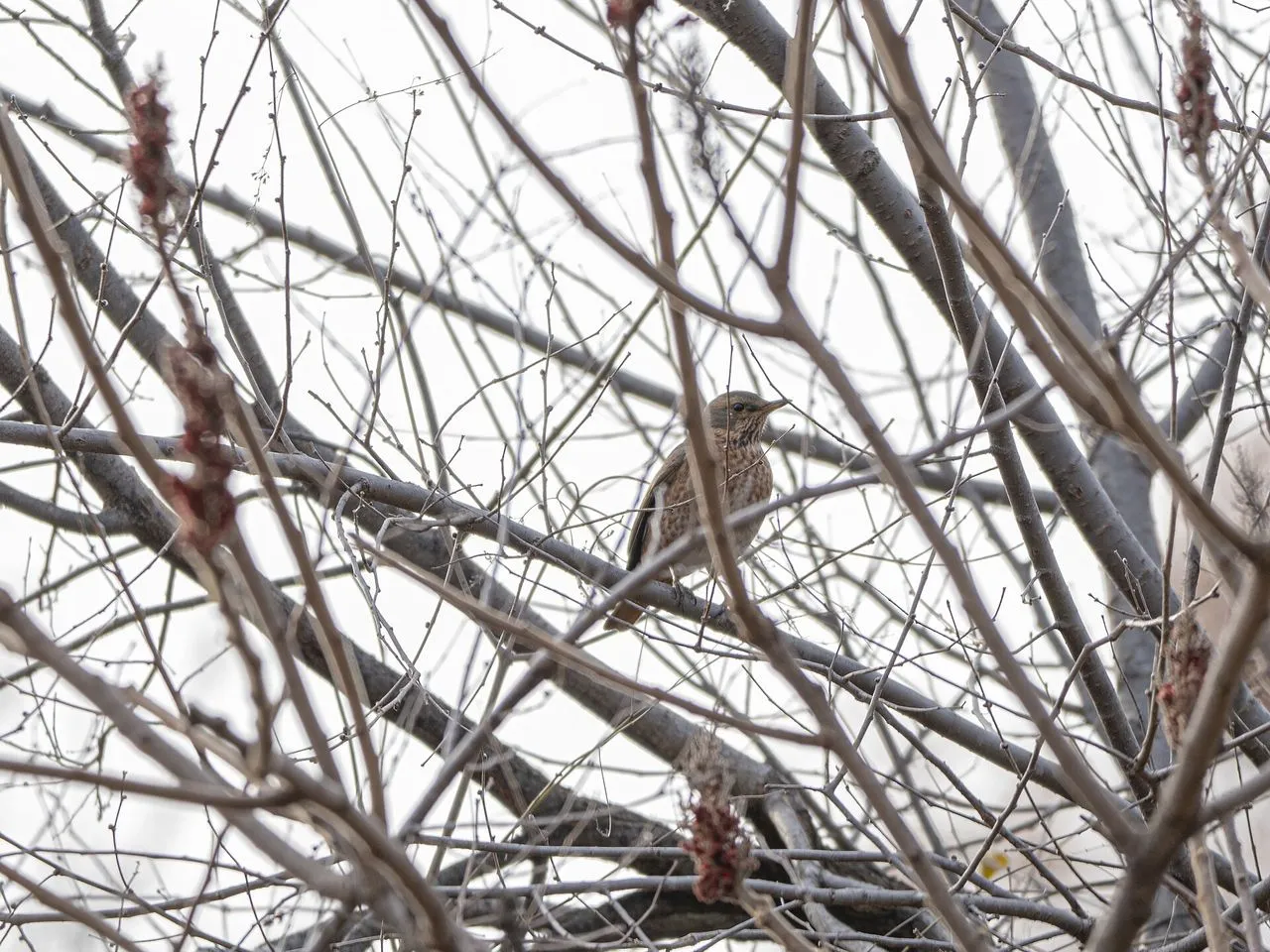
The Turdidae family includes thrushes, bluebirds, and solitaires. The American Robin (77g) is much larger than the European Robin (18g), they are not close relatives. North American thrushes include American Robin, Eastern Bluebird, Hermit Thrush, and Varied Thrush. Turdidae are primarily ground-foraging insectivores that also eat fruit. Bluebirds are secondary cavity nesters that benefit from nest boxes.
The Turdidae is a family of approximately 175 species of medium-sized passerines distributed across every continent except Antarctica, reaching their greatest diversity in sub-Saharan Africa and Southeast Asia.
I'm Dr. James Whitfield, an ornithologist trained at Oxford and formerly a research fellow with the British Trust for Ornithology. Twelve thousand documented garden hours, across Britain, eastern North America, and southern Europe, underpin what follows. This guide covers identification, song, ecology, breeding biology, and garden management for the family as a whole. Species profiles for the two North American members most commonly encountered at garden level are at American Robin and Eastern Bluebird.
Taxonomy and Range
The family Turdidae, as circumscribed by the IOC World Bird List, includes the true thrushes (Turdus, the numerically dominant genus), the bluebirds (Sialia), the solitaires (Myadestes and close relatives), and a substantial array of Old World groups (rock thrushes, some wheatears, ground thrushes) that shift between Turdidae and the closely related Muscicapidae depending on the molecular study in use. The instability at the edges of the family reflects genuine biological ambiguity: Turdidae and Muscicapidae are sister groups that have been radiating in overlapping geographic zones for tens of millions of years, and the boundary between them is not clean.
Turdus alone accounts for roughly 85–90 species and is among the most geographically widespread bird genera on Earth. In North America the genus is represented primarily by T. migratorius (the American Robin), the continent's most abundant thrush, along with T. naevia (the Varied Thrush, sometimes separated as Ixoreus naevius) in the Pacific West, and occasional vagrant appearances from Caribbean and Central American species. European Turdus is richer: the Common Blackbird (T. merula), Song Thrush (T. philomelos), Mistle Thrush (T. viscivorus), Fieldfare (T. pilaris), and Redwing (T. iliacus) all occur regularly in Britain, with Fieldfare and Redwing present primarily as winter visitors rather than breeders.
The bluebirds (Sialia) are a small New World genus of three species: the Eastern Bluebird (S. sialis), the Western Bluebird (S. mexicana), and the Mountain Bluebird (S. currucoides). All three are obligate secondary cavity nesters, unable to excavate their own holes. This life-history trait is unusual within the Turdidae and has had significant consequences for their conservation history, a point covered in the Eastern Bluebird profile.
The genus Catharus (Hermit Thrush, Swainson's Thrush, Veery, and others) contributes another six North American species, most of them forest-interior breeders more reliably detected by song than by sight.
The "Robin" Naming Problem
No question generates more confusion in transatlantic ornithology than the naming of robins. The European Robin (Erithacus rubecula) and the American Robin (Turdus migratorius) share a common name and a warm-toned breast, but they are not close relatives and are not placed in the same family. The European Robin is now assigned to the Muscicapidae (the Old World flycatchers), following molecular work that placed Erithacus closer to flycatchers than to thrushes. The American Robin is a true thrush, firmly within Turdidae.
The size difference alone resolves the confusion for anyone who has seen both birds. An adult T. migratorius weighs roughly 77 g and measures 23–28 cm. An adult E. rubecula weighs about 18 g and measures 12–14 cm. The American species is closer in size and foraging style to the European Blackbird (T. merula) than to the European Robin.
The name transfer is a colonial-era convenience. English settlers in North America saw a round bird with a red-orange breast and borrowed the most familiar name available. The same pattern repeated across other groups: the American "redstart" bears no close relation to the European Redstart, and the American "sparrows" now occupy a separate family (Passerellidae) entirely. The borrowed names have outlasted any justification from taxonomy.
The practical consequence is direct: do not assume that what the American Robin does in a garden matches what the European Robin does. Their nest structures, territorial behaviour, flock dynamics, and responses to garden management differ at almost every point. The American Robin profile sets out the specific contrasts in behaviour and ecology.
Identification
The Turdidae present a consistent gestalt once you know what to look for.
Body shape. Rounded, deep-chested, medium-sized. Most species fall between 18 and 28 cm, roughly starling-sized or somewhat larger, sitting clearly above the wood warblers and below the corvids in perceived bulk.
Posture. Distinctly upright when stationary, with a tendency to stand nearly vertical on open ground. This differs from the hunched posture of starlings and the more horizontal carriage of most warblers and sparrows.
Eye. Large and dark, set in a relatively large round head. The enlarged eye is not cosmetic. Turdidae are consistently among the first singers in the dawn chorus and among the last to stop foraging at dusk, and the retinal anatomy supports activity at light levels where most other passerines have already roosted.
Bill. Slender and slightly decurved, designed for picking invertebrates from soil and plucking fruit. Not the heavy seed-cracking bill of a finch, not the hooked bill of a shrike.
Foraging behaviour. The run-and-stop sequence is the most reliable behavioural field mark at distance: a short burst of running across open ground, an abrupt halt, a lateral head-tilt held for one to four seconds, then a rapid downward lunge or probe. This is active visual sampling. The head-tilt aligns one eye's foveal region nearly perpendicular to the soil surface, maximising detection of surface movement or colour contrast from earthworms and beetles. The long-popular "listening for earthworms" explanation for this posture lacks experimental support and has been quietly retired from peer-reviewed literature, though it persists in popular field guides.
Juvenile plumages. Young Turdus fledge with spotted underparts, a family-wide trait that disappears at the first complete post-juvenile moult in autumn. A juvenile American Robin is buff-washed and heavily spotted below, with none of the brick-red colouration of the adult. It is routinely misidentified as a different species entirely. The posture and foraging behaviour remain diagnostic even when the plumage is not.
Song
The Turdidae produce some of the most complex and sustained vocalisations of any temperate passerine family. Turdus species are characterised by extended, improvisational phrasing in which individual motifs rarely repeat consecutively. This is a structural contrast to the tightly repetitive songs of finches and buntings.
The Song Thrush (T. philomelos) is a useful exception within the genus: it characteristically repeats each phrase two to four times before moving to the next. This repetition is unusual in the genus and is why the Song Thrush is often the first example used to introduce thrush song to beginners, even though the pattern is atypical for the family.
The American Robin produces a sustained rolling song of clear, slurred notes in sequences of variable length, operating primarily in the 2–8 kHz range. It is reliably among the first voices of the North American dawn chorus, typically beginning 30–40 minutes before sunrise, and continues into late evening. Both reflect the enlarged-eye advantage described above.
The Veery (Catharus fuscescens) produces one of the most distinctive vocalisations in North American ornithology: a downward-spiralling, almost electronic-sounding cascade, created by the two syrinx halves generating notes at slightly different frequencies simultaneously. No other common garden-adjacent species produces anything similar, and it is identifiable in one hearing.
The Eastern Bluebird has a softer, more plaintive voice than the American Robin: a chortled "chur-lee, chur-lee" delivered from a raised perch in short series, with a rising "chur-wi" contact call that carries well across open ground. Bluebirds are often heard before they are seen.
Diet
Turdidae are seasonal omnivores with a predictable dietary shift. Invertebrates (earthworms, beetles, caterpillars, grasshoppers, snails) dominate in the breeding season, when protein demands for egg development and nestling growth are highest. Fruit replaces or supplements invertebrates in autumn and winter, when invertebrate availability collapses. The shift is not absolute: American Robins take fruit year-round if available, and they continue to take earthworms whenever soil conditions permit. But it is reliable enough to drive practical garden management decisions for the whole family.
What to plant for fruit. In North America: native dogwoods (Cornus spp.), native hollies (Ilex spp.), serviceberries (Amelanchier spp.), elderberries (Sambucus canadensis), winterberry (Ilex verticillata), and native hawthorns (Crataegus spp.). Timing of ripening matters as much as species selection: plants that retain fruit through winter (winterberry, hawthorn) attract thrushes during the period of greatest food scarcity. In Britain: rowan (Sorbus aucuparia), hawthorn (Crataegus monogyna), holly (Ilex aquifolium), elder (Sambucus nigra), and ivy (Hedera helix, fruiting in late autumn after most other sources are exhausted).
Supplementary feeding. Turdidae make little use of conventional tube or hopper seed feeders. American Robins will use platform or ground-level feeders loaded with halved apples, soaked raisins, or live and dried mealworms. Eastern Bluebirds show a strong and consistent response to mealworm feeders, particularly during cold snaps when frozen or waterlogged soil puts earthworms out of reach. Dry raisins are worth avoiding for ground-feeding thrushes; they can absorb water in the digestive tract and cause crop impaction.
Breeding Biology
All North American Turdidae build open cup nests. The American Robin's nest is the most studied in the family: an outer layer of coarse grass, weed stems, and debris, internally plastered with a thick layer of mud, then finished with fine dry grass. The mud lining is structurally diagnostic. Very few North American passerines use mud as a primary load-bearing component, and it is applied wet then allowed to dry and harden, giving the nest a distinctively rigid inner shell. Nest construction takes 2–6 days and is performed almost entirely by the female.
Clutch size is typically 3–4 eggs, pale blue-green and unmarked. Incubation lasts 12–14 days; nestlings fledge at 13–15 days but remain in parental care for 2–3 further weeks. Two broods are typical in most of the range; three are recorded in the southern states.
The Eastern Bluebird's breeding biology is governed by its cavity-nesting requirement. It depends entirely on existing holes (old woodpecker cavities, natural crevices in fence posts, or nest boxes) and cannot excavate its own. This constraint drove both the population collapse of the mid-20th century and its subsequent recovery through organised nest box programmes. The Eastern Bluebird profile covers the box dimensions and placement criteria that produced the best-documented results.
Common Confusions
| Confusion | Distinguishing features |
|---|---|
| American Robin vs. European Starling | Starling has a long pointed yellow bill, fast strutting walk rather than run-and-stop, no red-orange below |
| American Robin vs. Northern Mockingbird | Mockingbird is grey overall, longer-tailed, shows white wing patches in flight, lacks any warm colouration below |
| Juvenile Robin vs. adult Robin | Juvenile is buff-spotted below with no brick-red; posture and run-and-stop foraging are already fully formed |
| Spotted Catharus vs. juvenile Robin | Catharus are smaller, more secretive, forage low and close to cover; juvenile Robin is larger and more conspicuous in the open |
Notable Species
- American Robin (Turdus migratorius): the continent's most abundant thrush; present year-round across nearly all garden habitats in North America.
- Eastern Bluebird (Sialia sialis): cavity-nesting thrush of open country; its population recovery is among the best-documented conservation successes in North American ornithology.
- Hylocichla mustelina (Wood Thrush), declining breeder of mature eastern deciduous forest; among the finest singers in the family; responds to managed understorey in larger gardens.
- Catharus fuscescens (Veery), breeds in moist woodland; the spiralling electronic-sounding song is unmistakable.
- Catharus ustulatus (Swainson's Thrush), common migrant through eastern gardens in spring; distinguishable from the Veery by its upward-spiralling rather than downward-spiralling song.
- Catharus guttatus (Hermit Thrush), the hardiest Catharus; the only one that regularly overwinters in the northern US; a shy bird of woodland edges on migration.
- Sialia mexicana (Western Bluebird), replaces the Eastern Bluebird in the Pacific states and Rocky Mountain foothills; similar cavity-nesting requirements.
- Ixoreus naevius (Varied Thrush), Pacific coastal species with a striking orange-and-black pattern; occasionally irrupts east in winter during poor food years.
Where to See Turdidae
American Robins require no special effort to locate across most of North America. A short-grass lawn, park, or mown verge on any spring morning is sufficient. The more productive exercise is watching the foraging sequence rather than simply confirming presence: the run-and-stop timing, head-tilt angle, and strike rate repay extended observation and calibrate your eye for the subtler Catharus species when they pass through in migration.
Eastern Bluebirds are more habitat-specific: open agricultural land or rough pasture with scattered trees, fence lines, and at least one raised perch structure, with woodland not too distant. Their decline was sharpest where that structure disappeared through intensive agriculture or scrub encroachment. Maintained nest box trails through farmland are typically the highest-density viewing sites. Garden-scale setup is covered in the Eastern Bluebird profile.
Catharus thrushes are forest-interior breeders and uncommon in open gardens during the breeding season. Spring migration (mid-April through late May in eastern North America) is the exception: they pass through in significant numbers and will stop briefly at berry-producing shrubs near tree cover. A planting of native serviceberry or dogwood near a woodland edge attracts them on passage more reliably than any other single garden intervention.
See Also
- American Robin (Turdus migratorius)
- Eastern Bluebird (Sialia sialis)
- Song Thrush (Turdus philomelos)
- The Complete Attracting Guide
- The Complete Thrushes Guide
- American Robin vs European Robin: the cross-Atlantic naming confusion sorted with a 12-row comparison.
- Eastern vs Western Bluebird: throat colour as the diagnostic, with Mountain Bluebird as a third reference point.
Frequently Asked Questions
What's the difference between an American Robin and a European Robin?
They are not closely related. The American Robin (Turdus migratorius) is a true thrush weighing 77g. The European Robin (Erithacus rubecula) is a flycatcher (Muscicapidae) weighing only 18g. The American Robin is closer in size to the European Blackbird than to the European Robin.
Do thrushes come to bird feeders?
Most thrushes are ground-foragers preferring open lawns and leaf litter. They rarely use seed feeders but will eat fruit on platform feeders. American Robins and Varied Thrushes sometimes take mealworms. The best way to attract thrushes is a clean water source and leaf litter for foraging.
How do I attract Eastern Bluebirds?
Eastern Bluebirds need open habitat with sparse grass for foraging. Install a nest box with a 38mm entrance hole, 100x100mm floor, no perch (prevents House Sparrow predation), mounted 1.5–2m high on a smooth pole with a predator baffle. Face away from prevailing winds.
What do thrushes eat?
Thrushes are primarily insectivorous, eating earthworms, snails, beetles, and caterpillars. In late summer and autumn, they shift heavily to fruit, berries, grapes, and crabapples. This fruit-eating habit makes them vulnerable to window collisions during migration.