Mistle Thrush (Turdus viscivorus) is Europe's largest thrush (26-29cm). Cold grey-brown, large round spots on belly. Named for eating mistletoe. Sings in winter storms, earned 'Storm Cock' nickname.
Turdus viscivorus Linnaeus, 1758, the Mistle Thrush, is the largest regular European thrush and earned the name Storm Cock by singing from exposed trees in wind and winter rain.
Part of the Complete Thrushes Guide.
Identification at a glance
| Character | Mistle Thrush (T. viscivorus) | Song Thrush (T. philomelos) | Fieldfare (T. pilaris) |
|---|---|---|---|
| Length | 26–29 cm (10.2–11.4 in) | 20–23 cm (7.9–9.1 in) | 22–27 cm (8.7–10.6 in) |
| Tone | Cold grey-brown | Warm brown | Grey head and rump, chestnut back |
| Spots | Large, round, down belly | Smaller arrowhead spots | Heavy spots on ochre breast |
| Underwing | White | Buff to orange-buff | Pale grey rump in flight |
| Voice | Loud winter storm song; rattling call | Repeated song phrases | Chattering flock calls |
Identification
Visual
Mistle Thrush is large, 26–29 cm long and commonly 100–140 g, with a long-tailed, upright, rather rangy structure. The upperparts are cold gray-brown, not the warm brown of Song Thrush. The underparts are whitish with large, round or oval dark spots that continue well down the belly and flanks. The overall impression is pale, bold, and slightly coarse.
In flight, the underwing is white, and the tail shows pale outer edges. The flight is strong and direct, often with a rattling call. On the ground it stands tall in short grass or parkland, then runs and stops like a larger, grayer version of a Song Thrush. Sexes are alike. Juveniles show buff mottling above, but size and pale underwing still help.
Compared with Song Thrush, Mistle Thrush is larger, colder-toned, longer-tailed, and more open-country in behaviour. Song Thrush usually works closer to cover and has warmer buff underwing and smaller arrowhead spots. Fieldfare is similar in size but has a gray head, chestnut back, and more strongly contrasting rump and tail.
Audio
The song consists of loud, fluted, somewhat melancholy phrases delivered from exposed treetops. It resembles Blackbird in tone but is shorter, wilder, and less polished, with repeated bursts separated by pauses. The timing is distinctive: males sing in winter and very early spring, often during rough weather when most other birds are silent.
The flight and alarm call is a dry, rattling trrrrrr, carrying far across parkland or pasture. This call is often the first sign of a bird leaving a fruiting tree. In winter, aggressive calls around mistletoe clumps or berry-laden rowans reveal territory defence before the bird is seen.
Distribution
Mistle Thrush breeds across Europe, North Africa locally, and western to central Asia. In Britain it is widespread but thinly distributed, with declines in parts of farmland and upland edge. Northern and eastern populations migrate south or west in winter; British birds are mainly resident but wander locally according to fruit supply.
The species is most familiar in Britain, Ireland, western Europe, and open wooded landscapes of the continent. Winter flocks occur after breeding, but many adults become strongly territorial around fruit resources from late autumn onward.
Habitat
The preferred habitat is open woodland, parkland, orchards, wooded pasture, churchyards, golf courses, large gardens, shelterbelts, and farmland with mature trees. It avoids both dense closed forest and treeless arable land. Short grass for foraging and tall trees for singing and nesting are the central requirements.
In gardens it is most likely where old trees, berry-bearing shrubs, and nearby open grass occur together. A small enclosed garden with dense shrubs may suit Song Thrush or Blackbird but is usually too cramped for regular Mistle Thrush use.
Diet and Foraging
During spring and summer the diet includes earthworms, beetles, leatherjackets, caterpillars, slugs, and other invertebrates. Mistle Thrush often forages in short pasture, lawns, playing fields, and grazed parkland, using the run-and-stop method typical of larger thrushes. It is particularly visible after rain, when earthworms and surface invertebrates become available.
Fruit is central in autumn and winter. Mistletoe berries, holly, yew, rowan, hawthorn, ivy, and fallen apples are taken. The species is famous for defending fruiting mistletoe clumps against other thrushes, including Fieldfares and Redwings. A single bird may control a tree or group of trees for weeks, expelling competitors with rattling calls and direct chases.
Breeding Biology
The nest is a large cup placed in a tree fork, often high and conspicuous compared with Song Thrush nests. Materials include grass, moss, roots, twigs, leaves, and mud, lined with finer grasses. Heights of 3–15 m are common, with old park trees, orchard trees, and conifers used frequently.
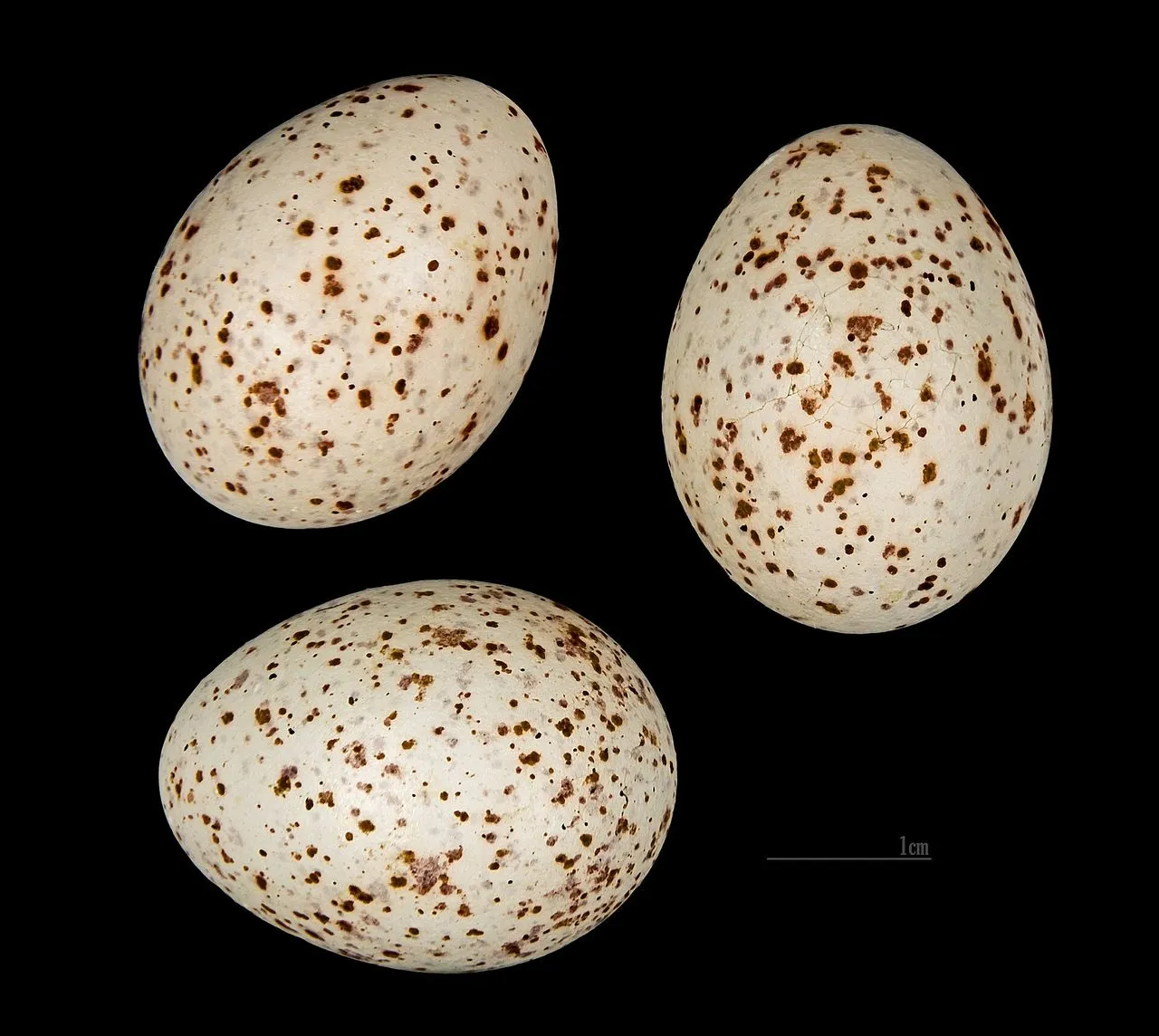
Clutch size is usually 3–5 eggs, pale blue or greenish with reddish-brown markings. Incubation lasts 12–15 days, mostly by the female. Nestlings fledge after about 14–16 days. Breeding can begin early, with eggs sometimes laid in March in Britain. Two broods are possible.
The species defends nests vigorously. Adults mob crows, magpies, squirrels, and even humans approaching the nest tree. This aggression reduces some predation but does not prevent losses in exposed sites, especially during cold early spring weather.
Notes
The link with mistletoe is ecological rather than merely linguistic. Mistle Thrush eats the sticky berries of Viscum album and can disperse seeds when pulp adheres to branches or passes through the gut. In winter, defended mistletoe clumps function as private food stores. This resource defence explains why a species capable of flocking after breeding becomes solitary and combative in December. The Storm Cock's winter song and mistletoe defence are two parts of the same seasonal strategy: claim space early, advertise ownership, and hold food through the leanest months.
See Also
Frequently Asked Questions
How do I identify Mistle Thrush?
Large, cold grey-brown thrush with big round dark spots extending down belly. Pale underwing in flight. Larger, longer-tailed than Song Thrush. Upright stance in open fields.
Why is it called Storm Cock?
Males sing from exposed treetops in wind and rain during winter and early spring, unusual timing. Loud, fluted, melancholy phrases delivered while other birds stay quiet.
What does Mistle Thrush eat?
Mistletoe berries give the species its name. Also eats other fruit, earthworms, insects. Defends mistletoe clumps aggressively in winter, chasing off other thrushes.
How is Mistle Thrush different from Song Thrush?
Mistle is larger, colder-toned, longer-tailed, bigger-spotted down belly. Song Thrush is warmer brown, smaller, has buff underwing, and repeats song phrases.