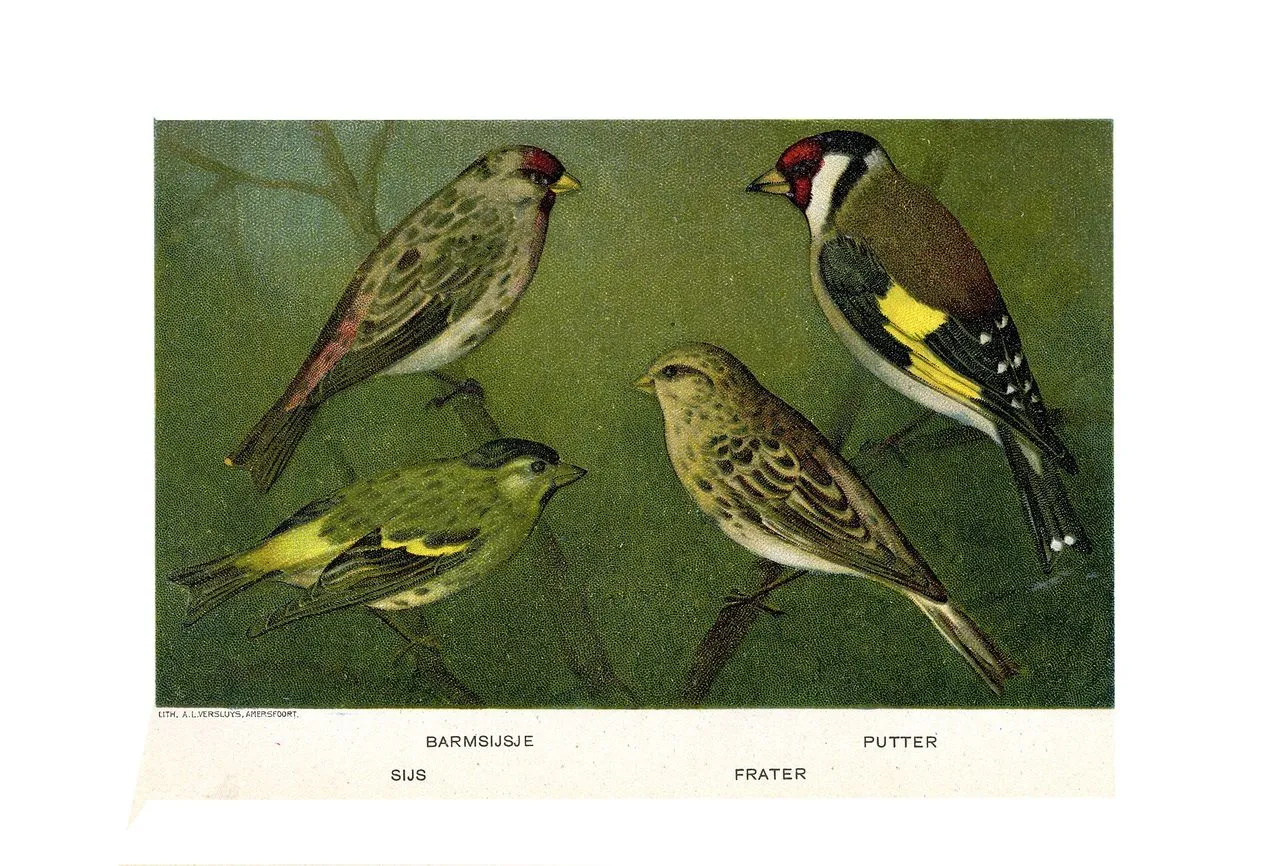
Finches (Fringillidae) have conical bills built for dehiscing seeds through lateral mandible movement, while sparrows (Passeridae) crush seeds with blunt compression. North America has no native sparrows in Passeridae, all native 'sparrows' belong to Passerellidae. At feeders, nyjer attracts finches; black-oil sunflower is universal. House Finches and Purple Finches are often confused, the latter has a deeply notched tail and more patterned wings.
The families Fringillidae (true finches) and Passeridae (Old World sparrows) together account for roughly 272 species of seed-eating passerines, distributed across every continent except Antarctica, with the broadest taxonomic diversity concentrated in the Old World Palearctic and the mountains of East Africa.
I'm Dr. James Whitfield, formerly a research associate with the British Trust for Ornithology's Garden BirdWatch scheme and now an independent ornithologist with around 12,000 hours of documented garden observation time. What follows is a practical field reference for identifying, understanding, and feeding the finch and sparrow families at the backyard level.
Taxonomy and Natural Range
Fringillidae was established by Vigors in 1825. The IOC World Bird List currently recognises 229 species in 50 genera, making it one of the larger families within the Passeriformes. The family spans the Holarctic, sub-Saharan Africa, and the Neotropics, reaching highest species density in the mountains of East Africa and the Himalayas. In North America, the relevant genera for backyard observation are Spinus (siskins and American goldfinch), Haemorhous (house and purple finches), Loxia (crossbills), Pinicola (pine grosbeak), and Coccothraustes (evening grosbeak). The Hawaiian honeycreepers, often subsumed into Fringillidae, represent a notable adaptive radiation from a single Fringillid colonist: 18 extant species remain of an original 59.
Passeridae, established by Illiger in 1811, is considerably smaller: 43 species in eight genera, all Old World in origin. The two Passer species relevant in North America are both introduced. Passer domesticus (house sparrow) was released or escaped in Brooklyn in 1851 and is now established across the continent. Passer montanus (Eurasian tree sparrow) was introduced in St. Louis in 1870 and remains largely confined to the Mississippi River valley. Native North American "sparrows" (white-throated Zonotrichia albicollis, song sparrow Melospiza melodia, chipping sparrow Spizella passerina, and their relatives) belong to the family Passerellidae, not Passeridae. Popular field guides handle this distinction inconsistently, and it is the source of one of the most persistent confusions in backyard ornithology.
Identification: Fringillidae vs Passeridae
At a feeder, these two families present as small to medium passerines with conical bills, short tails, and a tendency toward loose flocks. Three structural features separate them reliably.
Bill Morphology
Fringillidae bills are conical and laterally compressed, built for dehiscing: cracking seed hulls through a lateral rolling motion of the lower mandible, with the tongue stripping the kernel free. The cutting edges meet with precision. Bill depth and curvature vary considerably across the family. Loxia species carry mandibles crossed at the tips for levering conifer cone scales apart; Spinus species have a slender, slightly decurved bill suited to probing composite flower heads. Despite this variation, the mechanical principle is consistent: a precise moving-edge design for seed husking.
Passeridae bills are also conical but proportionally shorter and more blunt-tipped. House sparrows crush rather than dehisce: the mandibles apply broad compression rather than the rolling lateral shear of a Fringillid. Watch a chaffinch and a house sparrow working the same pile of millet and the difference is visible. The chaffinch's bill works with a quick lateral flick; the sparrow's presses directly downward.
Leg Posture and Locomotion
Fringillids perch with a slight forward lean and hop energetically between branches. Many, particularly Spinus and Carduelis species, hang inverted or near-inverted to access seed heads. Spinus tristis routinely feeds head-down on thistle; Carduelis carduelis extracts seeds from teasel at acute angles. Strong toe flexors make this possible. Passerids are more upright in posture and heavier-gaited, with a conspicuous hop-and-peck style at ground level. They can climb but avoid the acrobatics typical of smaller Fringillids.
Plumage Moult Strategy
Most Fringillidae undergo a complete post-breeding moult followed by a partial pre-breeding moult affecting head and upper parts. Much of the spring breeding plumage is achieved by feather-tip abrasion rather than new feather growth: pale tips wear away through winter to reveal brighter bases beneath. American goldfinch is the textbook case. The male's breeding yellow is last autumn's feathers with olive tips worn off, not a spring growth. This tip-abrasion mechanism is energetically cheaper than producing an entirely new set of feathers.
Passeridae undergo a single complete post-breeding moult with no pre-breeding partial moult. The male house sparrow looks essentially the same in January as in May. The grey crown and black bib are not revealing hidden pigment: they simply persist across the year unchanged.
Diet and Feeder Behaviour
Both families are predominantly seed-eaters, but the category conceals substantial ecological differences. Fringillids tend toward specialisation: Spinus species focus on small, oil-rich seeds (nyjer, thistle, small composites); evening grosbeaks (Coccothraustes vespertinus) crack large-shelled seeds that defeat smaller bills; crossbills are obligate conifer-cone specialists. Most Fringillids supplement seed with invertebrates during breeding, and some switch nestling diet almost entirely to caterpillars and aphids for the first week of chick life.
Passerids are more ecologically plastic. House sparrows take virtually any available food and adapt quickly to feeder types, favouring millet and wheat at mixed feeders. A sparrow-dominated feeder can displace more specialised Fringillids through sheer competition for perch space. Tube feeders with small ports select against Passer domesticus and favour Spinus species. Platform feeders and ground scatter attract Passerids preferentially. Running both feeder types simultaneously produces better species diversity than a single mixed-seed platform.
Song and Call
Fringillidae
Fringillid song is produced by the syrinx at the bronchial bifurcation, under independent bilateral muscle control: each side can generate a separate note simultaneously. This bilateral independence underlies the tonal complexity that distinguishes finch song from the vocalisations of most other passerine families. Chaffinch (Fringilla coelebs) delivers its 2 to 3 second cascading song through rapid alternation of bilateral syringeal muscles; sonographic analysis shows high within-individual stereotypy and detectable geographic dialects across its range. American goldfinch produces a prolonged twitter of phrases in flight and a four-note flight call widely rendered as po-ta-to-chip, delivered with a notably open bill that amplifies the higher harmonics. Greenfinch (Chloris chloris) contributes a long, wheezing dzhweee trill produced as an extended unilateral syringeal note rather than a bilateral alternation.
Passeridae
Passerid vocalisations are structurally simpler. House sparrow produces a series of cheep and chirrup notes carrying social information (alarm, flock cohesion, male status) without the tonal elaboration of Fringillid song. Each chirrup is generated by a single syringeal contraction against expelled air, rather than the sustained bilateral muscle control of Fringillid song. Eurasian tree sparrow is marginally more musical but operates under the same anatomical constraint. A complex, melodic trill at a feeder is not coming from a Passer.
Common Confusions
| Pair | Distinguishing feature |
|---|---|
| American Goldfinch vs Pine Siskin | Goldfinch: bold white wing bars, unstreaked below in breeding plumage, yellow wing panel. Siskin: heavily streaked throughout, yellow restricted to wing edges and rump |
| House Sparrow vs House Finch | House Finch male: red crown, breast, and rump with streaked brown flanks. House Sparrow male: grey crown, black bib, chestnut nape, no red anywhere |
| House Sparrow vs Chipping Sparrow | Chipping Sparrow: bright rufous cap, clean white supercilium, slender build; Passerellidae, not Passeridae |
| Purple Finch vs House Finch | Purple Finch male: raspberry suffusion, no clear flank streaking, distinctly curved culmen. House Finch: brighter red, flanks visibly streaked |
| Eurasian Siskin vs Goldfinch (UK) | Siskin: streaked breast and flanks, yellow rump, smaller. Goldfinch: broad yellow wing bar, red face mask, white rump, unstreaked |
| Common Redpoll vs Lesser Redpoll (UK) | Common: larger, paler, often frosted appearance. Lesser: smaller, darker brown above. Both carry red forecrown and black chin patch |
Native Passerellid sparrows (white-throated, song, fox, Lincoln's) are cleanly separated from house sparrow by head pattern. The male house sparrow's combination of grey crown, chestnut nape, and black bib is absent in all native North American sparrows. Any small brown bird with a bold black throat patch at a garden feeder is almost certainly P. domesticus.
Siskins are routinely reported as goldfinches in garden surveys. The reliable separator across all seasons: goldfinch is unstreaked below in breeding plumage; siskin is streaked on breast and flanks in all plumages. In winter the goldfinch fades, but the broad yellow wing bar and white rump remain diagnostic.
Notable Species
Two species from these families are profiled in depth:
- American Goldfinch (Spinus tristis): the most documented feeder finch in North America, notable for complete seasonal plumage change, a breeding season tied to seed availability rather than the invertebrate flush, and a strong preference for nyjer.
- House Sparrow (Passer domesticus): once the most abundant bird in British towns, now on the UK Red List, with British breeding populations estimated to have fallen over 70% since the mid-1970s.
Other Fringillids worth monitoring at North American feeders include Haemorhous mexicanus (House Finch), originally western but established in the east following a 1940 Long Island release; Haemorhous purpureus (Purple Finch), declining as house finch competition for feeder space intensifies; Spinus pinus (Pine Siskin), irruptive in years of boreal cone failure and readily attracted by nyjer; and Coccothraustes vespertinus (Evening Grosbeak), a large, bull-necked irruptive species of mountain-west winters.
For British garden observers, the core Fringillids are Fringilla coelebs (Chaffinch), Carduelis carduelis (Goldfinch), Chloris chloris (Greenfinch), Spinus spinus (Siskin), and Acanthis cabaret (Lesser Redpoll).
Where to See
Fringillids are most accessible at feeding stations from October through March, when natural seed stocks are low. American goldfinch is present year-round through most of its range but most conspicuous at feeders in winter and at thistle and composite seed heads in summer. Pine siskins and redpolls are irruptive; maintaining a nyjer feeder year-round and checking it in cold spells or during reported irruptions is the most practical approach.
Crossbills and siskins in Britain are best located in mature conifer stands from October onward. Their presence is often announced by the sound of falling cone scales before the bird is visible. Alder stands along rivers are reliable for lesser redpoll and siskin from November to March; both species follow the alder crop predictably. In North America, mixed flocks in overgrown field edges from August through October regularly include native Passerellids alongside goldfinch and siskin.
For practical guidance on setting up a garden to support the full diversity of finches and sparrows your local area carries, including feeder type, seed selection, water provision, and habitat planting, see the complete guide to attracting garden birds.
See Also
- The Complete Warblers Guide: the parulid family for comparison of migration patterns and feeding ecology with the finches.
- The Complete Thrushes Guide: the thrush family for comparison of ground-foraging and berry-eating behaviour with finches.
- The Complete Attracting Guide: practical guidance on feeder setup, seed selection, and habitat planting for finches and sparrows.
- American Goldfinch: the most documented North American feeder finch, with full seasonal plumage details.
- House Sparrow: the UK Red List species for understanding urban passerine population trends.
- House Finch vs Purple Finch: the classic eastern feeder ID problem solved with a 14-row side-by-side table.
- American vs European Goldfinch: the cross-continental confusion sorted with a 12-row comparison table.
- Preventing Trichomonosis at Finch Feeders: the disease that drove the UK Greenfinch population from 4.3 million to 2.8 million; recognition and protocol.
Frequently Asked Questions
What is the difference between a House Finch and a Purple Finch?
Male Purple Finches have more extensive red on the head and a notched tail; male House Finches have red limited to the forehead and face with a plain tail. Females are distinguished by the facial pattern: Purple Finch shows a bold facial stripe and light eye ring; House Finch shows a plain, streaked face.
Are there any native sparrows in North America?
Yes, all North American 'sparrows' belong to the family Passerellidae, not Passeridae. Native species include White-throated Sparrow, Song Sparrow, Chipping Sparrow, and Dark-eyed Junco. The House Sparrow and Eurasian Tree Sparrow are both introduced from Europe.
What seed do finches prefer?
Nyjer (thistle) is the preferred seed for goldfinches, siskins, and redpolls. Black-oil sunflower is also readily taken. Finches prefer tube feeders with small perches and mesh ports that exclude larger birds.
Why do some finches have crossed bills?
Crossbills (genus Loxia) have mandibles that cross at the tips, an adaptation for prying apart conifer cone scales to reach the seeds inside. This specialized bill shape allows them to exploit a food source no other finch can access.