Common Redpoll (Acanthis flammea) is an Arctic finch (10–16g) with red forehead, black chin, and pink flush on chest. Can survive -40°C by roosting in snow. Irruptive, invades south in winter.
Acanthis flammea Linnaeus, 1758, the common redpoll, is a 10 to 16 gram Arctic finch that can survive winter nights below -40°C by tunnelling into snow roosts.
Part of the Complete Finches & Sparrows Guide.
Identification
Visual
Common redpoll is small, streaked, and cold-toned, 12 to 14 centimetres long. The red forecrown, black chin patch, and tiny yellow bill set into a dark face are the core marks. The body is brown and white with dark streaking along the flanks. Adult males often show a pink wash on the breast, but females and immatures may lack pink entirely. The rump can be pale and lightly streaked.
Separation from pine siskin is usually straightforward at close range: redpoll has the red cap and black chin; siskin has yellow wing and tail flashes and no red crown. Hoary redpoll, where treated separately, is paler, frostier, and less streaked, with a shorter bill and whiter rump, but many birds are intermediate. Recent genetic work has led some authorities to treat redpoll forms as variation within a single species complex rather than deeply separated species.
At feeders, common redpolls look buoyant and restless. They are smaller than house finches, rounder than siskins, and often feed in tight flocks that rise and settle repeatedly.
| Character | Common Redpoll (Acanthis flammea) | Pine Siskin (Spinus pinus) | Hoary-type redpoll |
|---|---|---|---|
| Body mass | 10–16 g (0.4–0.6 oz) | 12–18 g (0.4–0.6 oz) | Similar, often slightly paler-looking |
| Forecrown | Red patch | No red patch | Red patch |
| Chin | Black patch | No black patch | Black patch, often smaller-looking |
| Flanks | Brown streaking | Heavy brown streaking | Reduced streaking, frosted appearance |
| Wing colour | No yellow wing flash | Yellow in wing and tail | No yellow wing flash |
Audio
Calls include a dry rattling chit-chit-chit, a rising swee-eeet, and various metallic chatters. Flocks in flight produce a constant light twittering. Song is a mixture of call notes, trills, and buzzy phrases, given on breeding grounds and sometimes in late winter as day length increases.
Distribution
Common redpoll breeds across Arctic and subarctic tundra, birch scrub, willow thickets, and open boreal margins around the Northern Hemisphere. In North America it breeds from Alaska across northern Canada. Winter movements are irruptive, bringing birds south into southern Canada and the northern United States in some years, with larger movements occasionally reaching well into the central and eastern states.
Irruptions follow seed availability, especially birch and alder crops. A strong northern seed crop can hold redpolls far north all winter. A broad failure can send flocks to feeders, weedy fields, and riparian alder stands hundreds of kilometres south.
Habitat
Breeding habitat is open northern scrub rather than closed forest: dwarf birch, willow, alder, tundra edge, and sparse spruce near treeline. In winter the species uses birch stands, alder thickets, weedy fields, marsh edges, roadsides, and gardens with small-seed feeders. It tolerates extreme cold and often feeds actively in conditions that suppress other small passerines.
Snow cover shapes feeding access. Redpolls cling to catkins, hang from weed stems, and exploit exposed seed heads protruding above snow. They are adept at using nyjer feeders because the bill is small and precise.
Diet and Feeder Behaviour
Small seeds dominate: birch, alder, willow, spruce, grasses, sedges, and weeds. In summer, insects supplement the diet, especially for nestlings. Redpolls have a throat pouch, an expandable section of the oesophagus that allows them to store seeds rapidly and digest them later in shelter. This adaptation lets a bird gather food quickly during brief exposure and process it while roosting.
At feeders, nyjer is the most reliable attractant. Fine sunflower chips are also taken. Redpolls feed readily from tube feeders, mesh socks, and trays, often in flocks of 10 to 100 during strong irruption years. They are less dominant than house finches but can overwhelm a feeder by numbers. Cleanliness matters because redpoll flocks crowd tightly and can transmit salmonella where wet seed and droppings accumulate.
Breeding Biology
Breeding begins soon after snow retreat, often in June across Arctic regions. The female builds a cup of twigs, grass, moss, rootlets, feathers, and mammal fur, placed low in willow, birch, alder, or on the ground under vegetation. The nest is well insulated, a necessity in cold, exposed breeding habitat.
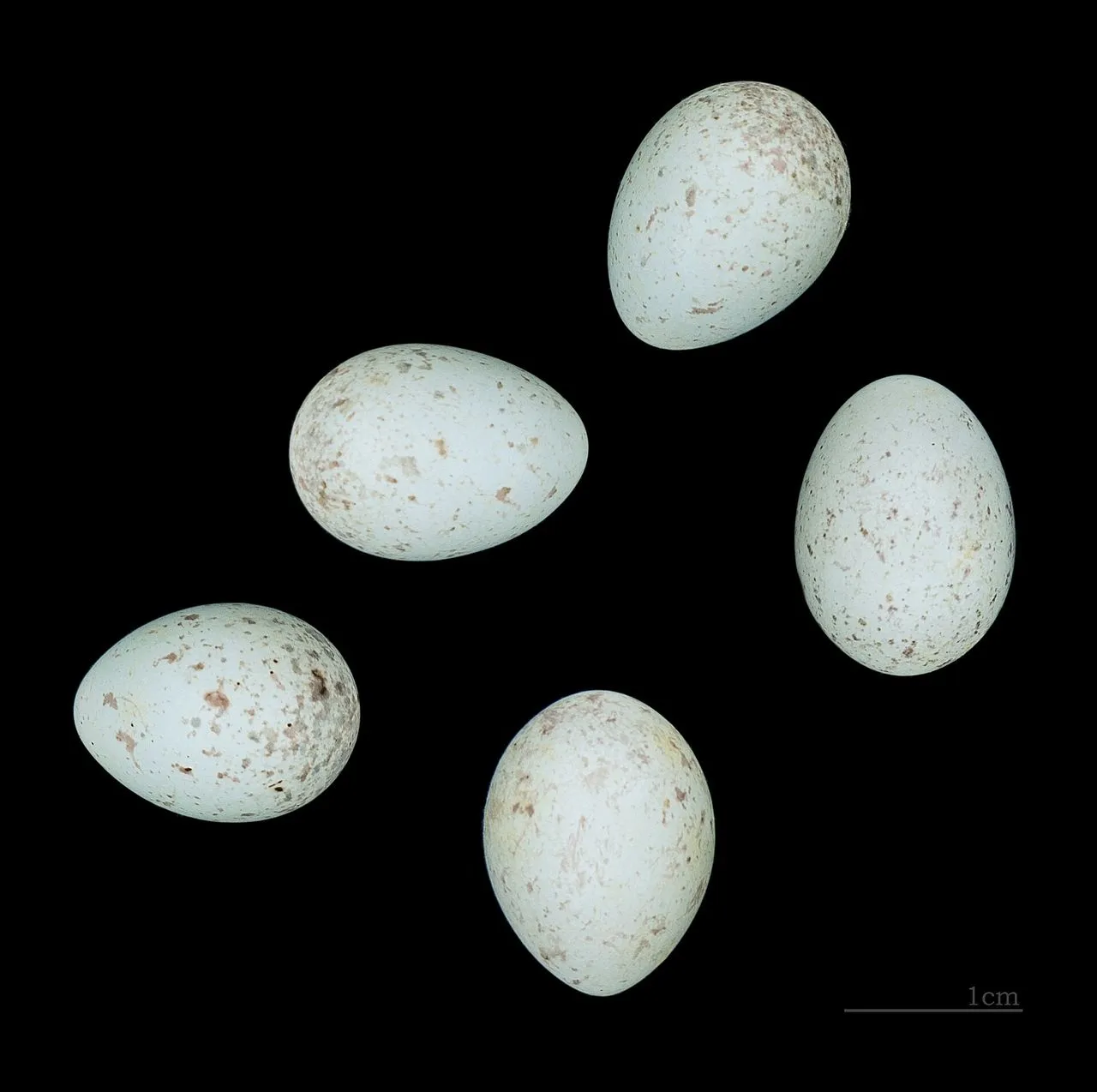
Clutch size is usually 4 to 6 eggs, pale greenish and speckled. Incubation lasts about 10 to 12 days, mainly by the female, while the male brings food. Young fledge after roughly 11 to 14 days. In favourable years with abundant seed and insects, redpolls may attempt more than one brood, but Arctic season length imposes a narrow window.
Notes
Common redpoll turns a winter feeder into an Arctic instrument. Its appearance signals conditions far beyond the garden: birch crop, alder crop, snow cover, and survival economics at high latitude. The species' small bill and low mass look fragile, yet its throat pouch, snow roosting, and flock mobility make it one of the more cold-competent passerines a northern observer is likely to see.
See Also
- Pine Siskin: the other streaked winter finch with restless flocking and shared irruption years.
- American Goldfinch: a familiar feeder finch whose bright plumage and nyjer use contrast sharply with redpolls.
- Brambling: the Eurasian winter visitor whose movements also track a northern seed crop.
- Purple Finch: another winter finch that can appear at feeders when northern food conditions shift.
- The Complete Finches & Sparrows Guide: full family reference: identification, song, and feeder behaviour.
Frequently Asked Questions
How do I identify Common Redpoll?
Red forehead patch, black chin, pinkish-red breast (in males). Brown-streaked above, white below. The small redpoll with black chin is this species. Hoary Redpoll has more white, less streaking.
How do redpolls survive Arctic winter?
They roost in snow tunnels at night, which insulates them from extreme cold. They can survive temperatures below -40°C this way. By day, they feed actively to maintain energy.
When do redpolls come to feeders?
Irruptive, some winters bring large numbers south, others almost none. When they come, they prefer nyjer and tiny seeds. They form large flocks and move together.
What is the difference between Common and Hoary Redpoll?
Hoary Redpoll is whiter, with less streaking and a 'frosted' appearance. Common Redpoll has more brown streaking, especially on the flanks. They often occur together.