Eurasian Tree Sparrow (Passer montanus) is a small Old World sparrow (12.5-14cm, 18-24g). Both sexes look alike, chestnut crown, white cheek with black spot, black throat. Introduced near St. Louis in 1870; remains confined to Midwestern US. Needs tree cavities for nesting.
Passer montanus Linnaeus, 1758, the Eurasian tree sparrow, was introduced near St. Louis in 1870 and remains largely confined to a small Midwestern range after more than 150 years.
Part of the Complete Finches & Sparrows Guide.
Identification
Visual
Eurasian tree sparrow is smaller and neater than house sparrow, 12.5 to 14 centimetres long and usually 18 to 24 grams. Both sexes look alike, which immediately separates it from house sparrow. The head has a rich chestnut crown and nape, a clean white cheek with a distinct black spot, a black throat patch, and a narrow black line through the eye. The back is warm brown with black streaking, and the wings show pale bars.
Male house sparrow has a grey crown, chestnut nape, and larger black bib; female house sparrow lacks the black cheek spot and chestnut crown. Native North American sparrows may show rufous caps or cheek markings, but none combines a chestnut full crown, white cheek, black cheek spot, and Old World sparrow structure.
The bill is stout but proportionally smaller than that of house sparrow. In winter flocks the species often looks compact, quick, and less heavy-shouldered. Juveniles are duller, with a weaker cheek spot and paler throat, but the basic face pattern emerges early.
| Character | Eurasian Tree Sparrow (Passer montanus) | House Sparrow (Passer domesticus) |
|---|---|---|
| Body length | 12.5–14 cm (4.9–5.5 in) | 14–18 cm (5.5–7.1 in) |
| Body mass | 18–24 g (0.6–0.8 oz) | Usually heavier-built |
| Crown | Chestnut in both sexes | Grey in male; brown in female |
| Cheek | White with black spot | Pale or grey, no isolated black spot |
| Sex difference | Sexes look alike | Sexes strongly different |
Audio
Vocalisations are sparrow-like chirps and cheeps, slightly higher and thinner than house sparrow. There is no elaborate territorial song comparable to native Passerellid sparrows. Calls function in flock cohesion, alarm, and nest-site advertisement. Around colonies, repeated chirping from cavities and hedges can sound like a quieter, more clipped version of house sparrow chatter.
Distribution
The native range extends across Europe and temperate Asia to Japan and Southeast Asia. Unlike house sparrow, it is often more rural in parts of Europe, using farmland, orchards, hedgerows, and village edges. In North America, the established population descends from birds released by German immigrants in Lafayette Park, St. Louis, in 1870. The range remains centred on eastern Missouri, western Illinois, and adjacent parts of the Mississippi River valley.
This limited expansion contrasts sharply with the continent-wide spread of house sparrow. Competition with the already established house sparrow, habitat specificity, and founder effects probably all contributed. Outside the core Midwestern range, records should be evaluated carefully for escapes or misidentified house sparrows.
Habitat
In North America the species uses rural towns, farms, hedgerows, orchards, shelterbelts, grain storage areas, and wooded edges near human settlement. It is less tied to dense urban centres than house sparrow and more likely around older agricultural landscapes with cavities and weedy foraging margins. In Europe it occupies a broad range of farmland and village habitats but has declined in many intensively managed agricultural regions.
Cavities are essential. Tree holes, nest boxes, building gaps, and old woodpecker holes are used. Hedges and brushy edges provide cover for feeding flocks. Clean, modernised farmsteads with sealed buildings and reduced weed seed offer less usable habitat than older mixed farms.
Diet and Feeder Behaviour
Diet is mainly seeds and grain outside the breeding season: millet, wheat, oats, grass seed, weed seed, and spilled agricultural grain. At feeders it takes millet, cracked corn, sunflower chips, and mixed seed from platforms and ground scatter. It is less acrobatic than finches and prefers stable feeding surfaces.
During breeding, nestlings receive insects and other invertebrates, especially caterpillars, beetles, aphids, and flies. Adult birds still consume seed but must collect animal food for chick growth. Flocks feed on the ground with quick hops and short flights back to cover. Where house sparrows are abundant, tree sparrows may be subordinate at concentrated feeders.
Breeding Biology
Breeding begins in spring, often from April, with two or three broods possible in favourable seasons. The nest is a bulky cup or domed mass of grass, straw, feathers, and plant fibres placed in a cavity. Nest boxes are readily accepted when entrance size excludes larger competitors only imperfectly; house sparrows may still contest them.
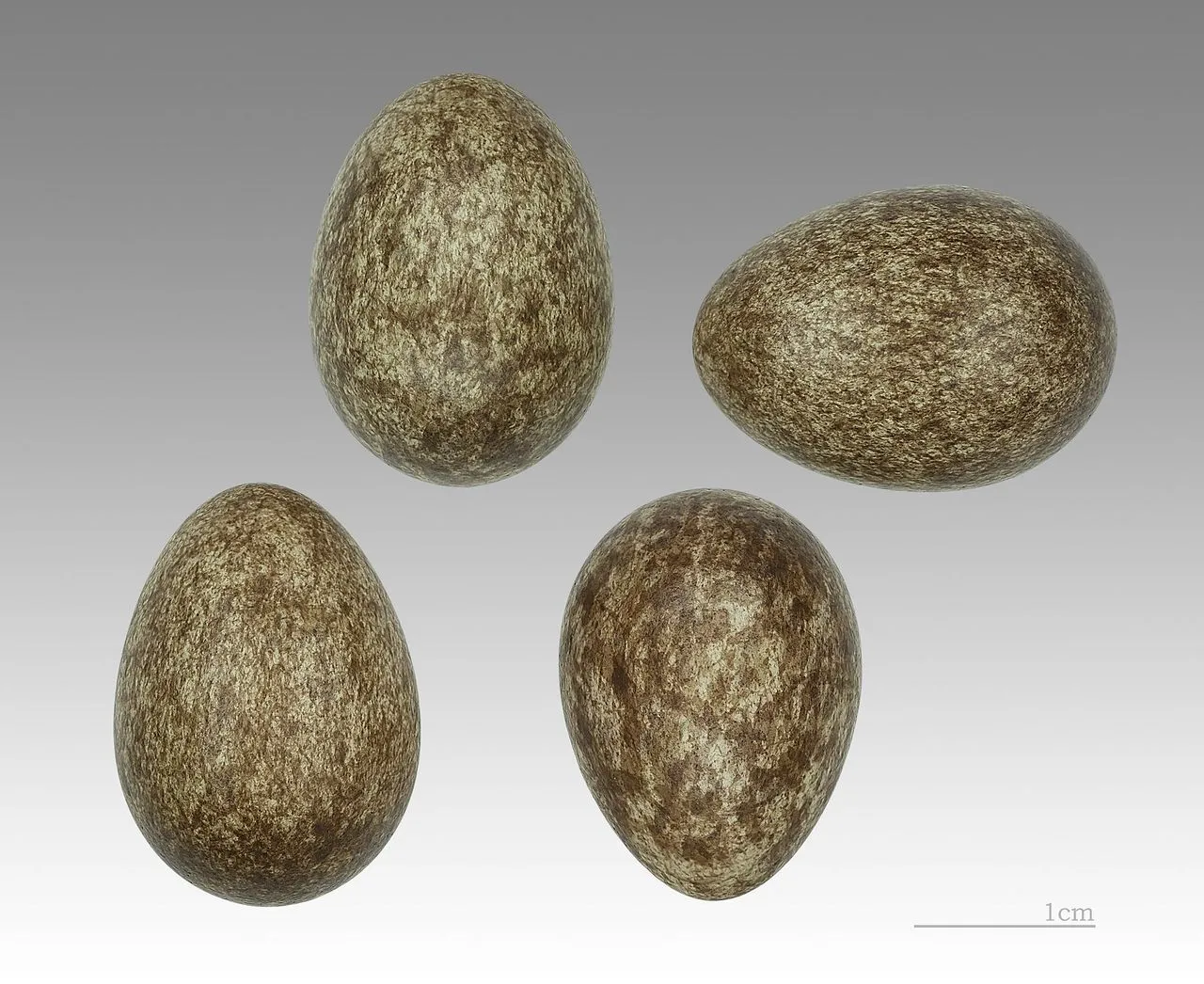
Clutch size is usually 4 to 6 eggs, whitish to grey and variably speckled. Both sexes incubate for about 11 to 14 days. Nestlings fledge after roughly 15 to 18 days. Pairs may remain associated across broods and colonies can persist at the same farm or village site for years if cavities and food remain available.
Notes
The North American Eurasian tree sparrow is an instructive failed invasion, or at least a restrained one. It arrived early, bred successfully, and had access to a continent filled with farms and towns, yet never followed house sparrow across the map. Its confinement shows that introduction alone does not guarantee expansion. Social structure, competition, habitat detail, and the order in which species arrive can matter as much as climate tolerance.
See Also
- House Sparrow: the larger, more familiar introduced sparrow that outcompeted tree sparrow in many settings.
- Song Sparrow: a native North American sparrow to compare for structure and streaking.
- Chipping Sparrow: a small, neat sparrow useful for size and posture comparisons.
- White-throated Sparrow: a bold winter sparrow that often shares gardens and hedges.
- The Complete Finches & Sparrows Guide: full family reference: identification, song, and feeder behaviour.
Frequently Asked Questions
How does Eurasian Tree Sparrow differ from House Sparrow?
Tree Sparrow is smaller, neater, with chestnut crown and white cheek containing a black spot. House Sparrow male has grey crown and larger black bib. Both sexes of Tree Sparrow look alike; House Sparrow sexes differ.
Why hasn't Tree Sparrow spread across North America?
It arrived later (1870) than House Sparrow (1853) and may have faced established competition. Limited to Missouri/Illinois area for 150+ years. House Sparrow's earlier establishment and broad habitat tolerance gave it the advantage.
What do Tree Sparrows eat?
Seeds and grain: millet, wheat, oats, weed seed. At feeders: millet, cracked corn, sunflower chips on platforms. During breeding, nestlings receive insects, especially caterpillars, beetles, aphids, and flies.
Where are Tree Sparrows found in North America?
Limited to eastern Missouri, western Illinois, and adjacent Mississippi River valley, descended from birds released in St. Louis in 1870. Outside this range, any Tree Sparrow record should be verified carefully.