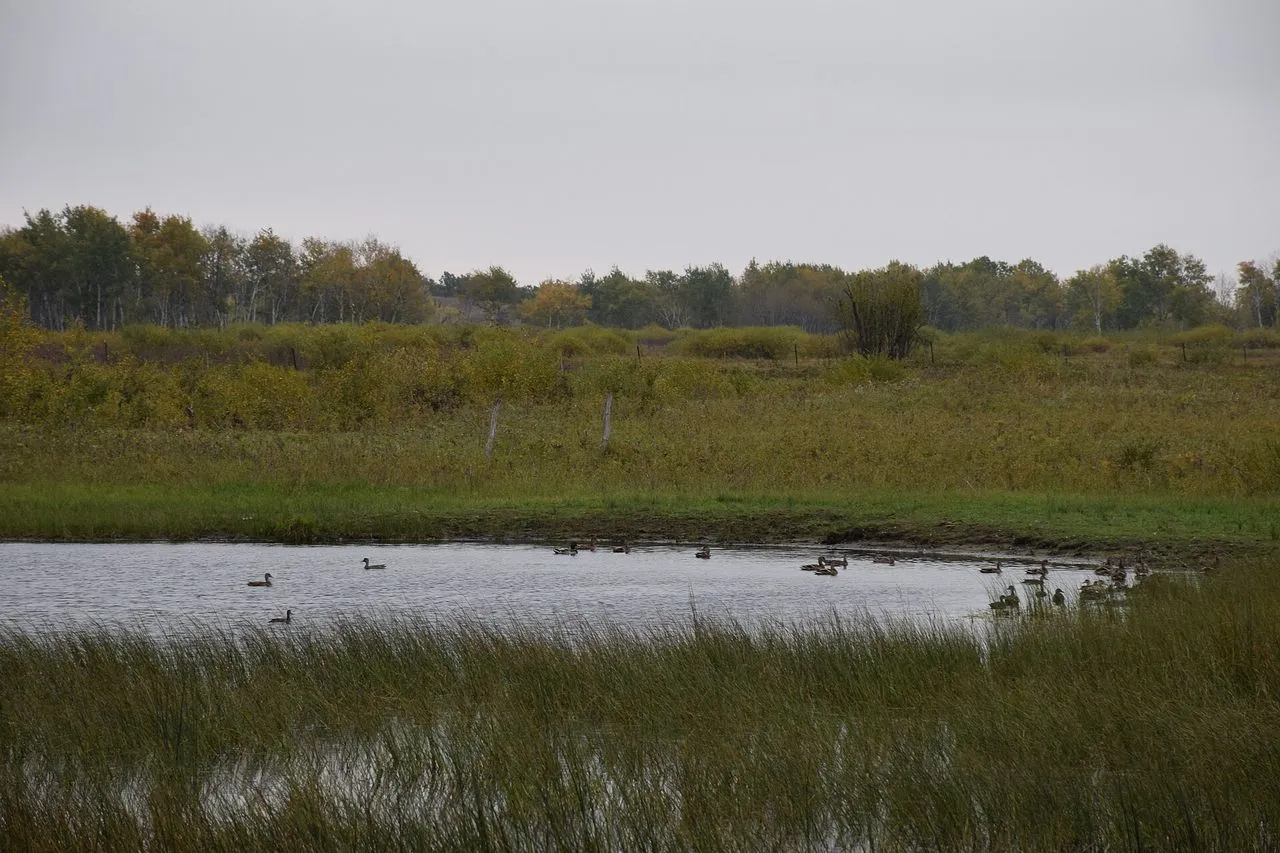
Anatidae includes 170 species: ducks, geese, and swans. They divide into three main groups: dabblers (Mallard, teal), divers ( Pochard, scaup), and sea ducks (eiders, scoters). Key ID points: dabblers tip up to feed; divers dive completely; swans have curved neck. Males eclipse to female-like plumage in summer. Many species hybridize, creating identification challenges.
The Anatidae is a cosmopolitan family of approximately 170 species of swimming, web-footed birds distributed across every continent except Antarctica, from the high Arctic tundra to equatorial river systems.
I'm Dr. James Whitfield, a research ornithologist formerly with the British Trust for Ornithology's wetland bird survey programme. Waterfowl formed a core part of my early field career before I moved into wader work, and the Anatidae remain the family I know most intimately, a consequence of the sheer hours they demand if you count them honestly. This guide covers the family at the level useful for a garden birder working up their identification skills: the major groups, the plumage traps, and the field techniques that cut through confusion.
Taxonomy
The family Anatidae sits within the order Anseriformes alongside the three screamers (Anhimidae) of South America and the magpie goose (Anseranas semipalmata) of Australia, the latter now usually placed in its own family Anseranatidae. The Anatidae itself is subdivided into three subfamilies that account for most of the species diversity encountered in the northern hemisphere.
Dendrocygninae, the whistling-ducks (8 or 9 species in Dendrocygna). Long-legged, long-necked, and strikingly upright in posture. They produce whistling calls rather than quacks, sit taxonomically at the base of the family, and are largely confined to tropical and subtropical latitudes. They are the outliers: morphologically and behaviourally distinct enough that their placement within Anatidae was debated for much of the 20th century.
Anserinae, the geese and swans (approximately 26 species in Anser, Branta, Cygnus, and a handful of smaller genera). Large-bodied, long-necked, and almost entirely herbivorous. In most species the male and female are visually identical, monomorphic, which sets them apart dramatically from the typical ducks. Swans represent the extreme of this pattern: sexes identical, long-term pair bonds, and biparental care. Geese sit intermediately, pairing for life but often showing subtle size dimorphism, with males averaging slightly larger.
Anatinae, the typical ducks and their relatives. This is by far the largest group, encompassing the familiar dabbling ducks, diving ducks, sea ducks, sawbills, stiff-tails, and perching ducks. Sexual dimorphism is the rule in most temperate-zone Anatinae; males in breeding plumage are frequently dramatic where females are cryptically brown.
A fourth grouping, the shelducks and sheldgeese, sometimes treated as Tadorninae, sits phylogenetically between Anserinae and Anatinae and is subject to ongoing revision. The Common Shelduck (Tadorna tadorna) of Europe is the most familiar representative: goose-sized, boldly patterned, and ecologically intermediate between a grazing goose and a filter-feeding duck.
Functional Groups: Dabblers, Divers, Perching Ducks, and Sea Ducks
The most practically useful way to approach duck identification is through feeding ecology, because feeding method is tightly coupled to morphology and behaviour. A bird you cannot identify by plumage can very often be placed to a functional group by posture, take-off style, or the position of its legs.
| Feature | Dabbler | Diver | Sea Duck | Perching Duck |
|---|---|---|---|---|
| Feeding method | Tip-up or surface skim | Pursuit dive, propelled by feet | Pursuit dive in deep or coastal water | Surface and shallow; roosts in trees |
| Leg position | Central | Set well back | Set very far back | Central to slightly forward |
| Take-off | Vertical spring from surface | Running sprint along water | Running sprint along water | Agile; capable of landing in trees |
| Bill | Broad, flat, well-lamellate | Variable; often narrower | Serrated in sawbills; broad in eiders | Broad to narrow |
| Speculum | Usually present, iridescent | Absent or inconspicuous | Usually absent | Variable |
| Hind toe | Small, unlobed | Lobed | Lobed | Unlobed |
| Typical habitat | Shallow lakes, marshes, floodplains | Deep lakes, reservoirs, estuaries | Open sea, rocky coasts | Rivers, wooded wetlands, forest pools |
Dabbling ducks (principally Anas, Spatula, and Mareca) feed by upending in shallow water or filtering surface water. The filtering mechanism is the lamellae: comb-like projections along the bill edges that sieve small invertebrates, seeds, and plant material. The hind toe is small and unlobed; legs sit centrally on the body, giving a nearly horizontal posture on land and allowing reasonably confident walking. The Mallard (Anas platyrhynchos) is the paradigm species: most of what you learn about dabbler morphology applies directly.
Diving ducks (principally Aythya: Tufted Duck, Pochard, Scaup) dive from the surface and propel themselves with their feet. The hind toe carries a distinct lobe that increases propulsive surface area underwater. Because the legs sit further back on the body, these birds sit low and stern-heavy in the water and walk with an ungainly forward lean. The laboured running take-off along the water surface, sometimes covering 20 metres before becoming airborne, is the quickest way to separate a diver from a dabbler at distance.
Sea ducks (eiders Somateria, scoters Melanitta, goldeneyes Bucephala, mergansers Mergus) share the diving ability of the Aythya group but are adapted for deeper, colder, or saltier water. Mergansers are the specialist fish-hunters: the serrated bill edges, the character that produces the "sawbill" vernacular, grip slippery prey that a smooth-edged bill could not retain. Common Merganser (Goosander in Britain) and Red-breasted Merganser are the species most regularly seen on inland waters in winter.
Perching ducks nest in tree cavities and carry the claw structure to perch on branches, unusual in a web-footed bird. Mandarin (Aix galericulata) and Wood Duck (Aix sponsa) are the best-known species. Mandarin is now an established feral breeder in Britain, derived from ornamental escapes; populations are particularly well established on wooded rivers in Surrey and Berkshire, and nest boxes have accelerated range expansion.
Eclipse Plumage
Eclipse plumage is consistently the source of confusion for birders who haven't encountered it before, and the confusion is understandable, an eclipse male Mallard in July is genuinely difficult to separate from a female on plumage alone.
The mechanism is straightforward. After breeding ends, typically late May to June in the northern hemisphere, male ducks of most sexually dichromatic Anatinae undergo a simultaneous post-nuptial moult of all flight feathers. Losing all primaries and secondaries at once renders the bird flightless for three to four weeks. During this period males also moult into a dull, female-like body plumage. The functional explanation most widely accepted is predator avoidance: a brightly coloured bird that cannot fly is under extreme selection pressure, and cryptic plumage reduces detection.
By October, primary regrowth is complete and the pre-breeding moult begins restoring full male plumage. In a typical year a Mallard drake is in full breeding plumage from December through late May, roughly half the calendar year.
One field character survives through eclipse and is the most reliable rapid separator: bill colour. Male Mallard maintains olive-yellow throughout; female bill is orange with dark mottling. A large brown duck with an olive-yellow bill in August is an adult male in eclipse, not a female or a hybrid. In diving ducks, bill pattern and the shape of any residual crest are analogous eclipse-season markers.
Identifying Hens
Female plumage convergence is one of the harder challenges in the family. Cryptic brown plumage has been strongly selected for in species where the female incubates and broods alone, and the result is that many female dabblers look superficially similar in poor light. Several field marks cut through the ambiguity.
Bill colour and pattern tend to be more species-specific in females than overall streaking pattern. Female Mallard: orange bill with dark mottling, the mottling is diagnostic, not just the orange. Female Teal: grey-green bill. Female Pintail: grey bill, faintly patterned. Female Shoveler: orange bill, but the spatulate profile is unmistakable independently of colour.
Speculum colour and bordering are consistent across sexes, ages, and plumages in dabbling ducks and are visible in flight and sometimes at rest. Female Mallard: purple-blue speculum bordered white on both sides. Female Gadwall: white speculum (one of the cleanest field marks in European dabblers). Female Teal: green-black speculum with white trailing edge. Learning these wing patches repays sustained effort.
Head profile and forehead slope resolve most diving duck females at reasonable range. Female Tufted Duck: warm brown with small crest remnant; steep forehead. Female Pochard: gently sloping forehead, pale area at bill base. Female Ring-necked Duck: peaked crown. Female Greater Scaup: rounded crown with white blaze at bill base broader and more diffuse than Tufted Duck's. These profile characters work at distance where plumage tones are washed out.
Body structure: when plumage is ambiguous, overall proportions often separate species, neck length relative to body, tail angle at rest, bill length as a proportion of head size. Female Pintail is longer-necked and longer-tailed than female Mallard even at rest; female Wigeon has a notably small, neat bill.
Hybridisation
The Mallard (Anas platyrhynchos) presents the most extensive hybridisation problem of any waterfowl in the northern hemisphere. It hybridises freely with several close relatives and produces fertile offspring, which back-cross into both parent populations. The principal wild pairings in North America involve the American Black Duck (A. rubripes), the Mottled Duck (A. fulvigula), and the Mexican Duck (A. diazi). In Europe, the feral and domestic Mallard gene pool contaminates wild populations wherever the two come into contact.
Urban and suburban waterbodies are now reliable sites for studying hybridisation. Features that suggest hybrid origin:
- Partial or irregular green gloss restricted to a patch on an otherwise brown head
- Bill colour intermediate between olive-yellow and orange, or blotchy
- White speculum borders present but body proportions diverging from wild-type
- Curled central tail feathers, a male Mallard character, on otherwise female-type birds
- Abnormal size: noticeably larger than wild-type, often a sign of domestic ancestry
The identification implications are real: not every brown duck on a park lake should be called a female Mallard, and not every green-headed bird is a pure wild-type male. For a detailed field treatment, see Mallard.
Calls and Behaviour
The female Mallard's loud, descending quack, technically the decrescendo call, has become the mental template against which most people measure all duck vocalisations. Its homologues exist across most Anas species; learning the pitch, rhythm, and number of notes in the descending series across species distinguishes Mallard from Teal from Pintail reliably on sound alone. Males of dabbling duck species produce softer, nasal calls: a raeb or kreep that is easy to overlook unless you're listening for it.
Diving ducks are generally quieter than dabblers. Sea ducks can be surprisingly vocal in season: male Common Eider produces a distinctive, throaty ah-wooOO during display that carries a considerable distance; Goldeneyes make a harsh snarling call. Mergansers are largely silent.
Geese are the loudest birds in the family in open habitats. The Canada Goose produces the familiar disyllabic ah-honk; Greylag Geese give a deep, rasping flight call; Brent Geese a rolling ronk. Whooper and Bewick's Swans call loudly in flight (the name "Whooper" is not accidental); Mute Swan is largely silent in flight but produces a distinctive rhythmic wingbeat audible at close range.
Pair formation in dabbling ducks begins on the wintering grounds from October onward. Communal display, multiple males around a single female, is easy to observe on any park lake: head-pumping, grunt-whistle sequences, wing-flap displays, and swimming bursts. Each species has a genetically encoded display sequence that females use to identify conspecifics. The mechanism matters for understanding hybridisation: when closely related species share a waterbody in winter, females misidentifying a display sequence is the most common proximate cause of cross-species pairing.
Notable Species
- Mallard (Anas platyrhynchos), the default dabbler for most of the northern hemisphere; ancestor of all domestic ducks except the Muscovy; widespread confusion from hybridisation
- Canada Goose (Branta canadensis), large, familiar goose; resident and migratory populations; recently split from Cackling Goose (B. hutchinsii)
- Aythya fuligula (Tufted Duck), commonest diving duck on British freshwater; male has drooping crest and white flanks
- Anas crecca (Eurasian Teal), smallest common dabbler; rapid, twisting flight; male has rufous and iridescent green head pattern
- Anas acuta (Northern Pintail), long-tailed, aerodynamic dabbler; sharply declining as a breeding bird in Britain
- Aix galericulata (Mandarin Duck), perching duck; established feral breeder in Britain from ornamental escapes
- Mute Swan (Cygnus olor), introduced to North America from Europe; orange bill with black basal knob diagnostic
- Common Goldeneye (Bucephala clangula), winter visitor to reservoirs; male has circular white cheek spot that reads as a white face-flash at distance
- Mergus merganser (Common Merganser / Goosander), large sawbill; red serrated bill; nests in tree holes on upland rivers
- Tadorna tadorna (Common Shelduck), goose-sized; broad chestnut breast band; nests in rabbit burrows
Where to See
Waterfowl are among the most accessible families for local birding. Most species listed above do not require specialist access or travel.
Lowland lakes, gravel pits, and reservoirs hold the widest range across most of the year: Mallard, Tufted Duck, Pochard at any season, Goldeneye and Goosander arriving in winter. Large reservoirs in southern England and the Midlands are the most reliable sites for variety.
Urban park ponds, despite their apparent limitations, are often underestimated as study sites. Canada Goose, Mallard, and Mute Swan are consistent year-round. More importantly, parks concentrate hybrid Mallards and domestics, making them the best available sites to study the full spectrum of Mallard variation and hybridisation without specialist access.
Coastal estuaries and intertidal mudflat in winter hold the largest concentrations: Wigeon, Teal, Pintail, Shelduck, and Brent Goose in Britain; comparable numbers of Wigeon, Black Duck, and Bufflehead in North American estuaries. The BTO's Wetland Bird Survey (WeBS) publishes annual count data identifying the top-performing sites in any given winter.
Upland rivers in winter: Goosander, Goldeneye, Red-breasted Merganser. These are most productively worked by walking a river stretch systematically rather than waiting at a fixed point.
Reed-bed wetland reserves in spring: Garganey arrive from sub-Saharan Africa from late March and are Britain's only regular trans-equatorial migrant duck; also Shoveler, Gadwall, and on well-managed reserves, Bittern alongside the waterfowl.
For wader species that share many of the same habitats, see Great Blue Heron.
- Mallard vs American Black Duck: the eastern dabbling-duck confusion sorted, with the Black Duck identification key.
- Gadwall: the only North American duck with a white speculum; prairie potholes and urban ponds.
Frequently Asked Questions
What's the difference between a dabbling duck and a diving duck?
Dabbling ducks (like Mallard, teal) tip forward to feed in shallow water, showing only their tail. Diving ducks (like scaup, pochard) submerge completely to reach deeper food. Diving ducks need a running start across the water surface to get airborne; dabblers can take off vertically.
Why do male ducks eclipse?
After breeding, males grow 'eclipse' plumage that resembles female colouring. This camouflage protects them during the flightless wing-moult period. Within weeks, they regrow breeding plumage. Eclipse is most complete in species where males have bright colours that would attract predators.
Do ducks migrate?
Most northern-hemisphere ducks migrate, though distances vary. Some species, like Mallard, are partially migratory, northern populations move south while southern populations may be resident. Migration is triggered by freeze-up, not temperature alone. Key staging areas include the Great Lakes and Mississippi Flyway.
Can ducks and geese hybridize?
Hybrids occasionally occur in captivity but are extremely rare in the wild due to behavioural and ecological differences. More common is hybridization between duck species, Mallard x Mottled Duck, or various diving duck crosses. Hybrid identification is one of waterfowl birding's greatest challenges.