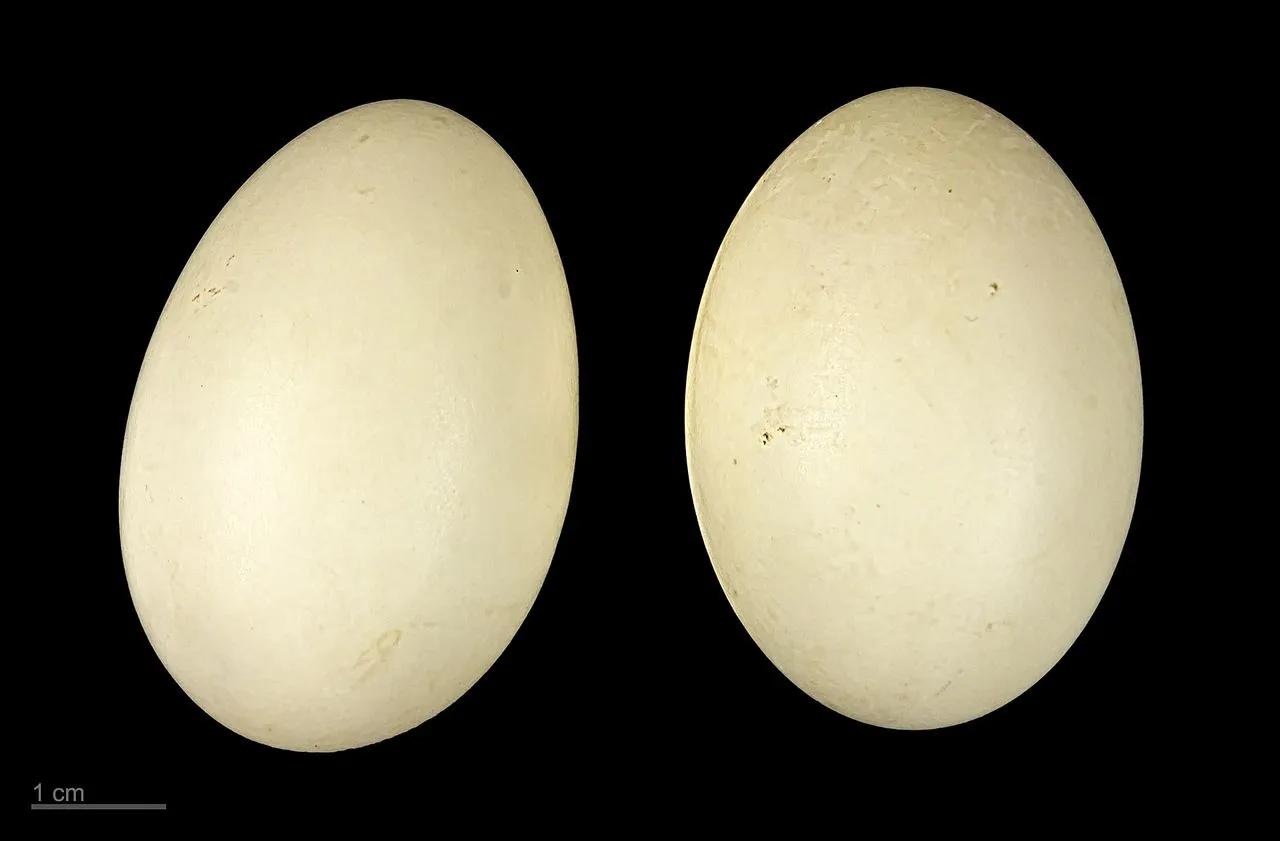
Spatula discors (Linnaeus, 1766), the Blue-winged Teal, is a small North American dabbler whose migration calendar is unusually early: many adults leave northern breeding areas in August, and large numbers reach Mexico, Central America, the Caribbean, and northern South America before other dabbling ducks have begun their main autumn passage.
Part of the Complete Waterfowl Guide.
Identification at a glance
| Character | Blue-winged Teal | Green-winged Teal |
|---|---|---|
| Length | 37–41 cm (15–16 in) | 31–39 cm (12–15 in) |
| Female bill | Relatively large; pale spot at base | Small, dark, neat |
| Wing | Powder-blue forewing; green speculum | Green speculum; no pale blue forewing |
| Migration | Early autumn departure | Later and more cold-tolerant |
| Habitat | Warm, shallow, vegetated marsh | Muddy edges and colder shallow wetlands |
Identification
Visual
The breeding male has a dark slate head with a bold white crescent in front of the eye, a spotted pinkish-brown body, black undertail, and a dark bill. The upperwing gives the species its name: powder-blue lesser and median coverts, then a green speculum behind. In flight, the blue forewing panel is usually more conspicuous than the green.
Females are warm brown and mottled, with a relatively large dark bill for a teal, a pale spot at the bill base, and a weak dark eye line. The blue upperwing is present in females and juveniles but may be hidden on a resting bird. Compared with Green-winged Teal, female Blue-winged is longer-billed, warmer toned, slightly larger, and less compact.
Eclipse males resemble females but often retain a darker head and more contrast around the face. Full male plumage is regained mainly on the wintering grounds and during northward movement.
Audio
The male gives a thin, high whistled or lisping tsee; display calls are not loud. Females produce nasal quacks, short and relatively soft. Many birds are detected visually before they are heard.
Distribution
Blue-winged Teal breeds across the prairie pothole region, parkland wetlands, and northern Great Plains, extending east through parts of the Great Lakes and northeast. It is among the most strongly long-distance migratory North American ducks. Wintering range extends from the southern United States through Mexico and Central America to Colombia, Venezuela, Peru, and Brazil. The Atlantic, Mississippi, Central, and Pacific flyways all carry birds, but the Central and Mississippi systems are especially important.
In western Europe it is a scarce transatlantic vagrant. Records cluster in autumn, consistent with displacement during migration.
The early migration schedule affects detectability. By the time many birders begin serious autumn wildfowl searches in October, most Blue-winged Teal from northern breeding areas have already passed. Late birds are often juveniles or individuals using warm managed wetlands. Spring passage is also quick, with pairs moving rapidly into breeding habitat when shallow water appears. Absence in late autumn should not be interpreted as local breeding failure.
Habitat
Breeding habitat is shallow freshwater marsh, prairie pothole, flooded grassland, seasonal pool, and sedge meadow with adjacent nesting cover. During migration it uses mud-edged ponds, managed impoundments, rice fields, lagoons, and quiet marsh pools. It often prefers warmer, shallower, more vegetated water than Green-winged Teal during passage.
Diet and Foraging
Blue-winged Teal is a surface-feeding dabbler in the genus Spatula, related to shovelers and cinnamon teal. The bill is relatively broad, with lamellae used to filter seeds, small aquatic invertebrates, crustaceans, and plant fragments. Feeding is usually by skimming the surface, dabbling in shallow water, or tipping lightly; it is not a deep upender.
Seeds of sedges, grasses, smartweeds, and pondweeds are important outside the breeding season. Invertebrates become important before laying and for ducklings, which require protein-dense prey in warm, shallow nursery wetlands.
Breeding Biology
Pairs form mostly during spring migration and shortly after arrival. Nests are built on the ground in grass or sedge, often in upland cover near wetlands rather than directly at the water edge. Clutches usually contain 9-13 eggs, relatively large for a small duck. Incubation lasts about 23-24 days and is by the female alone.
Males leave during incubation, moult, and begin southward movement early. Females with broods remain until young can fly at roughly 6-7 weeks. The early autumn departure of adults means a northern marsh can lose most Blue-winged Teal while Mallards and Pintails are still locally abundant.
Notes
The species is a useful reminder that not all teal are ecologically equivalent. Green-winged Teal often tolerates colder conditions and remains farther north later into autumn; Blue-winged Teal vacates early and winters deep into the Neotropics. Identification of females should not rely on size alone. The pale bill-base spot, larger bill, warmer body tone, and blue forewing in flight are the practical combination.
The blue wing panel is visible in both sexes and ages, but only when the wing is open or during preening. A sleeping female on the water may offer only bill shape and face pattern. In mixed teal flocks, wait for a wing stretch or a short flight. The pale blue forewing is broader and softer in tone than the green speculum and is the mark that survives poor distance better than fine head streaking.
Because the species migrates early, phenology is an identification aid. A small teal in a northern marsh in late August is statistically more likely to be Blue-winged than a teal found on the same marsh in late November after hard frost. Phenology cannot identify a bird by itself, but it should shape the observer's expectations and the level of scrutiny applied to female-plumaged teal.
In managed wetlands, the species responds quickly to shallow reflooding after late-summer drawdown. Seeds and invertebrates become available in water only a few centimetres deep, exactly the zone a small Spatula can exploit. Deep permanent ponds nearby may hold fewer birds despite looking more substantial.
See Also
- Green-winged Teal: the other common North American teal; compare migration timing, bill size, and habitat tolerance
- Northern Shoveler: close relative within Spatula sharing the blue forewing panel
- Mallard: larger, later-migrating dabbler often sharing the same managed wetlands
- Winter Feeding Strategies: useful context for shallow-water foraging and seasonal wetland use
- The Complete Waterfowl Guide: full family overview including the dabbler guild and migration ecology
Frequently Asked Questions
How do I identify a Blue-winged Teal?
The powder-blue forewing is visible in flight and during preening. Males have a dark head with a white crescent in front of the eye. Females have a larger bill than Green-winged Teal, a warmer brown tone, and a pale spot at the bill base.
When do Blue-winged Teals migrate?
They migrate early, with many adults leaving northern breeding areas in August. Large numbers reach Mexico, Central America, and northern South America before other dabbling ducks begin their main autumn passage. Spring passage is also quick.
Why are Blue-winged Teals considered long-distance migrants?
They winter farther south than most North American ducks, with wintering range extending from the southern US through Mexico to Colombia, Venezuela, Peru, and Brazil. This is unusual among dabbling ducks.
What habitat do Blue-winged Teals prefer?
They breed in shallow freshwater marsh, prairie potholes, and flooded grassland. During migration they use mud-edged ponds, managed impoundments, rice fields, and quiet marsh pools. They often prefer warmer, shallower, more vegetated water than Green-winged Teal.
Sources & References
- Ehrlich, P.R., Dobkin, D.S. & Wheye, D. (1988). The Birders Handbook. Simon & Schuster.
- Cornell Lab of Ornithology. (2024). All About Birds: Blue-winged Teal. birds.cornell.edu
- Sibley, D.A. (2014). The Sibley Guide to Birds (2nd ed.). Knopf.
- Carboneras, C. & Kirwan, G.M. (2024). Blue-winged Teal (Spatula discors). Birds of the World.