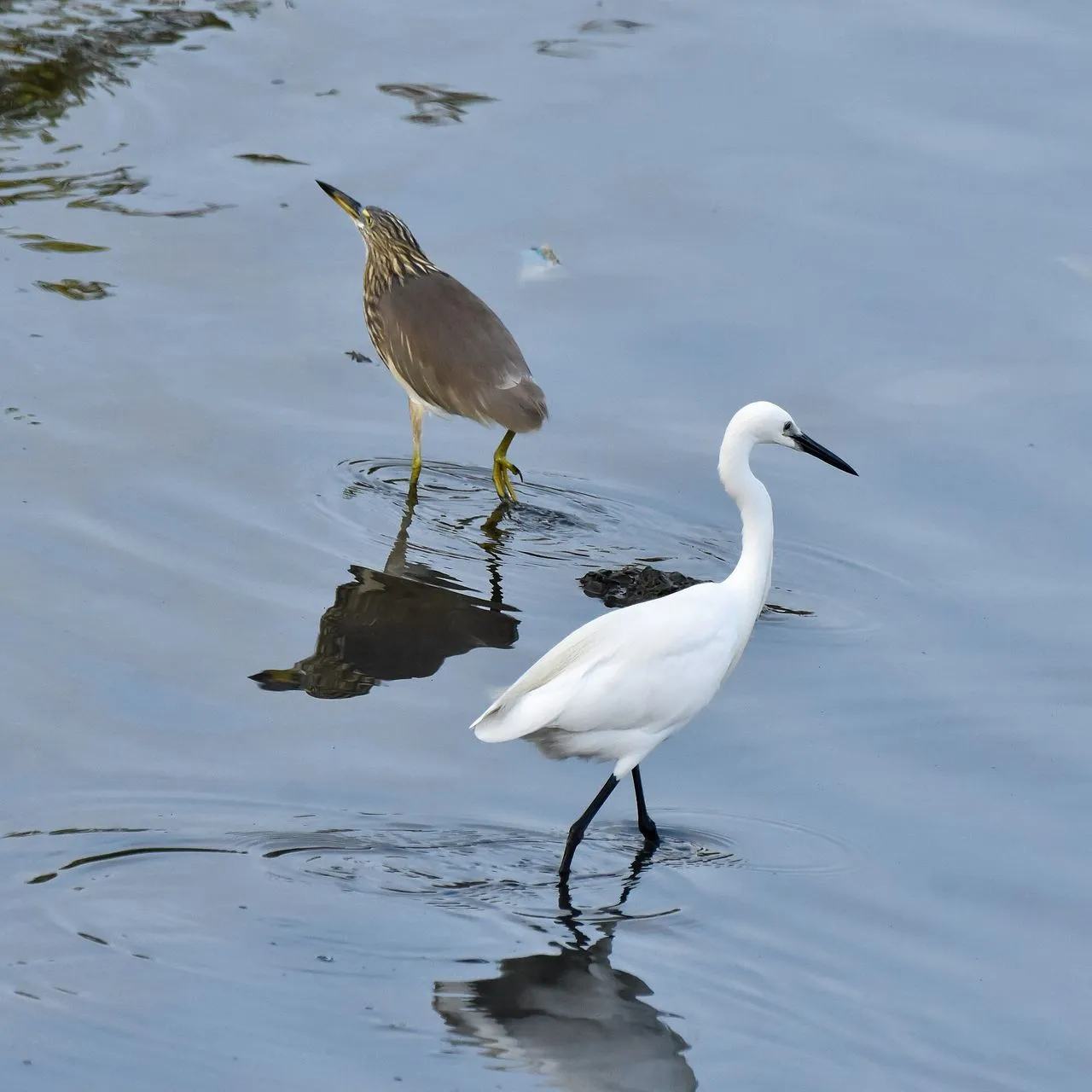
In North America, 'waders' means long-legged wetland birds (herons, egrets, bitterns, ibis). In Britain, it means shorebirds (sandpipers, plovers). These are unrelated. Ardeidae (herons) have S-shaped necks for striking at fish; ibis have curved bills for probing mud. Great Blue Heron and Great Egret are the most widespread backyard waders.
'Wader' means two different things on opposite sides of the Atlantic, and resolving the ambiguity before reading any of this guide's identification material is worth a few minutes of your time.
I'm Dr. James Whitfield, an Oxford-trained ornithologist formerly attached to the British Trust for Ornithology; most of what follows draws on 12,000-plus hours of field observation across Britain, North America, and the Mediterranean basin.
The Terminology Problem
In British English, a wader is a shorebird: a member of the order Charadriiformes, the group containing sandpipers, plovers, godwits, curlews, turnstones, and their relatives. These birds wade through intertidal mud and shoreline margins, and the name is descriptively tidy. North American birders call the same birds shorebirds, a term British birders use more broadly for any coastal species regardless of taxonomic order.
What North Americans typically mean by wader is instead a long-legged stalking bird that forages in or near water: herons, egrets, bitterns, ibises, and spoonbills. British birders would call these long-legged waders, distinguishing them from the true Charadriiform waders, or simply refer to them by family.
This guide uses wader in the North American sense: long-legged stalking and wading birds in the families Ardeidae and Threskiornithidae. Cranes (Gruidae) and storks (Ciconiidae) share the basic body plan and receive brief mention where their field identification overlaps with herons, but this is not a crane or stork guide. Charadriiform shorebirds, sandpipers, godwits, plovers, are not covered here.
Taxonomy
Ardeidae: Herons, Egrets, and Bitterns
Ardeidae contains approximately 70 species across 17 genera, breeding on every continent except Antarctica. Three broad groups make up the family:
Herons and egrets (subfamily Ardeinae): the large, long-necked, long-legged species most observers picture when they hear the word "heron." The term egret carries no taxonomic weight, it is applied by convention to white or largely white Ardeidae and to a few species with prominent breeding plumes. Ardea alba, the Great Egret, is more closely related to the grey Ardea herodias (Great Blue Heron) than it is to the Snowy Egret (Egretta thula), despite sharing white plumage with the latter.
Bitterns (subfamily Botaurinae): stockier, cryptically streaked, solitary, and specialised for dense reed beds and marsh vegetation. The American Bittern (Botaurus lentiginosus) freezes with its bill angled skyward when alarmed; the brown-streaked plumage mimics standing reeds closely enough that a bird at two metres can be invisible. Most birders hear bitterns long before they see one.
Night-herons (genera Nycticorax and Nyctanassa): shorter-necked, stockier, crepuscular to nocturnal, with proportionally large eyes adapted to low-light foraging. The Black-crowned Night-Heron (Nycticorax nycticorax) is the most widespread heron in the world; the flat quok call overhead on a dark evening is usually the first indication of its presence.
The largest North American species is the Great Blue Heron (Ardea herodias) at up to 137 cm; the smallest widespread species is the Green Heron (Butorides virescens) at around 44 cm. Body size scales directly with foraging depth and prey size, a partitioning covered in the habitat section below.
Threskiornithidae: Ibises and Spoonbills
Threskiornithidae contains approximately 33 species in two morphologically distinct subfamilies:
Ibises (Threskiornithinae): long, markedly downcurved bill used to probe soft substrate by tactile sensation rather than sight. The White Ibis (Eudocimus albus) is the most commonly encountered North American representative, forming dense mixed-age foraging flocks in coastal wetlands from the Carolinas to Texas.
Spoonbills (Plataleinae): the spatulate bill tip is swept laterally through the water column, detecting prey by touch. Only one species occurs in the Americas, the Roseate Spoonbill (Platalea ajaja), identifiable at any distance by its pink plumage.
Both subfamilies fly with the neck extended rather than folded, which is the most useful single character for separating them from Ardeidae at range.
Identification: The Neck Rule
The S-shaped neck retraction in flight is diagnostic for Ardeidae. All herons and egrets fold the neck back against the body during flight, producing a hunched, short-necked silhouette. Cranes (Gruidae), storks (Ciconiidae), and the ibises and spoonbills of Threskiornithidae all fly with the neck extended, producing a longer, more attenuated profile.
This character works across species and size classes. A distant Great Blue Heron and a distant Sandhill Crane (Antigone canadensis) can appear similar in size at range; neck posture separates them immediately. Heron wingbeats are also slow and slightly bowed at the bottom of the stroke, giving a somewhat laboured look compared to the stiffer wingbeat of cranes.
At rest, the structural features to note are: a long, dagger-shaped bill held in line with the head; long tarsi giving the characteristic stilted, elevated stance; and the S-curved neck visible in most species when relaxed, which flattens into a straighter line during the alert posture.
Hunting Strategies
The four principal foraging modes used by North American Ardeidae are not mutually exclusive; most species switch between them depending on prey density, water depth, and time of year.
Still-Hunt
The bird stands motionless at the water's edge or in shallow water and waits for prey to enter strike range. The strike mechanism relies on the S-curved neck functioning as a compressed spring: the modified cervical vertebrae of herons store mechanical energy in the kinked posture that releases as a rapid, high-velocity lunge. The speed of a fully committed heron strike is sufficient to take fish in water 25–30 cm deep with consistent accuracy. Great Blue Herons use still-hunting extensively during cold months, when the metabolic cost of continuous movement through cold water would reduce the net energy gain of active foraging.
Slow-Stalk
The bird advances through shallow water in slow, deliberate steps, placing each foot carefully to minimise turbulence. The head moves forward incrementally with each step, tracking the water surface. The Great Blue Heron alternates slow-stalk with still-hunting within the same foraging bout, switching strategy in response to prey behaviour and water conditions.
Foot-Stirring
The bird agitates the substrate with one foot while standing or advancing slowly, flushing invertebrates and small fish into the water column where they can be struck. The Snowy Egret (Egretta thula) is the North American species most associated with this strategy, employing it in a particularly energetic form: running through very shallow water with wings partly open, driving prey ahead of it and striking as it goes.
Canopy Spread
Wings are extended forward and downward to create a shaded patch of water over the bird's head. The functional benefit is dual: reduced surface glare improves visibility into the water column, and the shadow may attract small fish seeking cover. The Black Heron (Egretta ardesiaca) of sub-Saharan Africa is the extreme expression of this behaviour, forming a complete feather canopy with its head fully enclosed; several North American species, including the Great Blue Heron, show partial canopy spreading.
Colonial Breeding: The Heronry
Most Ardeidae breed colonially in structures called heronries (termed rookeries in North American usage, though that name belongs to corvids in British English). A single heronry may contain multiple species: Great Blue Herons, Great Egrets, Snowy Egrets, Little Blue Herons, and night-herons all nest together in some locations, with nest placement loosely stratified by species across canopy height.
Heronries site in tall trees, typically conifers or mature hardwoods, near reliable foraging water. The proximity to water is a direct function of travel time during chick provisioning: adults making repeated feeding trips cover less metabolic ground when nesting is closer to foraging habitat. The logistics of visiting an active heronry are worth stating plainly: they are loud (chick-begging calls carry 200 metres or more), and they smell strongly of guano and regurgitated fish. Neither should discourage a visit.
The evolutionary rationale for colonial nesting involves two probable mechanisms. Information transfer: birds leaving a colony at dawn can observe and follow successful foragers returning from the previous session, locating productive areas without independent search. Reduced per-capita predation risk: more pairs at a site means more eyes on aerial predators and shorter average time between vigilance scans of the airspace above the colony.
Body Size and Habitat Partitioning
Leg length in Ardeidae scales with body mass, and body mass determines the foraging depth accessible to each species. This produces a coarse partitioning of the wetland habitat by species, reducing direct competition between co-occurring herons and egrets. The following table covers the six species most commonly encountered in temperate North America; foot colour is the fastest single field ID character for separating the smaller white species in the field.
| Species | Length (cm) | Typical foraging habitat | Leg / foot colour |
|---|---|---|---|
| Great Blue Heron (Ardea herodias) | 97–137 | Deep marsh, open water to belly depth | Dark grey-black legs; grey-yellow feet |
| Great Egret (Ardea alba) | 89–104 | Moderate-depth water; also dry fields | Black legs; black feet |
| Tricolored Heron (Egretta tricolor) | 56–66 | Shallow coastal marshes and tidal flats | Dark legs; yellow feet |
| Snowy Egret (Egretta thula) | 56–66 | Very shallow water, mudflat margins | Black legs; yellow feet |
| Little Blue Heron (Egretta caerulea) | 56–61 | Shallow freshwater and brackish water | Grey-green legs and feet |
| Cattle Egret (Bubulcus ibis) | 46–56 | Dry grassland; follows large mammals | Yellow legs and feet (breeding) |
Common Confusions
Snowy Egret vs. juvenile Little Blue Heron. Juvenile Egretta caerulea are white to pale grey-white in their first year, overlapping with the all-white adult Snowy Egret. The separation is foot colour: Snowy Egret has bright yellow feet on black legs; juvenile Little Blue Heron has grey-green legs and grey-green feet. At closer range the bill character separates them, the Snowy's bill is uniformly thin and black; the juvenile Little Blue Heron's bill is heavier at the base and shows a pale bluish-grey basal half with a darker tip.
Great Egret vs. Great White Heron. The Great White Heron (Ardea herodias occidentalis) is a large all-white morph of the Great Blue Heron, resident in Florida and the Florida Keys. It is larger than the Great Egret, with yellow (not black) legs and a proportionally heavier bill. The separation matters where the two co-occur, particularly for survey records.
Heron vs. crane in flight. The neck rule resolves this: heron = neck folded; crane = neck extended. Wing shape also differs, herons carry broad, slightly bowed wings; cranes show flatter, stiffer wings and often trail the feet visibly beyond the tail.
White egret vs. White Ibis. The White Ibis (Eudocimus albus) is white-bodied but has a long, downcurved red bill and red legs. Any white, long-legged bird with a decurved bill is a Threskiornithid, not an Ardeid.
Notable Species
Full profiles on this site:
- Great Blue Heron (Ardea herodias), the largest North American heron; slow-stalk and still-hunt specialist; colonial nester capable of taking prey that appears anatomically improbable.
- Snowy Egret (Egretta thula), golden-footed, energetic foot-stirrer; the species whose aigrette plumes drove the founding of the Audubon Society.
Other species worth knowing:
- Ardea alba, Great Egret, yellow bill, black legs; the second-tallest white wading bird in North America.
- Egretta caerulea, Little Blue Heron, adults slate blue with a maroon-purple head and neck; first-year birds entirely white.
- Butorides virescens, Green Heron, small, compact, and secretive; occasionally places objects on the water surface to attract fish.
- Eudocimus albus, White Ibis, long decurved red bill; forms dense foraging flocks; a regular component of mixed egret assemblages.
- Platalea ajaja, Roseate Spoonbill, pink plumage and spatulate bill render it unmistakable at any age.
- Nycticorax nycticorax, Black-crowned Night-Heron, stocky, short-necked; most active from dusk onward.
Where to See
Heronries are the highest-density single-visit option, most productive from February through June when chicks are visible in nests and adult traffic to the colony is constant. Local chapters of the Audubon Society generally maintain records of active colonies.
For foraging behaviour, shallow-margin habitat outperforms open water. Coastal mudflats exposed at low tide, the edges of retention ponds and sewage lagoons, flooded agricultural fields, and slow-moving stream shallows all concentrate foraging herons and egrets. Dawn and the hour before dusk are the most productive windows; mid-morning, when water temperature rises and fish move to deeper, cooler water, is the least so.
Freshwater sites that hold mixed bird communities, the same slow-moving ponds where dabbling ducks such as Mallard gather, are often productive for several Ardeidae species simultaneously, giving the best opportunity to observe habitat partitioning between species of different body sizes foraging in the same area.
In winter, northern breeding populations of egrets vacate the interior and concentrate on the Atlantic and Gulf coasts. A January visit to the Texas Gulf Coast, Florida, or coastal California will produce far higher Ardeidae diversity than any northern freshwater site in the same month.
- Snowy Egret vs Great Egret: the most common white-egret ID problem with a 12-row side-by-side.
- Wood Stork: the only native North American stork; tactile feeding reflex, bald-headed silhouette, and the threatened-to-stable recovery in Florida.
Frequently Asked Questions
Why do herons stand still for so long?
Herons are ambush predators, Great Blue Herons stand motionless for minutes, then strike with remarkable speed (0.03 seconds). This 'wait and watch' strategy is more energy-efficient than active pursuit. Their S-shaped neck acts like a compressed spring, allowing lightning-fast extension for the strike.
What's the difference between a heron and an egret?
Egret is simply a type of heron, specifically, white herons in the genus Egretta. 'Egret' refers to plumage (often decorative plumes during breeding) rather than a separate group. Snowy Egret, Great Egret, and Cattle Egret are all herons that happen to be white.
Do waders come to backyard bird feeders?
No, waders do not eat seed. They are carnivores: fish, frogs, insects, crustaceans, and small mammals. Attract them with a pond, especially with a shallow, vegetated edge. Herons will hunt in garden ponds. Provide safe perching spots near water and avoid clear-floating pond covers that create reflection.
What is a bittern?
Bitterns (Botaurus, Ixobrychus) are stocky, secretive herons that hide in dense reeds. They have a distinctive booming call used in territorial displays. American Bittern is widespread in North America; Great Bittern is a European species. Their cryptic striped plumage provides excellent camouflage.