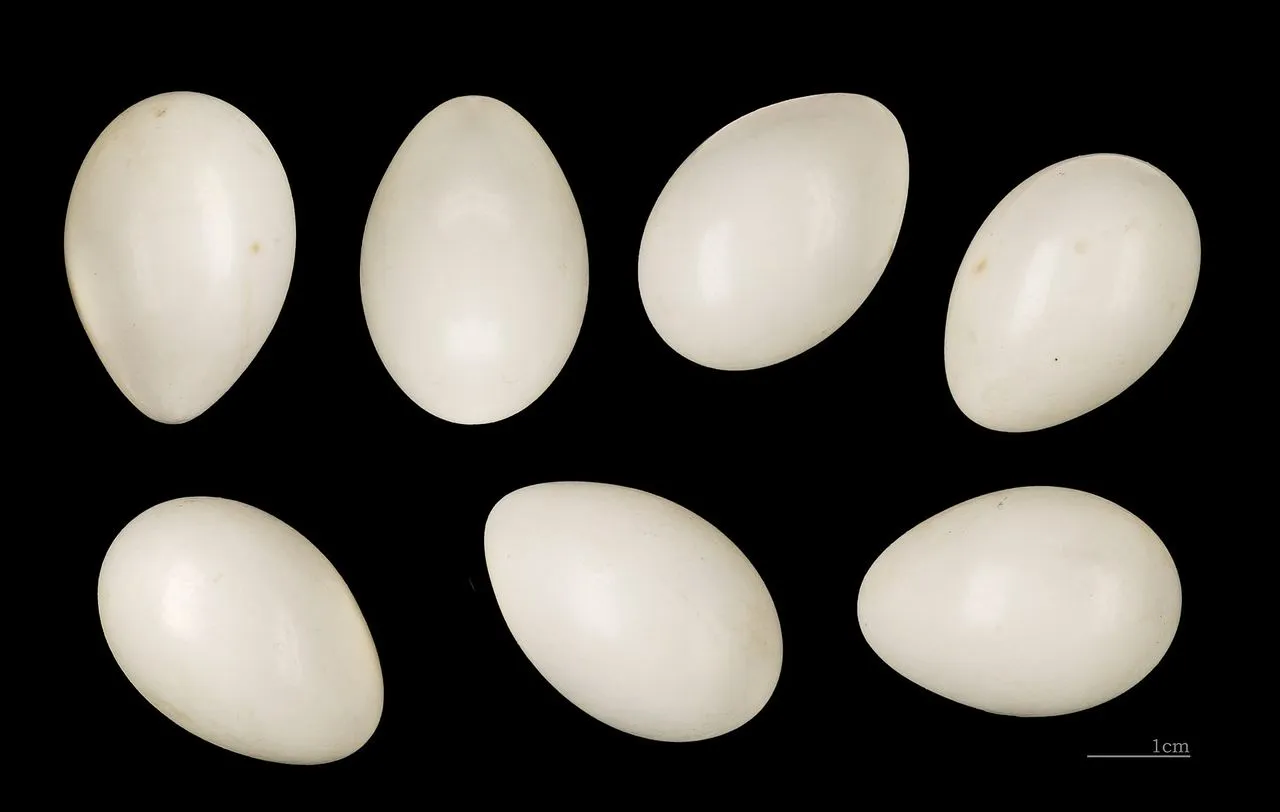
Picus viridis (Linnaeus, 1758), the European Green Woodpecker, is the ant-feeding lawn and pasture picid of western Europe. It drums rarely and weakly compared with Great Spotted Woodpecker; the field sound is instead the laughing territorial call, the yaffle, a descending series that carries across parkland and grazed fields in early spring.
Part of the Complete Woodpeckers Guide.
Identification at a glance
| Character | European Green Woodpecker (P. viridis) | Field use |
|---|---|---|
| Body length | 30–36 cm (12–14 in) | Large, crow-sized impression |
| Body mass | 150–220 g (5.3–7.8 oz) | Much heavier than Great Spotted |
| Flight mark | Yellowish rump | Conspicuous when leaving lawns |
| Sex mark | Male red in moustachial stripe; female all-dark | Useful on perched adults |
| Main cue | Laughing yaffle, ant-rich turf | Voice often replaces drumming |
Identification
Visual
The European Green Woodpecker is large, 30–36 cm long and about 150–220 g, with green upperparts, yellowish rump, pale underparts, red crown, and dark face mask. The bill is long and strong. Adult males show red in the centre of the black moustachial stripe; females have an all-dark moustachial stripe. Juveniles are heavily spotted and barred below, with a messier head pattern but still show green upperparts and yellow rump.
In flight the yellow rump is conspicuous, and the bird moves in a deep undulating line between trees or from tree to ground. On lawns it often stands upright, probing ant nests with a long tongue. The size and colour separate it immediately from Great Spotted and Lesser Spotted Woodpeckers, both pied rather than green.
Drumming is infrequent and soft. A European Green Woodpecker that drums may produce a brief, light roll, but absence of drumming is normal. This species advertises primarily by voice.
Audio
The yaffle is a loud laughing sequence, often written klu-klu-klu-klu, usually falling slightly in pitch and tempo. It is one of the most recognisable spring sounds in British and western European open woodland. Contact calls are sharper and less elaborate, but the laugh is the sound most observers learn first.
Distribution
The species occurs across much of western and central Europe, including Britain, France, Iberia, the Low Countries, Germany, Italy, and parts of eastern Europe, with related green woodpeckers replacing or abutting it farther east and south. In Britain it is widespread in England and Wales but scarce or absent from much of Scotland and Ireland. It is mostly resident, with limited dispersal rather than long-distance migration.
Habitat
European Green Woodpeckers need a combination of ant-rich open ground and trees for nesting or roosting. Parkland, orchards, pasture with hedgerow trees, woodland edge, churchyards, golf courses, commons, and old gardens all suit them when pesticide use is not excessive. Dense woodland without open feeding ground is less useful. Short turf, sandy soils, and unmanaged margins can hold strong ant populations and therefore attract regular feeding.
Diet and Foraging
Ants dominate the diet, including adults, larvae, and pupae. The bird probes into nests and soil with a long sticky tongue, often leaving small holes in lawns or disturbed anthills. It also takes beetles, flies, caterpillars, earthworms, fruit, and occasionally tree sap, but these are secondary. In winter, access to ant nests under frost or snow can limit feeding opportunities, which helps explain the species' sensitivity to prolonged cold weather.
Foraging is mostly terrestrial. A green woodpecker feeding on a lawn is not displaced from woodland; the lawn is the food source. The bird may return to the same ant-rich patch daily.
Breeding Biology
Nest cavities are excavated in decayed wood in living trees or dead trunks, often in willow, poplar, beech, apple, or other broadleaved trees. Excavation takes roughly two to four weeks. Entrance diameter is about 6 cm, and cavity depth commonly 30–45 cm. Clutch size is usually four to six eggs. Incubation lasts about 19 days, shared by both sexes, and young fledge after roughly 23–27 days. One brood is typical.
The species may reuse a cavity or excavate a new one depending on condition. Old cavities are important for secondary nesters and roosting bats in suitable regions.
Notes
The European Green Woodpecker is the Eurasian analogue most likely to surprise observers trained on bark-drilling woodpeckers. It is green, ground-feeding, and vocally obvious while being percussively subdued. If a large green bird rises from a lawn with a yellow rump and laughing call, no elaborate separation is needed. The ecological question is whether the site contains ants, short grass, and cavity trees. If it does, the species has all it requires.
British garden records often come from the edge of suitable habitat rather than from enclosed urban plots. A bird may feed on a lawn for several minutes, then fly to old boundary trees or neighbouring pasture. Heavy lawn treatment can reduce ant colonies and make a superficially similar garden less useful. Conversely, churchyards, orchards, and old commons with uneven turf can be excellent because they combine short grass, bare patches, ant nests, and mature trees.
The species is sometimes blamed for holes in lawns. The holes are usually shallow feeding probes, not destructive excavation. Their presence often indicates an invertebrate-rich sward, which is a biological asset rather than a defect.
Juveniles deserve separate mention because they look untidy compared with adults. Heavy spotting across the underparts, barred upperparts, and a duller red crown can make them seem like a different species in late summer. The yellow rump, green body, large size, and ground-feeding behaviour remain decisive. Family groups may call repeatedly around old orchards and pasture edges before dispersing locally.
See Also
Frequently Asked Questions
How do I identify a European Green Woodpecker?
Look for a large green woodpecker with green upperparts, yellowish rump, pale underparts, red crown, and black face mask. Adult males have red in the centre of the black moustachial stripe; females have all-dark moustache. The yellow rump is conspicuous in flight.
What is the 'yaffle' call?
The yaffle is the European Green Woodpecker's territorial call - a loud laughing sequence often written as 'klu-klu-klu-klu', usually falling slightly in pitch. It is one of the most recognizable spring sounds in western European woodland. This species drums rarely and weakly.
Where do European Green Woodpeckers feed?
They feed almost exclusively on the ground, probing ant nests with their long sticky tongue. They prefer ant-rich open ground like lawns, pasture, parkland, and orchard floors. They need trees nearby for nesting/roosting but the feeding habitat is terrestrial.
Are European Green Woodpeckers declining?
They have declined in parts of western Europe due to habitat loss from modern orchard removal, pesticide use (reduces ants), loss of old trees, and grassland intensification. They need short turf with ant colonies and cavity trees - both must be present.
Sources & References
- Ehrlich, P.R., Dobkin, D.S. & Wheye, D. (1988). The Birders Handbook. Simon & Schuster.
- Cornell Lab of Ornithology. (2024). All About Birds: European Green Woodpecker. birds.cornell.edu
- Sibley, D.A. (2014). The Sibley Guide to Birds (2nd ed.). Knopf.
- Winkler, H., Christie, D.A. & Nurney, D. (1995). Woodpeckers: A Guide to the Woodpeckers of the World. Houghton Mifflin.