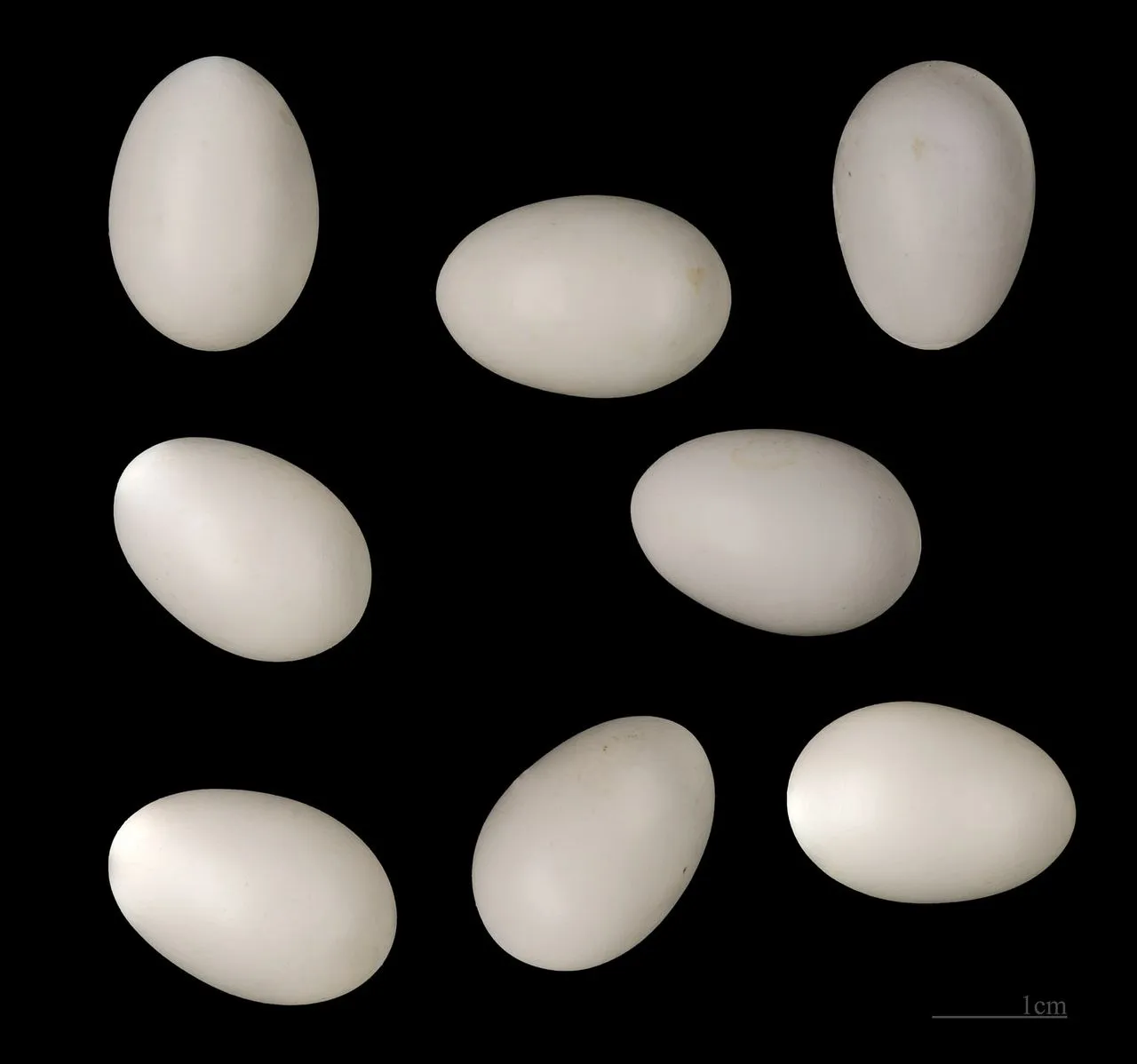
Jynx torquilla (Linnaeus, 1758), the Eurasian Wryneck, is a woodpecker by family but not by ordinary field expectation. It does not excavate like a Great Spotted Woodpecker, does not drum territorially in the usual picid manner, and is often detected only as a cryptic brown bird flushed from ant-rich ground; the eponymous neck-twisting display is a defensive movement, not a myth attached to the name.
Part of the Complete Woodpeckers Guide.
Identification at a glance
| Character | Eurasian Wryneck (J. torquilla) | Field use |
|---|---|---|
| Body length | 16–18 cm (6.3–7.1 in) | Small, slim, long-tailed picid |
| Body mass | 30–45 g (1.1–1.6 oz) | Light compared with pied woodpeckers |
| Plumage | Grey-brown mottling, dark eye and dorsal lines | Bark-like, not pied or green |
| Drumming | Effectively absent | Calls and ground movement matter more |
| Feeding substrate | Ant-rich ground, short turf, rotten wood | Often flushed from ground cover |
Identification
Visual
The Eurasian Wryneck is 16–18 cm long and about 30–45 g, slim, long-tailed, and intricately mottled in grey, brown, buff, and black. The plumage resembles bark, leaf litter, and dry grass more than the pied or green patterns of typical European woodpeckers. A dark line runs through the eye and down the neck, and the back shows a central dark stripe with fine vermiculation. There is no red crown, no bold white wing patch, and no stiff-looking trunk posture.
The feet are zygodactyl, and the tongue is long and sticky for ants, but the tail is softer than in true trunk-climbing woodpeckers. Wrynecks perch lengthwise along branches and feed on the ground more like a passerine at times. When threatened at a nest cavity, they may twist the head and neck slowly, hiss, and contort the body in a snake-like display. This behaviour gives the genus and English name their force.
Drumming is effectively absent as a normal field cue. Expect calls and movement, not percussion.
Audio
The territorial call is a repeated nasal kwee-kwee-kwee series, carrying from orchards, open woodland, or scrub. It can sound oddly insistent and more passerine than woodpecker-like. On migration, birds are often silent and found only by flushing from short vegetation, coastal scrub, or field edges.
Distribution
The Eurasian Wryneck breeds across much of Europe and temperate Asia, though it has declined or disappeared as a breeder in parts of western Europe, including Britain. It is migratory, wintering mainly in Africa south of the Sahara and in parts of southern Asia depending on breeding origin. In Britain it is now chiefly a passage migrant, especially in autumn on coasts and islands, with only exceptional breeding attempts.
Habitat
Breeding habitat consists of open woodland, traditional orchards, wood pasture, scrub with old trees, forest edge, and farmland with ant-rich ground and available cavities. It needs short or broken vegetation for feeding and holes for nesting, but it does not excavate its own substantial cavity. Modern orchard removal, pesticide use, loss of old trees, and intensification of grassland have all reduced habitat quality in western Europe.
On migration, wrynecks appear in coastal scrub, gardens, allotments, dunes, hedgerows, and rough fields. A bird may remain hidden for hours, then fly a short distance with a low, slightly undulating movement before vanishing again into cover.
Diet and Foraging
Ants dominate the diet: adults, larvae, and pupae taken from nests and soil with the extensible tongue. The bird also takes small beetles, aphids, caterpillars, spiders, and other invertebrates, but its feeding ecology is strongly myrmecophagous. It probes bare ground, short turf, rotten wood, and anthills, often walking or hopping rather than climbing trunks.
This diet links the species to low-intensity land use. Ant-rich turf, orchard floors, grazed edges, and open sandy soils matter more than dense closed woodland. A landscape can have trees and still be poor wryneck habitat if the ground layer is shaded, fertilised, or heavily treated.
Breeding Biology
Eurasian Wrynecks nest in existing cavities: old woodpecker holes, natural holes, nest boxes, wall holes, or tree cavities. They may remove material or evict small cavity users, but they do not excavate like Dendrocopos. Clutch size is usually seven to ten eggs, relatively large for a picid. Incubation lasts about 11–14 days, and young fledge after roughly 20–22 days. One brood is common, with second broods possible in favourable conditions.
The nest contains little lining. Both adults feed the young, carrying ants and larvae to the cavity. Breeding success depends on ant availability within short foraging distance of the nest.
Notes
The Wryneck is the reminder that Picidae is broader than hammering black-and-white birds on trunks. It has the family tongue and feet but not the usual percussion, tail support, or excavation behaviour. Its cryptic plumage and neck-twisting display are not decorative oddities; they are part of a ground-feeding, cavity-using, ant-specialist life history that sits near the base of the woodpecker family.
On autumn passage, especially along the British east and south coasts, a Wryneck may remain in a tiny area of cover for several days if ants and shelter are available. Views are often brief: a barred brown bird flicking from a path edge into bramble, then freezing lengthwise on a branch. The cryptic pattern is so effective that an observer can know the exact bush and still fail to relocate the bird. Good field notes should describe structure and behaviour as much as colour: soft tail, mottled bark-like upperparts, dark dorsal line, short low flight, and ground feeding.
Because it uses existing cavities, nest-box provision can help only where feeding habitat remains suitable. Boxes without ants nearby are empty architecture.
See Also
Frequently Asked Questions
How do I identify a Eurasian Wryneck?
Look for a small, slim, long-tailed woodpecker with intricate grey-brown mottled plumage and a dark line through the eye. No red crown, no bold white patches. Often found on ground rather than trees. When threatened at nest, performs distinctive slow neck-twisting display.
Why is the Eurasian Wryneck unusual for a woodpecker?
It does not excavate like typical woodpeckers, rarely drums, has softer tail feathers, and spends much time feeding on the ground like a passerine. It uses existing cavities rather than excavating its own. The cryptic plumage is also unlike typical pied woodpeckers.
Do Eurasian Wrynecks migrate?
Yes, they are migratory. They breed across Europe and temperate Asia, then winter mainly in Africa south of the Sahara and southern Asia. In Britain they are now chiefly passage migrants, especially in autumn.
What do Eurasian Wrynecks eat?
Ants dominate the diet - adults, larvae, and pupae taken from nests and soil with their long sticky tongue. They also take small beetles, aphids, caterpillars, and spiders, but are strongly myrmecophagous (ant-specialist).
Sources & References
- Ehrlich, P.R., Dobkin, D.S. & Wheye, D. (1988). The Birders Handbook. Simon & Schuster.
- Cornell Lab of Ornithology. (2024). All About Birds: Eurasian Wryneck. birds.cornell.edu
- Sibley, D.A. (2014). The Sibley Guide to Birds (2nd ed.). Knopf.
- Winkler, H., Christie, D.A. & Nurney, D. (1995). Woodpeckers: A Guide to the Woodpeckers of the World. Houghton Mifflin.