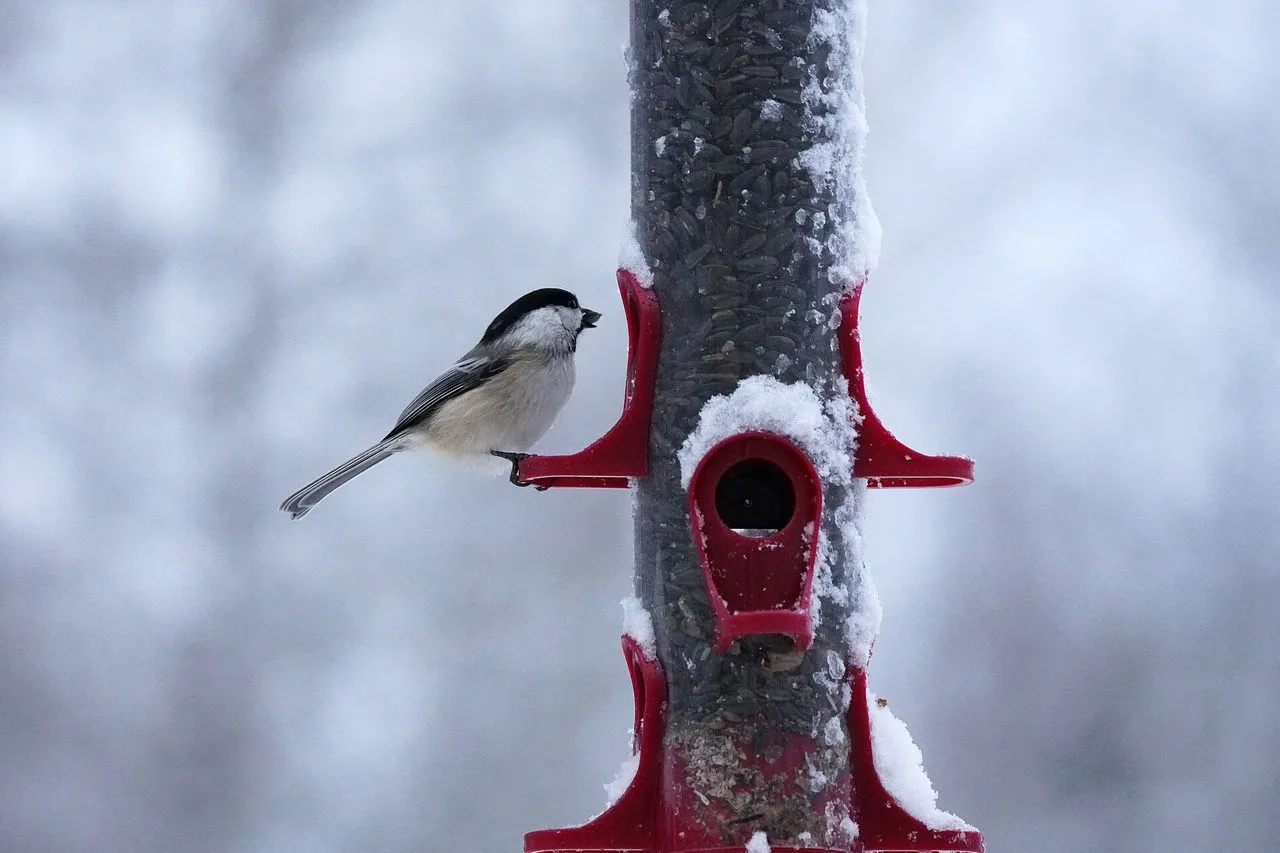
A chickadee can lose 8–10% body mass in one cold night, winter is about calorie density, not variety. Prioritize black-oil sunflower and suet (40%+ fat). A heated birdbath is essential. Refill before forecast snow. Place feeders near cover but within escape range. Avoid bread and seed mixes.
A 20 g chickadee can lose 8 to 10 percent of its body mass during a single cold night. Winter feeding is not about variety for human amusement. It is about rapid access to fat-rich calories, liquid water, and cover within a short flight.
Most winter advice overvalues seed mixes and undervalues open water. Birds can find dormant seeds in many landscapes. They cannot drink ice, and they cannot safely spend ten minutes exposed at a feeder during a wind chill event.
Part of the Complete Attracting Guide.
Specifications / What Actually Works
| Winter need | Practical provision | Useful for | Watch point |
|---|---|---|---|
| High fat seed | Black-oil sunflower or hulled sunflower | Finches, chickadees, cardinals | Hulled seed moulds when wet |
| Animal fat | Suet in a steel cage | Woodpeckers, nuthatches, tits | Replace if sour or greasy |
| Open water | Heated bath just above 0 °C (32 °F) | Nearly all passerines | No salt, sugar, or antifreeze |
| Ground access | Small cleared tray or patch | Juncos, doves, sparrows | Remove leftovers by dusk |
| Wind cover | Evergreens or brush 2–3 m (6–10 ft) away | Small birds leaving feeders | Avoid cat cover under the station |
Prioritise calorie density. Black-oil sunflower is the core winter seed because it has a high oil content, a thin shell, and broad acceptance. Hulled sunflower is even more efficient and reduces waste, though it spoils faster when wet. Peanuts are excellent for jays, woodpeckers, nuthatches, and tits if they are unsalted and fresh. Suet is the best cold-weather fat source for woodpeckers and small insectivores; see Suet feeders and rendered fat. If you want the woodpecker side of that equation, Attracting Woodpeckers covers the habitat piece.
Avoid cheap mixes dominated by red millet, wheat, cracked corn, and milo. White millet has value for juncos and native sparrows when scattered sparingly on dry ground or a tray, but filler-heavy mixes create waste and rodents.
Use two feeding levels. A tube or hopper 1.5 to 2 m high serves chickadees, tits, nuthatches, finches, and cardinals. A small cleared ground patch or tray serves juncos, doves, and sparrows. Keep the ground ration small enough to be consumed by dusk.
Feed early. Birds need calories shortly after dawn, after the overnight fast. Fill feeders in late afternoon for the following morning if storms are forecast. During heavy snow, clear ports and trays before sunrise if practical. A buried feeder is not a food source.
Open water is a winter multiplier. Use a thermostatic heated bath that holds water just above 0 °C, not a hot bath. Place it where the cable is safe, the footing is stable, and birds have cover 2 to 3 m away. Never add salt, glycerine, sugar, or antifreeze. For basin depth and placement, see Birdbaths and water features.
Cover should be close and dense. Evergreen shrubs, brush piles, reed bundles, and uncut perennial stems reduce wind exposure and provide escape routes. A feeder in the middle of a bare frozen lawn is efficient for hawks and cats. A feeder 2 to 3 m from dense cover is efficient for birds.
Keep snow from sealing natural food. Leave seed heads of coneflower, sunflower, goldenrod, teasel where appropriate, and native grasses standing through winter. Goldfinches and siskins use them directly. Many birds also search stems and bark for overwintering insects.
Common Mistakes
- Feeding bread. Bread is low in useful fat and protein and encourages crowding around poor food.
- Letting wet hulled seed sit in a tray. Hulled seed is efficient but moulds quickly because the protective shell is gone.
- Offering large amounts at dusk on the ground. Uneaten food becomes a rodent ration overnight.
- Clearing all vegetation for neatness. Winter birds need stems, brush, and evergreen structure more than bare tidiness.
- Assuming feeding must be continuous forever. Birds use multiple food sources. A planned stop is acceptable; an empty feeder during an ice storm after weeks of heavy use is the avoidable problem.
Maintenance & Hygiene
Winter slows pathogens; it does not abolish them. Clean tube and hopper feeders monthly in freezing weather and every two weeks during thaw cycles. Use hot water and detergent, then a 1:9 bleach-water soak if droppings or mould are present. Dry thoroughly before refilling so seed does not freeze into clumps.
Rotate ground-feeding spots. A single trampled patch accumulates hulls, faeces, and damp seed. Move the tray or scatter point by 1 to 2 m every week if space allows. When snow melts, rake and discard the old hull layer.
Inspect suet every few days. In cold weather it keeps well, but birds can foul the cage and squirrels can expose fragments. Replace any suet that smells sour, shows grey-green mould, or becomes greasy during a warm spell.
If finches appear lethargic, with swollen eyes or difficulty swallowing, stop feeding immediately for at least two weeks and disinfect all feeders. Winter concentration is useful only while the station remains cleaner than the alternatives birds would find without you.
See Also
- Suet Feeders and Rendered Fat
- Summer Feeding Strategies
- The Complete Attracting Guide
- How to Make Homemade Suet: step-by-step rendering protocol; basic recipe and no-melt variations for milder climates.
- Keeping Water Open in Winter: the single most useful winter intervention according to the attracting pillar; full setup and maintenance protocol.
- Spring Bird Migration Feeding: transitioning your feeders from winter survival mode to spring migration support.
Frequently Asked Questions
What is the best winter bird food?
Black-oil sunflower seed (highest calorie-to-weight ratio, thin shell) and suet (40%+ fat). These provide the fat reserves birds need for cold nights. Avoid cheap seed mixes with milo and millet, rejected by most species.
Why is a heated birdbath essential in winter?
Birds cannot drink ice. A thermostatically controlled heated birdbath (50–80W) is the single most useful winter intervention. In deep cold, every passerine within 200m visits the heated bath. It provides water when all other sources are frozen.
Should I feed more in winter?
Yes, but strategically. Refill before forecast snow, birds use extra energy to dig through snow. Keep feeders stocked through storms, birds burn reserves quickly. But focus on high-calorie foods, not variety. Sunflower and suet beat seed mixes.
What should I not feed in winter?
Bread is low-protein, high-salt, and can cause angel wing in waterfowl. 'Wild bird seed' mixes with high milo content are rejected. Avoid anything moist or sticky in freezing weather, it can freeze to bills and feet.