Falco peregrinus Tunstall, 1771, the Peregrine Falcon, is the fastest bird in measured hunting flight, with stoops reliably exceeding 200 km/h and exceptional recorded dives above 300 km/h under favourable conditions.
Part of the Complete Raptors Guide.
Identification
| Character | Peregrine Falcon (F. peregrinus) | Merlin (F. columbarius) | American Kestrel (F. sparverius) |
|---|---|---|---|
| Size/build | Large falcon, deep chest | Smaller, compact and blunt-headed | Smallest North American falcon |
| Face | Broad black hood and moustachial stripe | Weak single moustachial mark | Double black facial stripes |
| Wingbeat | Deep, stiff, authoritative | Rapid, stiff, lower-powered | Rapid; often interrupted by hover |
| Hunting | Stoop often above 200 km/h (124 mph) | Low direct pursuit | Hover-and-drop over fields |
Visual
Peregrine is a large, powerfully built falcon with long pointed wings, a deep chest, and a relatively short tail. Adults are blue-grey above, pale below with dark barring, and marked by a broad black hood and moustachial stripe. The face pattern is heavier than Merlin and much heavier than American Kestrel. Juveniles are browner above and vertically streaked below, but the bulky falcon shape and dark facial wedge remain useful.
In flight, Peregrine wingbeats are stiff, deep, and authoritative. The bird often travels in direct lines, then rises with strong rowing strokes before stooping. The silhouette differs from a buteo by the pointed wings and from an accipiter by the shorter tail and stronger forward mass. Perched birds sit upright on cliffs, towers, bridge girders, or building ledges, often overlooking open airspace used by pigeons, shorebirds, ducks, or gulls.
Subspecies vary in size and darkness. Arctic-breeding F. p. tundrius is generally paler and migratory. The North American anatum Peregrine, once functionally extirpated from much of the eastern United States, has been restored through captive breeding and reintroduction. Field identification rarely requires subspecies assignment unless the bird is in a migration study context.
Audio
Peregrines are usually silent away from nest ledges and territorial encounters. At the nest they give loud rasping kak-kak-kak calls and wailing food-begging notes. Urban pairs become conspicuous during the breeding season because calls echo from hard building surfaces, but a hunting adult over a river or estuary may pass silently.
Distribution
The Peregrine is nearly cosmopolitan, absent only from Antarctica and a few remote oceanic or forested interiors. In North America it breeds from Arctic tundra south to coastal cliffs, river gorges, desert escarpments, and cities. European populations occupy sea cliffs, inland quarries, uplands, cathedrals, and tower blocks. Arctic birds migrate long distances to wintering grounds in temperate and tropical regions; many urban and coastal adults in milder climates are resident.
Habitat
The original breeding habitat is cliff. What the species requires is not wilderness but a high, secure ledge adjacent to open hunting airspace. Sea cliffs provide seabirds and shorebirds; river gorges provide pigeons, swifts, and waterfowl; cities provide Rock Pigeons, starlings, gulls, and height. Tall buildings mimic cliffs closely enough that Peregrines now nest in major cities across North America and Europe.
Foraging habitat is open air with predictable bird traffic. Estuaries, reservoirs, coastal headlands, landfill gull concentrations, urban pigeon corridors, and migration bottlenecks are all productive. Dense forest is unsuitable because stooping requires vertical space and a visible target.
Diet and Hunting
Birds dominate the diet. Rock Pigeons are central in many urban territories. Coastal pairs take shorebirds such as Dunlin, Redshank, and sandpipers, as well as terns, auks, gulls, and ducks. Inland prey includes starlings, blackbirds, doves, swifts, and occasionally bats. The prey spectrum is broad because the hunting method targets flight rather than a narrow taxonomic group.
The famous stoop is a controlled dive from height. The falcon climbs above the intended prey, folds the wings partially, and descends at extreme speed, often striking with clenched feet rather than seizing immediately. The impact may kill or stun the prey, after which the falcon turns to collect it. Not all hunts are vertical stoops. Peregrines also pursue horizontally, contour along cliffs, and use surprise attacks from building edges. Pairs sometimes hunt cooperatively, with one bird flushing and the other intercepting.
The stoop is often over-described as brute speed. Its precision is more important. At high velocity, the falcon must account for prey movement, wind shear, and the closing angle while avoiding collision with ground, water, or structures. Missed stoops are common. Success depends on altitude advantage and surprise, not simply top speed.
Breeding Biology
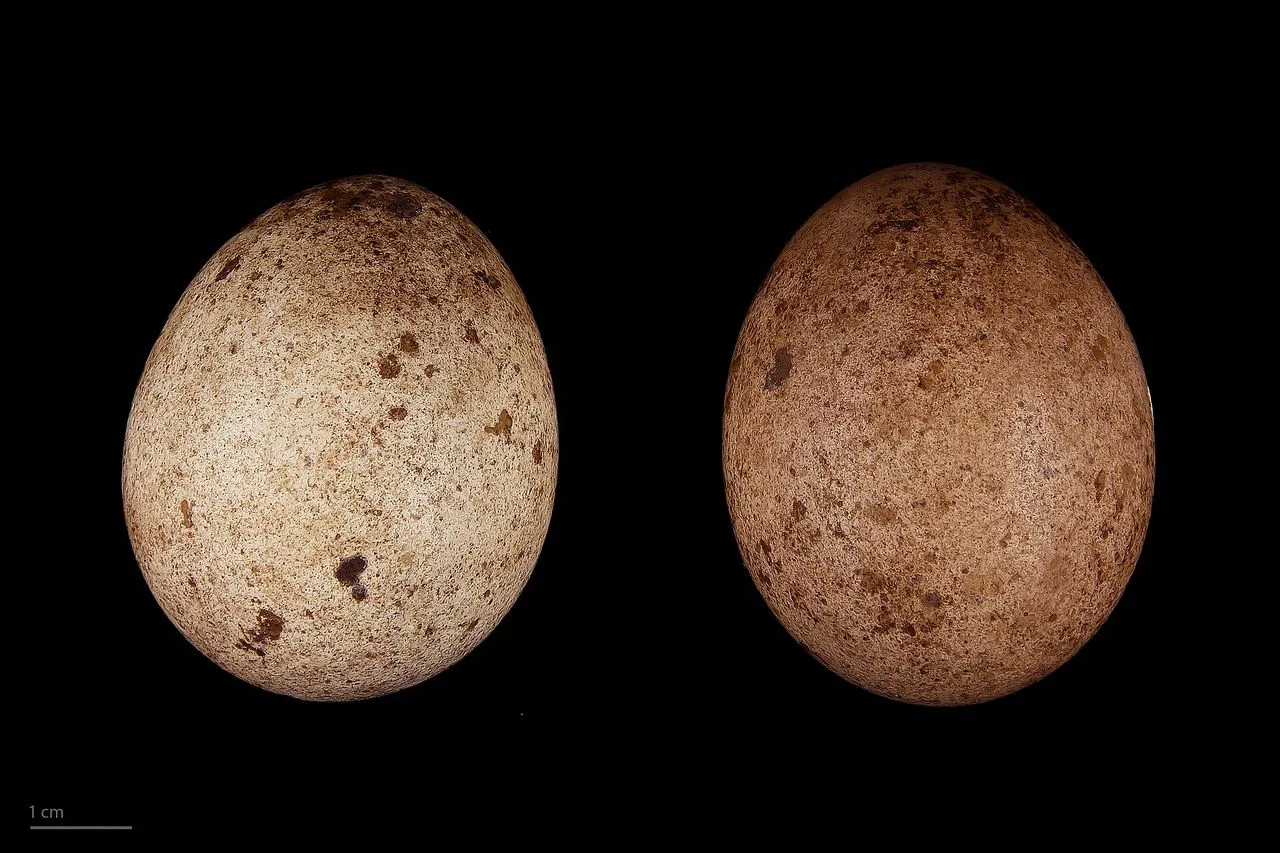
Peregrines do not build stick nests. Eggs are laid in a scrape on cliff ledges, building ledges, quarry shelves, bridge structures, or nest trays provided by conservation projects. Clutch size is usually three or four eggs. Incubation lasts about 29 to 32 days, shared by both sexes but mainly by the female. Young fledge at five to six weeks and require extended flight practice before they can hunt effectively.
Territory fidelity is strong where ledges and prey remain suitable. Urban nest cameras have made the breeding cycle unusually visible, but they can distort public expectations: failed eggs, sibling competition, and prey remains on ledges are normal components of falcon breeding biology.
Notes
The Peregrine's recovery is one of the clearest raptor conservation cases of the twentieth century. DDT and related organochlorines caused eggshell thinning, widespread reproductive failure, and severe population collapse by the 1950s and 1960s. Restrictions on DDT, captive breeding, hacking programs, and legal protection allowed recovery. The species was removed from the U.S. Endangered Species List in 1999, but that success should not be mistaken for immunity. Local threats remain: illegal persecution, collision, contaminants, and disturbance at nest cliffs.
Urban recovery has also changed the species' prey base. In many cities, Rock Pigeons function as the equivalent of cliff-nesting seabirds: abundant, predictable, and moving through open air corridors between roosting and feeding sites. A tower ledge above a pigeon flightline is not a compromise habitat for a Peregrine; it is a workable cliff with a permanent prey stream.
See Also
Frequently Asked Questions
How do I identify a Peregrine Falcon?
Look for a large falcon with long pointed wings, a deep chest, and a relatively short tail. Adults show a blue-grey back, pale underparts with dark barring, and a broad black hood and moustachial stripe heavier than in Merlin or American Kestrel. Wingbeats are stiff, deep, and authoritative. The silhouette differs from a buteo by pointed wings and from an accipiter by the shorter tail and stronger forward mass.
How fast does a Peregrine actually stoop?
Stoops reliably exceed 200 km/h and exceptional recorded dives surpass 300 km/h under favourable conditions. The precision of the stoop matters more than the raw speed: at high velocity the falcon must account for prey movement, wind shear, and closing angle while avoiding collision. Missed stoops are common. Success depends on altitude advantage and surprise. Not all hunts are vertical stoops, Peregrines also pursue horizontally and use surprise from building edges.
How do Peregrines nest in cities?
Urban Peregrines use tall buildings, cathedrals, bridge girders, quarries, and nest trays, exploiting ledges that mimic cliff topography. The key requirement is a high secure ledge adjacent to open airspace with predictable bird traffic. Rock Pigeons function as cliff-nesting seabirds, providing a permanent prey stream along flight corridors between roosting and feeding sites. Urban nest cameras have made the breeding cycle visible but can distort expectations, failed eggs and prey remains are normal.
What drove the Peregrine Falcon's near-extinction and recovery?
DDT and organochlorines caused eggshell thinning and widespread reproductive failure across much of the range. Restrictions on DDT in 1972, captive breeding, hacking programs, and legal protection allowed recovery. The species was removed from the U.S. Endangered Species List in 1999. Local threats remain: illegal persecution, window collision, contaminants, and disturbance at nest ledges.
Sources & References
- Cornell Lab of Ornithology. (2024). All About Birds: Peregrine Falcon. birds.cornell.edu
- Cade, T.J. & Bird, D.M. (1990). Peregrine Falcon: Its Conservation and Management. Journal of Raptor Research.
- Sibley, D.A. (2014). The Sibley Guide to Birds (2nd ed.). Knopf.
- Ferguson-Lees, J. & Christie, D.A. (2001). Raptors of the World. Helm Identification Guides.