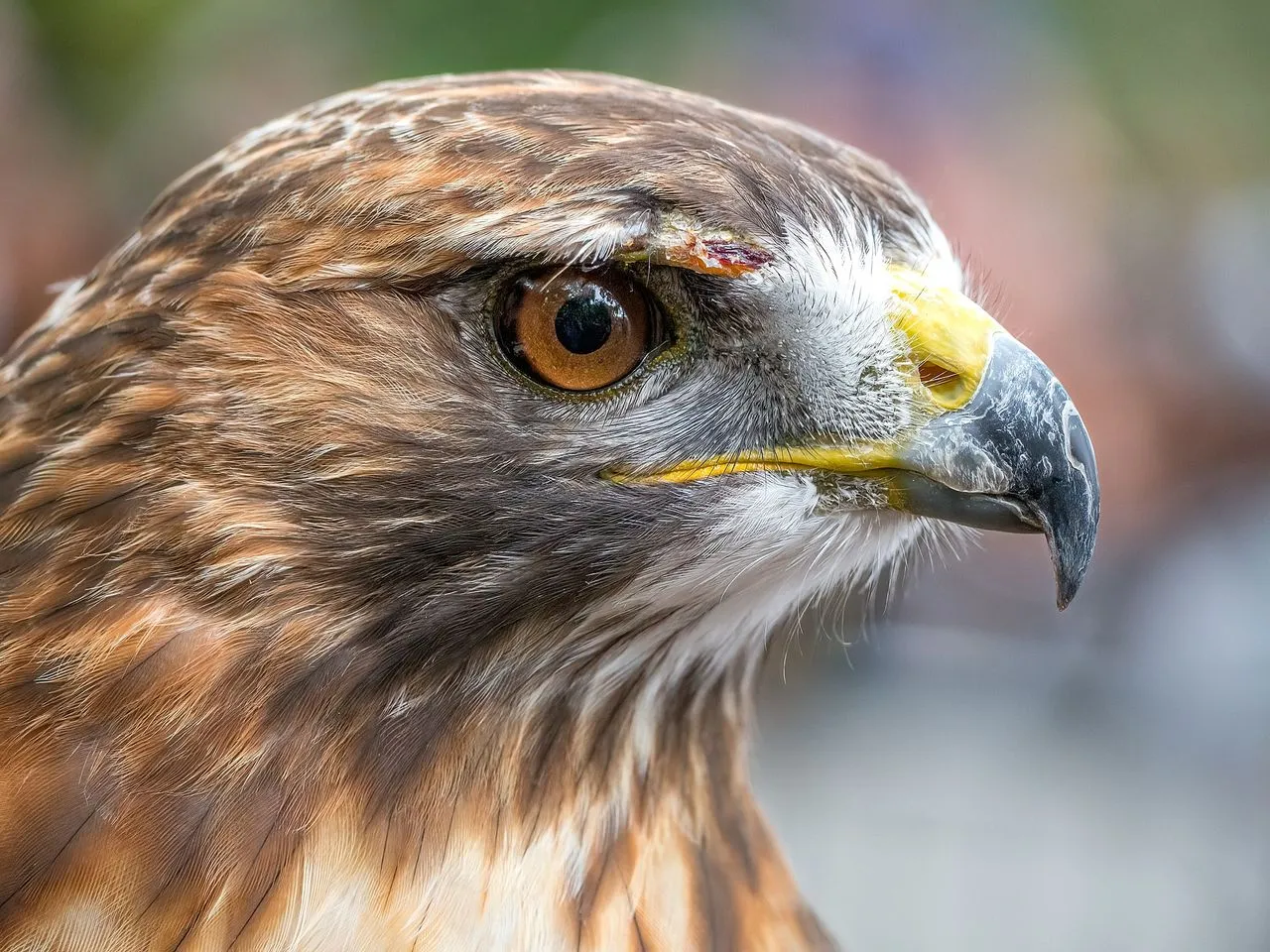
Buteo jamaicensis, the Red-tailed Hawk, is the hawk that most North Americans encounter first, most often, and across the widest range of habitats and seasons.
It is also, despite its familiarity, a bird that presents genuine identification challenges across its range, because no other North American buteo carries as much plumage variation within a single species. Part of the Complete Raptors Guide.
Identification
| Character | Red-tailed Hawk (B. jamaicensis) | Red-shouldered Hawk (B. lineatus) | Swainson's Hawk (B. swainsoni) |
|---|---|---|---|
| Structure | Heavy-chested buteo, broad wings | Forest buteo, longer tail | Slimmer, longer-winged grassland buteo |
| Tail | Brick-red in adults; banded brown in juveniles | Black-and-white banded | Variable; not brick-red |
| Underwing | Dark patagial marks usually present | Pale crescent panels near wingtips | Pale linings contrasting with dark flight feathers |
| Typical hunt | Perch-hunts roadsides and open fields | Woodland edge and wet forest | Open country; insects important off breeding grounds |
At family level, B. jamaicensis is a textbook buteo: broad, rounded wings with splayed primary fingers at the tips, a short fanned tail, and a heavy-chested profile. Wingspan runs to 130 cm in large females. The species is sexually dimorphic in size, with females averaging roughly 25% heavier than males, though the sexes are identical in plumage. Adults are identified by the brick-red upper tail surface that gives the species its common name. This colour is visible from above in soaring flight and can be seen from below when the bird banks against the sun.
Key field marks
The belly band. A horizontal band of dark streaking across the lower belly, produced by darker feather bases on the abdominal feathers, is present in most light-morph adults and nearly all juveniles. At typical raptor-watching distances of 100 to 400 metres, this is often the most visible single character, presenting as a dark belt across an otherwise pale underside.
The rufous tail. Adults seen from above show an unmistakable brick-red or rufous-orange tail. From below in direct light the colour glows through the feathers when the bird banks. On overcast days or at steep angles the tail may look brown rather than red; the upper surface is the reliable view.
Patagial mark. A dark comma-shaped patch on the leading edge of the inner wing, visible on the underwing from below. This mark is present in most morphs and persists across moult cycles. At range, when the belly band is not distinct, the patagial marks are often still readable.
Dark carpal patches. Dark spots at the wrist on the underwing, present in most plumages and visible at reasonable range in good light.
Juvenile plumage
First-year birds lack the red tail. The tail is brown with fine dark banding across multiple bars, superficially similar to several other buteo species including Broad-winged Hawk (Buteo platypterus) and Red-shouldered Hawk (Buteo lineatus). The belly band is usually present but variable in intensity. Juveniles are best identified by the combination of belly band, patagial marks, and the characteristic buteo silhouette. Full adult plumage develops over two to three years.
Plumage Variation and Morphs
The breadth of plumage variation in B. jamaicensis is the main reason otherwise experienced birders misidentify the species as something rarer. The relevant categories for field identification are:
Light morph. The standard expected bird across most of the range: pale underparts with belly band, brownish upperparts. This accounts for the large majority of individuals east of the Great Plains.
Dark morph. Entirely dark chocolate-brown below, with the rufous tail still present on adults. Dark-morph birds are encountered regularly in the western portion of the range, particularly the Great Plains and Rocky Mountain states, and are frequently called "unknown large hawk" by observers expecting the light-morph pattern.
Rufous (intermediate) morph. Heavy rufous-brown streaking below, intermediate between light and dark. Occurs mainly in the west and accounts for a modest proportion of western breeding birds.
Harlan's Hawk (B. j. harlani). The northwestern subspecies, breeding in Alaska and the Yukon, sometimes treated as a separate species. Adults show a mottled white-and-grey tail rather than rufous, and are predominantly dark below with variable white mottling. Harlan's presents real identification challenges in winter, when birds move south into the Great Plains and mix with western dark-morph birds.
Krider's Hawk. The pale extreme of the light morph, breeding on the northern Great Plains. Near-white below, with a washed-out tail that can appear whitish in flat light. Krider's birds are sometimes mistaken for Ferruginous Hawks (Buteo regalis) or, at extreme range, Ospreys.
The consistent thread across all morphs: the silhouette is always a buteo, the patagial mark is usually present, and adults nearly always show some rufous on the tail under reasonable viewing conditions.
Hunting Behaviour
Red-tailed Hawks are predominantly still-hunters. The bird selects an elevated perch with a clear sight-line over open ground, holds that position while scanning for movement below, then drops in a short stoop. The stoop is typically less than 50 metres, often considerably less, and ends with a feet-first strike.
The primary prey base across the range is small mammals: voles, mice, ground squirrels, rabbits. The species is not a specialist and takes birds, reptiles, and large invertebrates opportunistically. In urban areas, Rock Pigeons and European Starlings appear in the diet with some regularity.
The prevalence of Red-tailed Hawks on utility poles and fence posts along roadsides is not coincidental. Road margins through agricultural land create predictable linear corridors of short, managed vegetation where small mammal activity is concentrated and ground cover is thin enough to allow visual detection from above. The poles provide the height advantage that still-hunting requires. A Red-tailed Hawk on a motorway light standard is making a demonstrably rational use-of-habitat decision, not a reckless one.
The species also hunts from a soaring position, stooping from height onto prey spotted during thermal soaring over open fields. This is less commonly observed than perch hunting because the stoop covers more distance and is harder to follow, but GPS tracking studies have confirmed it is a regular component of the hunting repertoire.
Voice
The call of B. jamaicensis is the source of one of the most persistent inaccuracies in film and television production. The screaming cry used to represent eagles in North American cinema and television, including the Bald Eagle (Haliaeetus leucocephalus), is in almost every case an audio recording of a Red-tailed Hawk. The Bald Eagle's actual call is a thin, reedy chatter that lacks cinematic weight. The Red-tailed Hawk produces a loud, descending, raspy keeee-errr that carries well across open country and has become the default "raptor sound" in North American media. Knowing what the actual call sounds like is useful: a Red-tailed Hawk advertising territory or objecting to an intruder at a nest site is audible at distances where the bird itself is difficult to see.
Where to Find
Red-tailed Hawks are year-round residents across most of the continental USA and southern Canada. The most reliable conditions for watching the species in detail:
- Roadsides through agricultural landscape. Drive slowly along rural roads and scan utility poles, fence posts, and dead snags. A still figure on a pole that does not flush as the vehicle passes is often a Red-tailed Hawk, comfortable enough with vehicle traffic to allow close observation.
- Open ridgelines in autumn. During October and November, northern-breeding birds move south along ridges. Hawk Mountain Sanctuary in Pennsylvania is the best-documented watchpoint, but almost any ridge with a southward orientation produces Red-tails in numbers during migration.
- Urban parks. Pairs nest in most large urban parks with mature trees adjacent to open grass. Central Park in New York has supported nesting Red-tailed Hawks since the 1990s, an early example of a pattern now routine across North American cities.
This is a common bird. It rewards careful watching precisely because it is common enough to observe at length, in varied conditions, without requiring any effort beyond looking at what is already there.
See Also
- Cooper's Hawk
- Golden Eagle
- Barn Owl
- Red Kite
- The Complete Raptors Guide
- Why Are Vultures Circling Over My House?: if the bird is rocking in a V-shape with two-tone underwings, it is a vulture not a hawk.
- Red-tailed vs Red-shouldered Hawk: size, tail pattern, and the diagnostic Red-shouldered primary windows side by side.
Frequently Asked Questions
How do I identify a Red-tailed Hawk at distance?
The belly band, a horizontal dark stripe across the lower belly from darker feather bases, is usually the most visible single character at 100 to 400 metres. The patagial mark, a dark comma on the leading edge of the inner underwing, is present in most morphs and persists across moult. Adults show a brick-red tail visible from above when soaring and banking against the sun. The buteo silhouette with broad wings and heavy chest is always consistent.
What causes the wide plumage variation in Red-tailed Hawks?
Multiple morphs occur within a single species. Light morph: pale underparts with belly band, standard across most of the east. Dark morph: entirely dark brown below, common in western ranges. Rufous morph: heavy rufous-brown streaking, mainly western. Harlan's Hawk: mottled white-and-grey tail rather than rufous, northwestern subspecies. Krider's Hawk: near-white below with washed-out tail, pale extreme on the northern Great Plains. All morphs share the buteo silhouette and patagial mark.
Why is the Red-tailed Hawk call used for eagles in films?
The screaming cry used for eagles in North American cinema is almost always a recording of a Red-tailed Hawk. The actual Bald Eagle call is a thin reedy chatter that lacks cinematic weight. The Red-tailed Hawk produces a loud descending raspy keeeee-errr that carries well across open country and has become the default raptor sound in North American media. Knowing the actual call is useful for identifying territorial advertising at nest sites.
What do Red-tailed Hawks eat?
Small mammals dominate the diet across most of the range: voles, mice, ground squirrels, and rabbits. The species is not a specialist and takes birds, reptiles, and large invertebrates opportunistically. In urban areas Rock Pigeons and European Starlings appear regularly. Road margins through agricultural land concentrate small mammal activity under thin ground cover, which is why Red-tailed Hawks perch on utility poles and fence posts along roadsides.
Sources & References
- Cornell Lab of Ornithology. (2024). All About Birds: Red-tailed Hawk. birds.cornell.edu
- Preston, C.R. (2000). Red-tailed Hawk. Stackpole Books.
- Sibley, D.A. (2014). The Sibley Guide to Birds (2nd ed.). Knopf.
- Ferguson-Lees, J. & Christie, D.A. (2001). Raptors of the World. Helm Identification Guides.