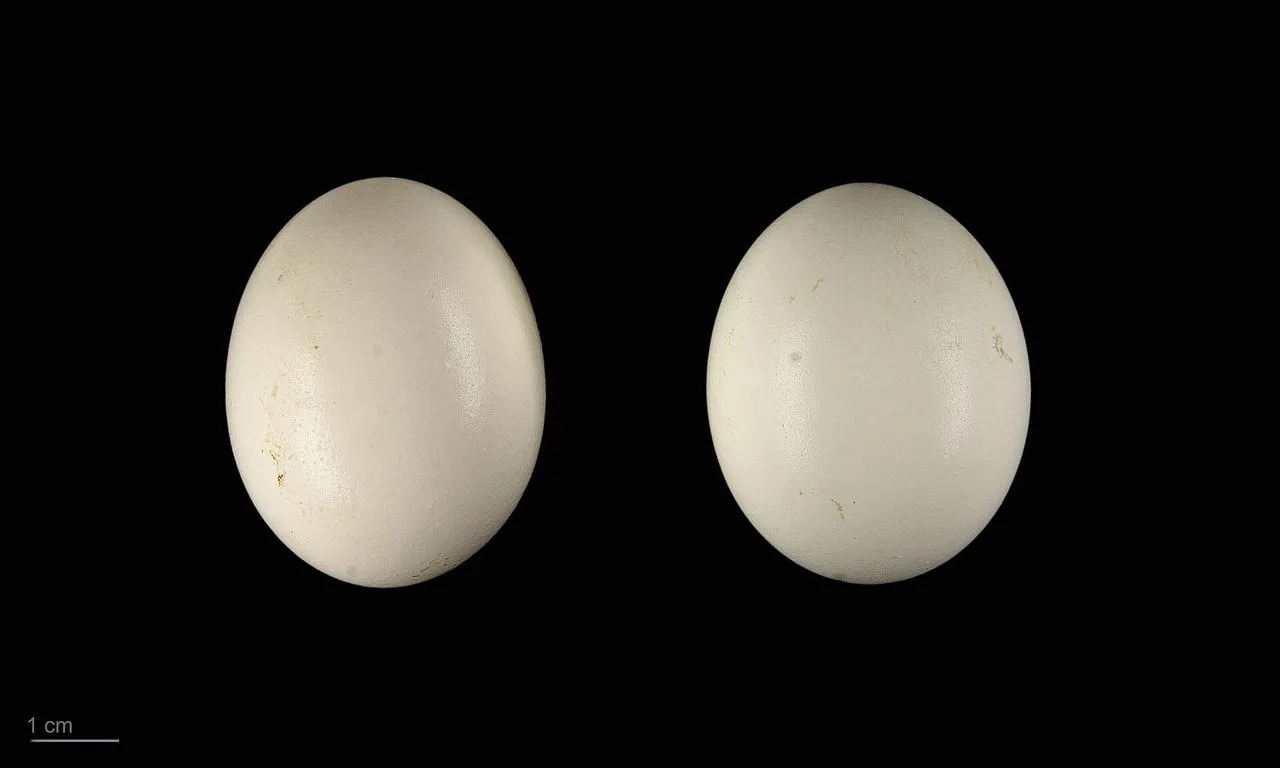
Surnia ulula (Linnaeus, 1758), the Northern Hawk Owl, is a 215-380 g boreal owl whose long tail, fast direct flight, and daylight hunting make it structurally closer to an accipiter than to a typical nocturnal owl.
Part of the Complete Owls Guide.
Identification
| Character | Northern Hawk Owl (Surnia ulula) | Boreal Owl (Aegolius funereus) |
|---|---|---|
| Length | 36-45 cm (14-18 in) | 22-27 cm (9-11 in) |
| Wingspan | 69-82 cm (27-32 in) | 50-62 cm (20-24 in) |
| Mass | 215-380 g (7.6-13.4 oz) | 93-215 g (3.3-7.6 oz) |
| Tail | Long, barred, hawk-like | Shorter, compact owl shape |
| Active period | Diurnal | Nocturnal |
| Usual perch | Exposed treetop, snag, roadside pole | Dense spruce or conifer cover |
Visual
Northern Hawk Owl is medium-small, long-tailed, and slim, 36-45 cm long with a wingspan of 69-82 cm. The head is rounded without ear tufts, the facial disc is pale with dark borders, and the eyes are yellow. Upperparts are dark brown with white spotting; underparts are white with dense horizontal barring. The tail is long and barred, often the first structural clue.
The bird commonly perches at the top of a spruce, dead snag, telegraph pole, or roadside tree in full daylight. From there it launches into fast, direct flight, sometimes hovering briefly before dropping to prey. No other boreal owl combines this exposed diurnal posture, long tail, and barred underparts in the same way.
Audio
The breeding song is a rapid, rolling series of whistles or trills, quite unlike the low hoots of large owls. Alarm calls include sharp screams and chatter. Outside the breeding season it is often silent, and winter birds are found visually from roadsides and openings rather than by call.
Calling is most relevant in boreal breeding habitat from March through May. In winter irruption areas, the bird's silhouette on an exposed treetop is a better locator than sound.
Distribution
The species is circumpolar across boreal North America and Eurasia, breeding in Alaska, Canada, Scandinavia, Russia, and northern forest zones. It is resident to nomadic, with southward winter movements in years when vole populations crash or snow conditions reduce access to prey.
In North America, winter records south of the breeding range occur irregularly across the northern United States. In Europe, movements bring birds into southern Scandinavia, the Baltic region, and occasionally farther south. These events are not predictable by calendar alone; they follow prey and snow conditions across the boreal zone.
Habitat
Northern Hawk Owl uses open boreal forest, burns, muskeg edges, bogs with scattered spruce, clearcuts with snags, river edges, and forest-tundra transition zones. It avoids dense closed stands where its visual hunting method is constrained. Fire-created landscapes with standing dead trees can be highly suitable because they provide both perches and small-mammal habitat.
Winter birds select similar structure at lower latitudes: open fields with scattered trees, bog edges, young plantations, and roadside clearings. A single prominent perch overlooking rough grass can hold a bird for days if prey remains available.
Diet and Hunting
Small mammals dominate, especially voles and lemmings. Red-backed Voles (Myodes spp.), meadow voles, deer mice, shrews, and lemmings are common prey depending on region. Birds are also important: finches, redpolls, chickadees, grouse chicks, and other small to medium birds are taken, particularly when mammals are scarce.
The hunting method is visual perch hunting in daylight. The owl scans from an exposed perch, flies directly, and drops onto prey, sometimes plunging into snow. It can detect and capture prey from considerable distance across open snowfields. Caching occurs, with surplus prey stored in tree forks, cavities, or snow.
Breeding Biology
Nest sites include old woodpecker cavities, broken-top tree cavities, natural hollows, and occasionally old stick nests. The species does not construct a nest. Egg laying begins early in the boreal spring, often while snow remains. Clutch size is variable, commonly 3-7 eggs, larger in strong vole years.
Incubation lasts roughly 25-30 days and is mainly by the female. The male hunts and delivers prey. Adults defend nests aggressively, striking intruders around the head. Young leave the cavity or nest site before fully independent and remain near the nesting area while adults continue provisioning.
Notes
The Northern Hawk Owl undermines two common assumptions: that owls are nocturnal and that boreal predators are hard to see. In winter it may be the most conspicuous owl in a landscape, sitting on the highest available spruce beside a road at noon. That visibility should not be confused with tameness. Repeated close approach forces the bird off hunting perches and can reduce feeding efficiency in the very snow conditions that brought it south.
Its use of roadside clearings creates a particular observation problem. Roads provide openings and perches, but they also draw birders, photographers, and vehicles into the hunting corridor. A hawk owl displaced from the top of a roadside spruce may lose the best view over a vole-rich ditch. The least disruptive approach is to stop well beyond the bird, remain inside the vehicle, and watch whether it resumes scanning within a minute. If it continues to stare at the observer rather than the ground, the distance is too short.
Breeding records south of the usual range should be documented carefully. A wintering bird remaining into spring is not automatically nesting; evidence requires territorial calls, pair behaviour, cavity use, food carrying, or dependent young. Because the species can be nomadic, single-season presence should not be confused with permanent range expansion.
When prey is abundant, a wintering bird may cache voles in snow or branch forks. Watching from distance can reveal repeated flights to the same storage point without interrupting feeding.
See Also
Frequently Asked Questions
Why is Northern Hawk Owl active during the day?
It is a visually oriented diurnal hunter, structurally adapted with a long tail and direct flight more like an accipiter than a typical nocturnal owl. It scans from exposed perches, flies fast, and drops onto prey, sometimes plunging into snow. The hunting method requires daylight or strong dawn-dusk light.
Where can I see a Northern Hawk Owl?
On the breeding range across boreal Alaska, Canada, Scandinavia, and Russia, it favours open boreal forest, burns, muskeg edges, and forest-tundra transition. South of the breeding range, irruption-year birds appear at northern US clearings and roadside openings, often perched at the top of the highest available spruce.
What do Northern Hawk Owls eat?
Small mammals dominate, especially voles and lemmings: Red-backed Voles, meadow voles, deer mice, and shrews. Birds are also important, including finches, redpolls, chickadees, and grouse chicks, particularly when mammal prey is scarce. Surplus prey is cached in tree forks, cavities, or snow.
Why do Northern Hawk Owls irrupt south?
Southward movements follow prey and snow conditions across the boreal zone, not calendar dates. Vole population crashes or deep snow crusts that block access to prey can push birds south irregularly. These events are not predictable annually but can produce concentrations in the northern United States and southern Scandinavia.
Sources & References
- Cornell Lab of Ornithology. (2024). All About Birds: Northern Hawk Owl. birds.cornell.edu
- Mikkola, H. (1983). Owls of Europe. T & AD Poyser.
- Duncan, J.R. & Duncan, P.A. (2020). Northern Hawk Owl. Birds of the World. Cornell Lab of Ornithology.
- Sibley, D.A. (2014). The Sibley Guide to Birds (2nd ed.). Knopf.