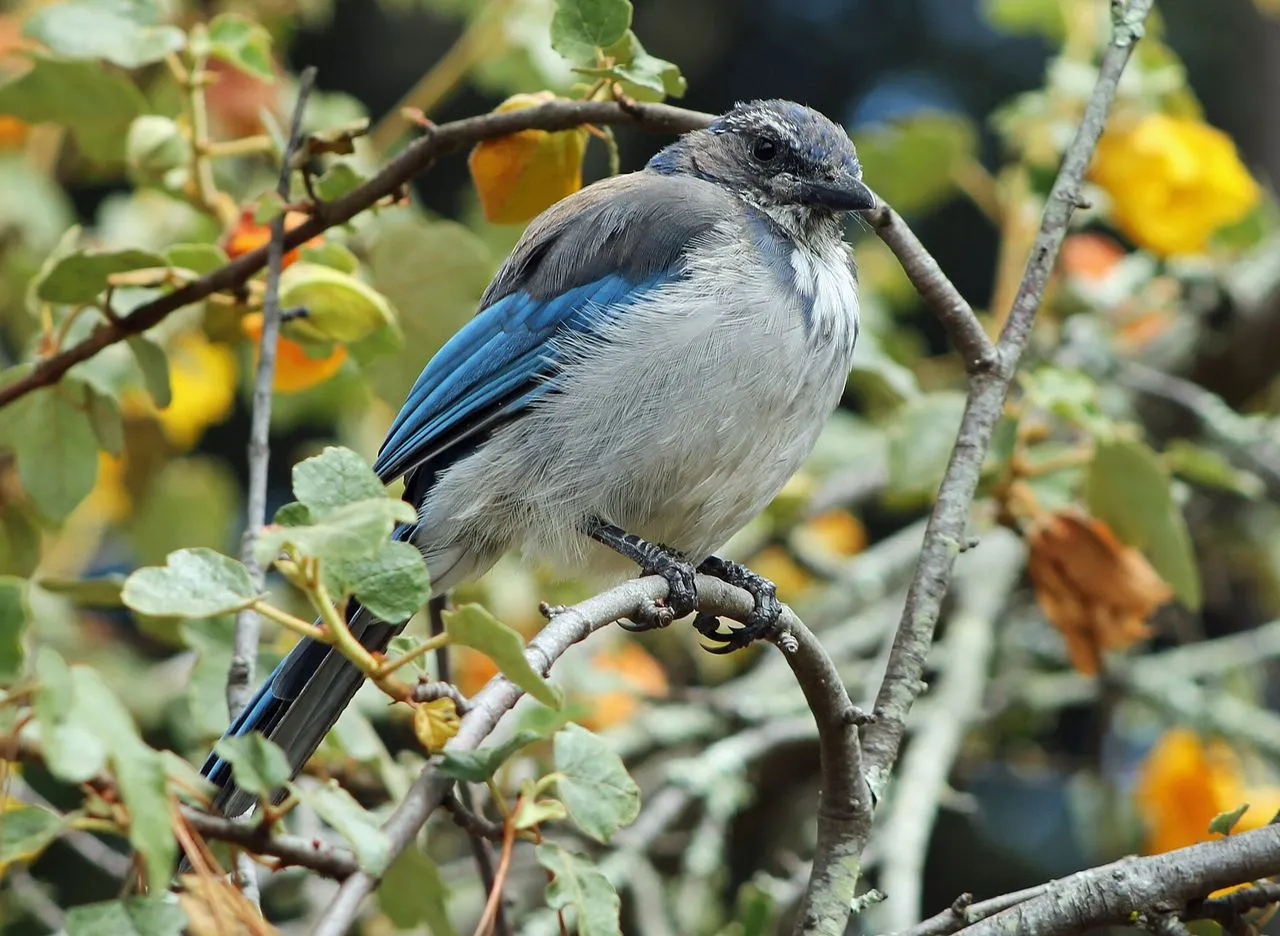
Corvids (crows, ravens, jays, magpies, nutcrackers) have brain-to-body ratios comparable to great apes and demonstrate cognitive abilities that match or exceed many primates. Documented examples include tool manufacture and sequencing in New Caledonian Crows, mirror self-recognition in Eurasian Magpies, individual human face recognition in American Crows, deceptive caching in scrub-jays, and future-oriented planning in Common Ravens. The bird brain lacks the layered neocortex of mammals but has equivalent neuron density in the pallium and nidopallium caudolaterale, an independent evolutionary route to the same cognitive results.
Corvus and its corvid relatives are not anecdotally clever. They are the subject of more replicated cognitive ethology research than any other bird family, and the conclusions are direct: corvids match or exceed great apes on a range of problem-solving tasks, despite being separated from primates by more than 300 million years of independent evolution.
Part of the Complete Corvids Guide.
What it is: Corvids have brain-to-body ratios comparable to great apes and neuron densities in the pallium that approach primate figures. This translates into documented abilities including tool manufacture, mirror self-recognition, individual face recognition across years, deceptive food caching, and future-oriented planning.
Where to start: The New Caledonian Crow provides the clearest single-species case. It manufactures hooked tools from raw plant material in the wild, sequences multiple tools to solve compound problems, and stores tools for anticipated future use.
What to avoid assuming: Corvid intelligence is not a scaled-up version of mammalian cognition. The neural architecture differs structurally from a primate cortex. Cognitive complexity arose independently in birds and mammals along separate evolutionary paths from structurally different starting points.
Brain Architecture
Vertebrate brains are not interchangeable. Mammals build complex cognition on a six-layered neocortex, a laminar structure absent from all birds. For much of the twentieth century this anatomical difference was interpreted as a hard ceiling on avian cognitive capacity: a "bird brain" was shorthand for limited intelligence.
That interpretation collapsed under accumulating experimental evidence. The reframing came partly from neuroanatomy. Olkowicz and colleagues, publishing in PNAS in 2016, counted neurons across 28 bird species and found that several corvid and parrot species contain neuron numbers in the pallium comparable to medium-sized primates, packed at substantially higher density. The pallium, the dorsal region of the avian forebrain, is not homologous to the mammalian neocortex in its layering, but it is the functional equivalent: the site of complex sensory integration, learning, and executive-like control.
Within the pallium, the nidopallium caudolaterale (NCL) has received particular attention. The NCL receives converging input from sensory, associative, and limbic areas and projects to motor output systems in a pattern that parallels the mammalian prefrontal cortex. Lesion studies in corvids confirm that NCL damage disrupts working memory, cognitive flexibility, and delay-of-gratification tasks, the same functions impaired by prefrontal damage in primates.
The takeaway is architectural: evolution has produced complex cognition more than once, through different physical structures that arrive at convergent functional outcomes.
Tool Use
The textbook case is Corvus moneduloides, the New Caledonian Crow, a species restricted to the island of New Caledonia in the southwest Pacific.
In the wild, New Caledonian Crows manufacture two distinct tool types from Pandanus leaves: stepped-cut tools with a serrated edge and hooked tools shaped to a consistent angle. Manufacture involves multiple sequential steps: selecting a leaf of appropriate width, removing lateral barbs in a controlled pattern, and trimming the hook head to a specific profile. The tools are made before the target prey is in sight, which rules out simple trial-and-error shaping toward a visible goal.
Hunt's 1996 field documentation established that wild birds produce tools to a standardised design across individuals and populations, a finding analogous to material culture in non-human primates. Subsequent laboratory work found that captive birds spontaneously manufacture tools from unfamiliar materials, including metal wire, to retrieve food from novel containers. They also sequence multiple tools, using a short tool to retrieve a longer tool needed to reach food, without prior training on the compound task.
Tool storage matters here. New Caledonian Crows carry tools between foraging sites and cache them in tree holes for future use, rather than discarding them after each use. Tool manufacture is metabolically and temporally costly; retention for reuse is the efficient outcome, and these birds produce it without instruction.
Self-Recognition
In 1970, Gordon Gallup Jr. developed the mark test as an empirical criterion for mirror self-recognition: an animal is briefly marked on a body region visible only in a mirror, and behaviour in front of the mirror is compared with a control condition. Animals that direct self-touching toward the marked region, rather than treating the reflection as another individual, are considered to have passed.
The test was passed by chimpanzees in 1970, by dolphins and elephants in subsequent decades, and by a non-mammal for the first time in 2008. Helmut Prior and colleagues reported in PLoS Biology that Eurasian Magpies (Pica pica) with colour stickers placed on the throat directed scratching at the marked region under mirror conditions but not in the absence of a mirror and not when the sticker was placed in an already-visible location.
The Eurasian Magpie became the first bird, and the first non-mammal, to pass the mark test without ambiguity. The result places magpie self-awareness alongside cetaceans and great apes in the narrow set of species that have cleared this threshold.
Face Recognition
The American Crow case, published in PNAS by John Marzluff and colleagues, is one of the most carefully designed field experiments in corvid cognition.
In the 2008 study, crows captured by researchers wearing a specific rubber "dangerous" mask subsequently scolded individuals wearing that mask, and not control masks, for years after the original capture event. The scolding response intensified over time and spread across sites where the original captured birds had never been. The 2010 follow-up addressed the mechanism: naive crows with no direct experience of the dangerous mask nonetheless scolded it after observing conspecifics doing so. This is not generalised alarm learning. The recognition is face-specific, persists through changes in the wearer's clothing and posture, and spreads horizontally through a social group without requiring each individual to experience the aversive event personally.
The functional significance is clear. A crow that identifies specific threatening individuals and communicates that identification to flock-mates has a substantial survival advantage. It also requires maintaining a long-term identity record for faces in the local population, a working-memory demand that scales directly with population density.
Caching and Deception
Western Scrub-Jays (now California Scrub-Jays, Aphelocoma californica) were the subject of what became the most discussed corvid evidence for theory of mind. Emery and Clayton reported in Nature (2001) that these jays encode the what, where, and when of each cache, integrating all three variables when deciding which cache to recover first. They preferentially retrieve perishable items cached longer ago and fresh high-value items last.
The deception result followed. Birds that cached food while being observed by a dominant conspecific subsequently re-cached those items in new locations, in the absence of the observer, in a way that would degrade the observer's ability to pilfer. Birds with no prior experience of being pilfered did not show this re-caching behaviour. The implication, replicated across multiple laboratories, is that the jay models what the observer saw, infers that the observer now holds pilfering-relevant information, and acts to eliminate that information advantage.
This is a demanding cognitive structure. It is not a fixed-action pattern; it requires generating a representation of another individual's epistemic state and acting on that representation to produce a new state of affairs.
Future Planning
A common dismissal of apparent animal cognition is that the behaviour could be explained by immediate stimulus-response chains rather than any form of prospective representation. The raven data from Kabadayi and Osvath, published in Science in 2017, was designed to address exactly this critique.
Ravens were given a task paralleling a paradigm used with great apes: they could choose to retain a tool needed to open a box for food, rather than consuming an immediately available treat, when the box would become accessible only later. Ravens performed at or above the level of great apes on this task and on a bartering variant where they retained a token exchangeable for food later over an immediate food item. The design controlled for immediate reward, species-specific motor biases, and task familiarity.
The Common Raven demonstrates the same forward-looking behaviour that, in great apes, is treated as evidence of prospective planning. Whether the underlying cognitive architecture is homologous or merely functionally convergent is a separate question; the behavioural outcome matches at the performance level.
Why This Matters
The scientific significance of corvid cognition is not that birds are clever. It is that mammalian neocortex architecture is not a prerequisite for the cognitive outcomes previously assumed to require it.
If complex planning, perspective-taking, causal inference, and individual social memory had evolved only in the lineage leading to primates, a researcher might reasonably conclude that neocortical laminar architecture was necessary for those capacities. Corvids eliminate that conclusion. They produce the same cognitive endpoints from a structurally different neural substrate, through an evolutionary lineage that diverged from the mammalian lineage over 300 million years ago.
This matters for comparative psychology, for the study of consciousness, and for any model that tries to map cognitive capacity onto brain architecture. The corvid and primate cases are the best-documented instances of convergent cognitive evolution in vertebrates.
Cognitive Feats by Species
| Species | Signature capacity | Best-evidenced finding | Primary research source |
|---|---|---|---|
| New Caledonian Crow | Tool manufacture and sequencing | Hooked stick tools shaped from pandanus; meta-tool use (tool to obtain tool) | Hunt 1996; Taylor et al. 2007 (Auckland) |
| Common Raven | Future planning, tactical deception | Tool-and-token exchange planned 17 hours ahead; cache-protection deception when watched | Kabadayi and Osvath 2017 |
| Western Scrub-Jay | Episodic-like memory, theory of mind | What-where-when memory of cache contents; re-caching when previously observed | Clayton and Dickinson 1998; Emery and Clayton 2001 |
| Eurasian Magpie | Mirror self-recognition | Targeted mark-directed behaviour on own body in mirror test | Prior, Schwarz, and Gunturkun 2008 |
| American Crow | Individual face recognition | Mob response sustained for years toward dangerous human faces, transmitted socially | Marzluff et al. 2010, University of Washington |
| Blue Jay | Spatial cache memory, hawk mimicry | Thousands of acorn caches retrieved; accurate Red-shouldered and Red-tailed Hawk calls | Tarvin and Woolfenden 1999; long-term Cornell observation records |
| Clark's Nutcracker | Massive spatial cache memory | Up to 98,000 whitebark pine seeds cached and recovered across seasons | Vander Wall and Balda 1977; Tomback 1982 |
The table is not exhaustive. It selects the single most distinctive finding per species for orientation.
A Species-by-Species Note
The American Crow (Corvus brachyrhynchos) shows the best-documented face recognition in any wild bird species. Its broad habitat tolerance and high density in human landscapes make it the most studied corvid in North American urban cognition research.
The Common Raven (Corvus corax) has produced the most controlled laboratory evidence for future-oriented planning and tactical deception in cache protection. Ravens tested in the Kabadayi and Osvath paradigm matched great ape performance without prior training on the exchange task structure.
The Blue Jay (Cyanocitta cristata) demonstrates episodic-like spatial memory for thousands of acorn cache sites and produces accurate copies of hawk calls, a cognitively flexible behaviour with direct fitness consequences in competitive foraging contexts. See the Blue Jay profile for the full ecology of acorn caching and mimicry.
The Eurasian Magpie (Pica pica) is the only non-mammal with an unambiguous mirror self-recognition result to date. Its stable group social organisation, in which individuals maintain long-term individual relationships, probably places selection pressure on the self-other discrimination abilities the mark test detects.
The Western Scrub-Jay (California Scrub-Jay, Aphelocoma californica) produced the clearest corvid evidence for theory of mind through deceptive re-caching. It also shows what-where-when episodic-like memory replicated across multiple independent laboratory groups.
Clark's Nutcracker (Nucifraga columbiana) caches up to 98,000 whitebark pine seeds per autumn and recovers the majority months later under snowpack, guided by spatial memory with demonstrated accuracy across seasonal conditions. That is a different cognitive demand from tool manufacture or face recognition, but the spatial memory capacity it implies is exceptional by any measure. See the Clark's Nutcracker profile for the cache ecology and whitebark pine mutualism.
See Also
- The Complete Corvids Guide: family-level taxonomy, identification, and cognitive overview.
- American Crow: full species profile, face recognition detail, and winter roost behaviour.
- Common Raven: species profile with future planning and cache deception notes.
- Blue Jay: the eastern North American jay; hawk mimicry and acorn caching ecology.
- Eurasian Magpie: the mirror self-recognition species with stable group social structure.
- Clark's Nutcracker: spatial memory for cache sites and whitebark pine mutualism.
Frequently Asked Questions
Do corvids really have brains comparable to those of great apes?
Not structurally identical, but comparable in the metrics that matter. Olkowicz et al. (2016, PNAS) found that corvid forebrains contain neuron numbers approaching those of medium-sized primates, at substantially higher packing density. The nidopallium caudolaterale functions analogously to the mammalian prefrontal cortex in working memory and cognitive flexibility, despite being built from a different laminar architecture.
Which corvid species is the best-documented tool user?
The New Caledonian Crow (Corvus moneduloides) is the benchmark. It manufactures hooked tools from Pandanus leaves in the wild to a standardised design, sequences multiple tools to reach food, and caches tools for future use. Wild populations across different islands show consistent tool design, analogous to material culture in non-human primates.
How do we know corvids plan for the future rather than just responding to present stimuli?
The Kabadayi and Osvath (2017, Science) study controlled for this directly. Ravens chose to retain a tool needed for a future food-access task over an immediately available treat, without prior training on that exchange structure. Raven performance matched or exceeded great apes tested on the same paradigm, controlling for immediate reward and species-specific motor biases.
Did corvid intelligence evolve from primate intelligence?
No. Corvids and primates diverged from a common ancestor more than 300 million years ago, before either lineage had developed complex cognition. The cognitive similarities are a case of convergent evolution: independent evolutionary pathways arriving at similar functional outcomes from structurally different neural architectures. This is why the comparison is scientifically interesting rather than trivially expected.
Sources & References
- Olkowicz, S. et al. (2016). Birds have primate-like numbers of neurons in the forebrain. PNAS 113(26)
- Marzluff, J.M. et al. (2010). Lasting recognition of threatening people by wild American Crows. Animal Behaviour
- Emery, N.J. & Clayton, N.S. (2001). Effects of experience and social context on prospective caching strategies by scrub jays. Nature
- Kabadayi, C. & Osvath, M. (2017). Ravens parallel great apes in flexible planning for tool-use and bartering. Science