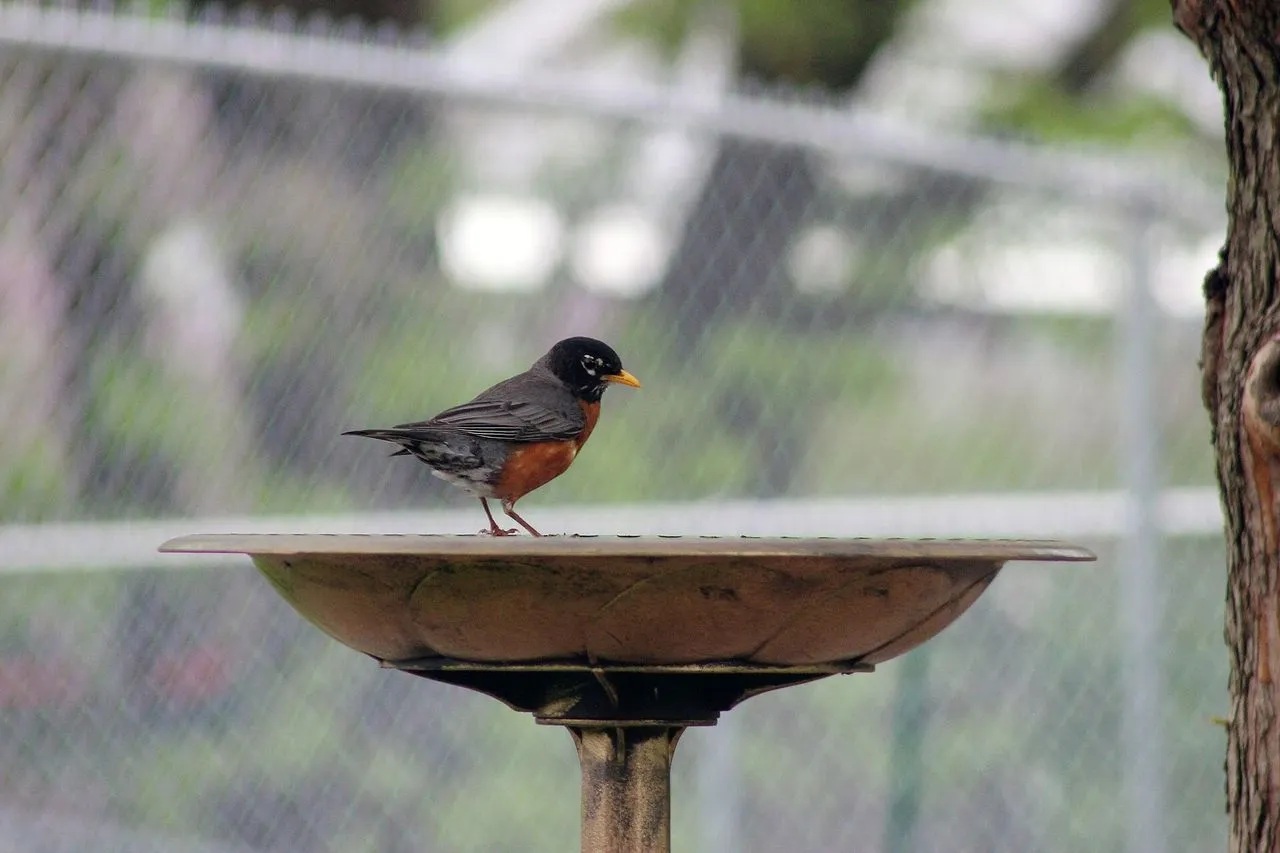
Birds typically take 1–3 weeks to discover a new feeder. The most common causes of a longer wait are wrong seed (supermarket mix heavy in milo), poor location (too exposed or outside predator-safe zones), and no water source nearby. Switch to black-oil sunflower, place the feeder within 3m of dense cover, add a bird bath, and wait at least three weeks before changing anything.
The most common reason a new feeder sits empty for weeks is that the person who installed it expected faster results than birds reliably produce. Birds are cautious. A new object in a familiar space, even one filled with good food, is something to inspect from a distance before committing to land on.
That said, a well-sited feeder with the right seed usually sees its first visitors within one to two weeks. If yours is past three weeks with nothing, something specific is wrong. Work through the causes below in order; most problems resolve at cause one or two.
Part of the Complete Attracting Guide.
How Long Discovery Actually Takes
Cornell Lab advises that a well-placed feeder in an established suburban garden may see its first visitors within a few days. Window feeders or those in settings where birds are less accustomed to approaching structures often take several days or more. In sparse rural settings, or gardens with little native vegetation to support a resident bird population, six to eight weeks is not unusual.
The variation is almost entirely explained by local bird density and habitat quality, not by feeder design. A garden with native shrubs, a water source, and established bird territory nearby sees fast discovery. A garden of clipped lawn and non-native ornamental plantings holds fewer birds, and the ones passing through have less incentive to investigate.
If you are past eight weeks with correct seed and good placement, the feeder is probably not the problem. The habitat is.
Diagnostic Table
| Time waited | Current setup | Most likely cause | First action |
|---|---|---|---|
| Under 2 weeks | Correct seed, good position | Normal discovery lag | Wait; watch for scouts |
| 2–4 weeks | Supermarket "wild bird mix" | Milo and red millet rejected | Replace with black-oil sunflower only |
| 2–4 weeks | Open position, no nearby cover | Predator risk perception | Move within 3m of dense shrub |
| 2–4 weeks | New bright plastic feeder | Novelty/startle effect | Leave unfilled for 1 week, then refill |
| 2–4 weeks | No water source nearby | Missing habitat-quality signal | Add a bird bath within 10m |
| 4–8 weeks | Feeder 2–5m from large glass pane | Window reflection suppressing approach | Move feeder; add external film |
| 4–8 weeks | Feathers found below feeder | Hawk or cat strike | Wait; consider relocating 3–5m |
| 8+ weeks | Any setup | Habitat poverty | Plant native species; add water |
Wrong Seed: The Most Common Cause
Supermarket "wild bird mix" is typically 50–60% milo (grain sorghum) and red millet by weight. Project FeederWatch and the National Audubon Society both confirm that most temperate-zone seed-eating birds reject both. American Goldfinches will not eat milo. House Finches largely ignore it. Chickadees, nuthatches, titmice, cardinals, and grosbeaks do the same. Birds that visit will pick through the mix for the sunflower fraction, exhaust it within a few visits, then leave. The feeder then appears full but offers nothing edible to the species you want.
The fix is straightforward: black-oil sunflower seed, single ingredient. The thin shell cracks easily for small bills, the kernel-to-shell ratio is high, and the oil content (around 40%) is exactly what a winter bird needs. It is taken by more species than any other single seed. If you specifically want the small finches, goldfinches, siskins, redpolls, add a separate nyjer feeder alongside.
One note on nyjer: it goes rancid within six weeks of the bag being opened, faster in humidity. A nyjer feeder that birds sampled and then abandoned almost certainly has bad seed. Empty it, scrub the ports, and refill from a fresh bag before assuming placement is the problem.
Location: Cover and Predator Zones
A feeder in the wrong position will be avoided regardless of what is in it.
The placement rule from the Complete Attracting Guide is not optional: place the feeder either within 3 m of dense cover, so a startled bird can dive to safety in under a second, or more than 10 m from cover, so birds gain altitude before reaching an ambush zone. The zone between 3 and 10 m is where Cooper's Hawks operate most effectively, and birds have learned this. An exposed feeder on a lawn 5 m from the nearest hedge may attract occasional bold individuals but will never hold the steady traffic of a properly positioned station.
Dense cover for this purpose means evergreen or heavily branched shrubs with fast escape-route depth: yew, holly, hawthorn, native viburnum, hazel. Deciduous canopy goes bare in winter when feeders matter most. For shrub species that also provide nesting structure, see native shrubs for nesting.
Window Proximity
A feeder placed 2–5 m from a large glass pane sits in the most problematic zone. Reflections of sky or vegetation in glass read to birds either as open flyways or as approaching objects. Some birds approach the feeder then veer off repeatedly; others startle during feeding and fly toward the glass.
The two safe distances are very close, under 1 m, so any collision cannot build fatal speed, or far, over 5–6 m. If your feeder sits in between and birds are approaching then pulling away, move it. External film treatments and spacing patterns that remove the reflection cue entirely are covered in window strike prevention.
No Water Nearby
Birds use water as a habitat-quality signal. A garden with a bird bath, particularly one with moving water, reads as richer territory to a passing bird than an equally planted garden without one. The acoustic cue of dripping or splashing water draws warblers, flycatchers, and thrushes that would ignore a seed feeder entirely, and their presence in the garden draws other species toward it.
If your feeder has been up for three or more weeks with no activity, adding a simple bath within 5–10 m is one of the most effective interventions available. A hose set to one drop every two seconds, or a small solar fountain, roughly triples bird use compared to a static basin. See Birdbaths and Water Features for placement specifics and the cleaning schedule.
Feeder Type and Seed Mismatch
Each feeder type selects for a different set of birds, and putting the wrong seed in the wrong feeder produces nothing.
The most common mismatch is nyjer in a tube feeder with standard sunflower ports. Standard ports are typically 8–12 mm wide; nyjer seed is small enough that it pours straight through anything wider than 3–5 mm. If you installed a nyjer feeder and got no takers, check the port size before assuming location is the problem. For a full breakdown of feeder types matched to species and seed, including the hopper, platform, suet cage, and nectar designs, see Choosing the Right Feeder.
A second common mismatch: a tube feeder designed for clinging birds (chickadees, nuthatches, finches) installed in a spot those species cannot approach safely. Tube feeders will not attract ground-foraging juncos, doves, or sparrows, those birds want a low platform or scattered seed.
Predator Pressure
A Cooper's Hawk that made a successful strike at or near a feeder can suppress use for several days to two weeks. Birds remember the location, and the alarm calls associated with a strike carry through a local flock. If you find scattered feathers below or near the feeder, predation is the most likely explanation for a sudden drop in visits.
The correct response is patience, not action. Removing the feeder signals abandonment, not safety. Leave it stocked and use will return. If hawk pressure is chronic, multiple strikes per week, consider relocating the station 3–5 m to a position with a different sight line and better overhead cover. Physical deterrents, pole baffles, and cage-style designs that protect visiting birds are covered in Predator-proofing Feeders.
New Feeder Novelty
A fresh, shiny plastic feeder is a new object in a landscape the resident birds know well. This creates a genuine startle effect in some populations, particularly with vivid red or yellow hoppers. It is not a permanent aversion, it resolves as the surface weathers and the feeder becomes part of the background.
The practical fix is to mount the feeder unfilled for a week before adding seed. Resident birds investigate it at their own pace, decide it is not a threat, and are already comfortable landing on it when seed appears. Metal and wood feeders rarely need this step.
Pesticides and Landscape Poverty
A garden that is heavily treated with neonicotinoid-based lawn and ornamental products, or planted entirely with non-native species, may simply not support the bird density needed to generate regular feeder visits.
Neonicotinoids kill the soil invertebrates and foliage insects that insectivorous birds feed to their nestlings. Adult birds can survive on seeds and berries in such a garden while failing to raise successful broods year after year, the local population declines quietly. A feeder in this context is a supplement to a broken food chain, not a solution to it.
The long-term fix is habitat. One native hawthorn, serviceberry, or native oak will produce caterpillars, berries, and cover that no feeder replicates. See Native Plants for Birds for the species that genuinely raise bird density in the surrounding area.
The First Three Weeks: A Protocol
- Fill with black-oil sunflower only. Discard any supermarket mix.
- Position within 3 m of dense, thick-branched shrub cover.
- Confirm window proximity: under 1 m or over 5 m.
- Add or confirm a water source within 10 m.
- Do not move the feeder during the first two weeks. Repositioning resets the discovery window.
- Check seed condition every five to seven days, damp or clumped seed should be replaced even before birds arrive. Once the station gets busy, keep it on the schedule in Feeder Hygiene and Disease to prevent a visited feeder from becoming a disease point.
If nothing has visited by week three, return to the diagnostic table above and address the most likely cause. Change one variable at a time, wait one week, and assess.
See Also
- Choosing the Right Feeder: feeder type matched to bird species and seed.
- Birdbaths and Water Features: the water source that often breaks a stalled station.
- Predator-proofing Feeders: placement and physical deterrents against hawks and cats.
- Feeder Hygiene and Disease: keeping a busy station from becoming a disease source.
- Native Plants for Birds: the habitat base that makes feeders work long-term.
- The Complete Attracting Guide: the full four-resource framework: food, water, cover, nesting.
Frequently Asked Questions
How long should I wait before giving up on a new feeder?
At minimum three weeks. In suburban gardens with established bird populations, discovery is often within a few days. In sparse rural settings or gardens surrounded by non-native plantings with a depleted insect base, six to eight weeks is not unusual. If you are past eight weeks with the right seed and correct placement, the problem is almost certainly habitat, not the feeder.
Does the colour or material of a new feeder put birds off?
Bright, shiny plastic can cause a startle effect that delays first visits by one to two weeks, particularly with vivid red or yellow hoppers. Weathering the feeder outdoors unfilled for a week before adding seed can help. Metal and wood feeders rarely produce this effect.
Why did birds visit once or twice and then stop?
Usually seed quality or predator pressure. Nyjer goes rancid within six weeks of opening and will be abandoned almost immediately once it does. Alternatively, a Cooper's Hawk or Sharp-shinned Hawk may have made a successful strike at the station, look for scattered feathers below the feeder. Birds typically return within a few days once the predator moves on.
Should I put a fake bird near the feeder to attract real ones?
No. Decoys do not reliably attract feeder birds, and territorial species may actively avoid a fake bird of the same species. The most effective social cue is sound, a nearby moving water source (even a slow drip from a hose) draws more species than any visual trick.