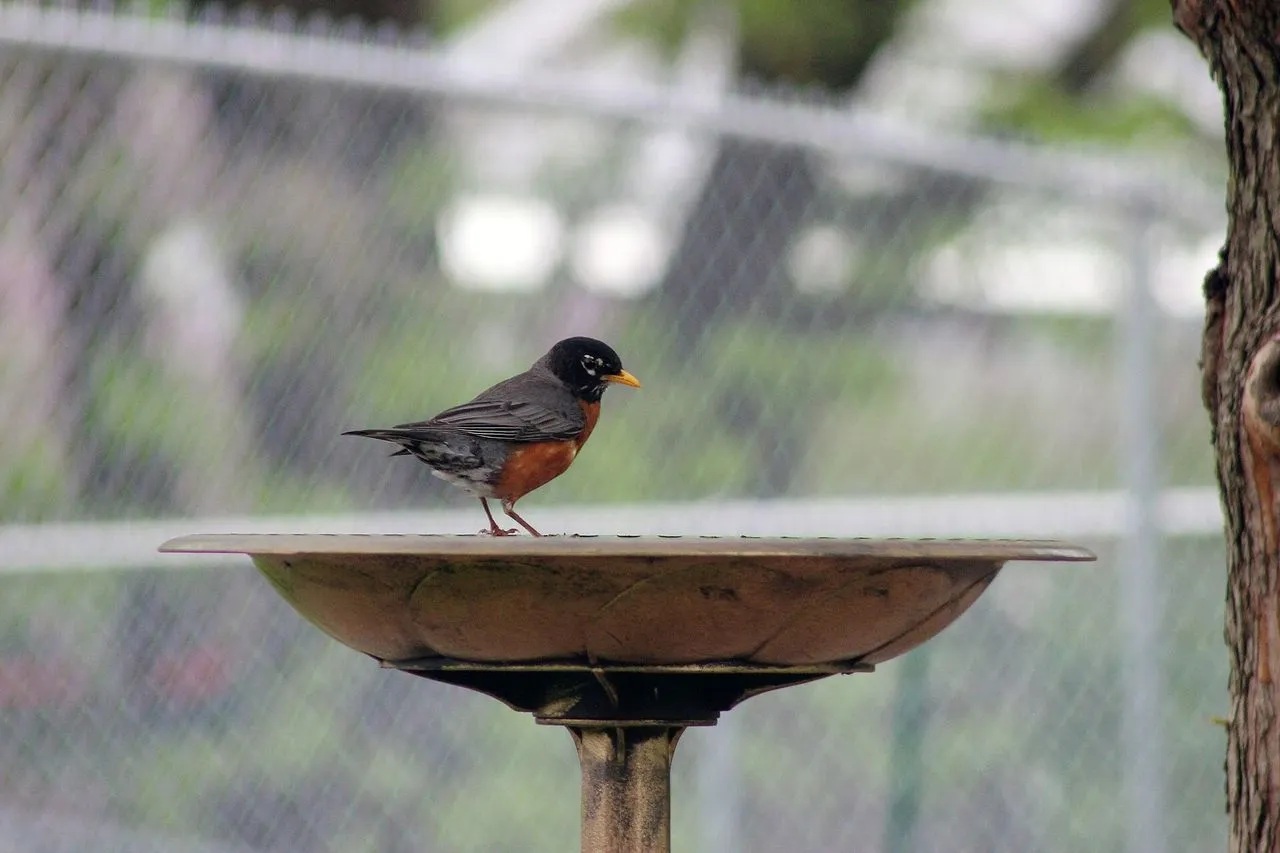
A shallow birdbath (2–6cm deep) with a rough floor attracts more species than seed. Bath depth matters more than material, most ornamental baths are too deep. Add flat stones so birds can stand with water at belly level. A dripper or pump triples bird use; a heated bath is essential in winter.
A birdbath should be 2 to 6 cm deep at the usable edge. That matters more than whether it is ceramic, concrete, copper-coloured, solar, or expensive. Most garden birdbaths sold as ornaments are too deep and too slippery.
Seed attracts seed-eaters. Water attracts almost everything: thrushes, warblers, flycatchers, waxwings, woodpeckers, sparrows, finches, and migrants that will never touch a feeder. Published advice underestimates water because water is not sold in branded bags.
Part of the Complete Attracting Guide.
Specifications / What Actually Works
| Feature | Target | Birds helped | Main risk |
|---|---|---|---|
| Edge depth | 1–3 cm (0.4–1.2 in) | Warblers, finches, kinglets | Too slippery if glazed |
| Centre depth | 5–6 cm (2–2.4 in) | Thrushes, doves | Too deep for small passerines |
| Basin width | 35–50 cm (14–20 in) | Most garden birds | Fouling if under feeders |
| Moving water | 30–60 drops per minute | Migrants and insectivores | Spray too forceful |
| Cover distance | 2–3 m (6–10 ft) | Wet, vulnerable birds | Cat ambush if closer than 1 m |
Use a shallow basin with a rough floor. The ideal profile is a gradual slope from 1 cm at the rim to 5 or 6 cm near the centre. If you already own a deep bath, add flat stones until the birds can stand with water no higher than the belly. Small passerines do not want a plunge pool.
Diameter matters less than edge quality. A 35 to 50 cm basin is adequate for most gardens. The rim should allow a bird to perch and inspect before entering. Glazed bowls look clean but are often too slick; add a rough stone or a thin layer of washed gravel.
Moving water outperforms still water. A drip rate of 30 to 60 drops per minute is enough to produce sound and surface movement visible to birds. A hanging bottle with a pinhole, a commercial dripper, or a small recirculating pump all work. The point is not a fountain display. It is acoustic detection.
Place water 2 to 3 m from shrub cover. Closer than 1 m, cats can rush from concealment. Farther than 5 m, small birds hesitate because they must cross open ground while wet and less agile. Low shrubs, brush piles, or native planting provide the staging cover; thorny shrubs are especially useful. For planting structure, see Native plants for birds, and for feeder spacing logic that uses the same cover rule, see Choosing the right feeder.
Height is a trade-off. Ground-level water is natural and attracts thrushes, doves, juncos, and towhees. Pedestal baths reduce mammal access and are easier to see from a window. If cats are present, use a pedestal 60 to 90 cm high with open ground below it.
In winter, open water can exceed seed in value. A thermostatic birdbath heater that holds water just above 0 °C is useful in freezing climates. Use an outdoor-rated unit with a protected cable and a ground-fault circuit interrupter. Do not add glycerine, salt, or antifreeze. Birds drink that water and bathe in it.
Water also concentrates birds for observation. Warblers that pass over a feeder may drop to a dripping bath during migration, especially in dry September weather. The same garden that gets House Finches at seed may get a Blackcap, Yellow-rumped Warbler, or Hermit Thrush at water.
Common Mistakes
- Buying a bath that is 10 cm deep with vertical sides. That is a tub, not a passerine bath.
- Putting the bath tight against shrubbery. The bird needs escape cover nearby, not an ambush wall touching the basin.
- Letting the surface go green. Algae is not automatically lethal, but it signals nutrient build-up and poor turnover.
- Running a fountain too forcefully. Spray and turbulence discourage small birds. A drip or gentle ripple is enough.
- Assuming mosquitoes require chemicals. Mosquitoes require time. Dumping and refilling every 24 to 48 hours breaks the larval cycle.
Maintenance & Hygiene
Change water daily in warm weather and every 2 to 3 days in cool weather. In freezing weather, dump and refill when droppings or seed hulls accumulate; heated dirty water is still dirty water.
Scrub the basin with a stiff brush every 2 to 4 days in summer. Use hot water for routine cleaning. If slime persists, use a 1:9 bleach-water solution, leave it for 10 minutes, rinse thoroughly, and dry before refilling. A vinegar scrub helps with mineral deposits but is weaker against biofilm.
Do not place baths directly below feeders. Seed hulls, faeces, and wet fragments turn a bath into soup. Keep at least 3 m between seed and water stations, more if pigeons or doves dominate the feeder.
Check the footing. Birds grip with toes, not suction cups. If you see birds leaning forward, fluttering, and leaving without bathing, the basin is probably too slippery or too deep. Correct that with stones before buying another bath.
The best water feature is not the prettiest one. It is shallow, audible, clean, and placed where a wet bird can escape.
See Also
- Predator-proofing Feeders: the 3-metre cover spacing rule applies equally to water features and seed stations.
- Window Strike Prevention: birds concentrated at water are more collision-prone; the two articles work together.
- The Complete Attracting Guide: the full cross-species reference for water, feeders, and cover.
- Keeping Water Open in Winter: heater types, wattage, setup geometry, and what NOT to add (glycerine, salt, antifreeze are all toxic).
Frequently Asked Questions
How deep should a birdbath be?
2–6cm at the usable edge is ideal. Most decorative birdbaths sold in garden centres are too deep and too slippery. Add flat stones to create shallower areas where small birds can stand comfortably.
Does moving water really attract more birds?
Yes. A slow drip (one drop per two seconds) or a small solar pump roughly triples bird visits. Moving water is a strong visual and acoustic cue that birds detect from a distance.
How do I prevent mosquito breeding?
Empty and refill every 2–3 days in summer. Use a dripper that keeps water moving. Stock tank-preventive tablets are safe for birds but check the label. Stagnant water breeds mosquitoes; moving water does not.
Do I need a heated birdbath in winter?
In freezing climates, a heated birdbath is the single most useful winter intervention. Use a thermostatically controlled heater (50–80W). A functional heated bath draws every passerine within 200m during cold snaps.