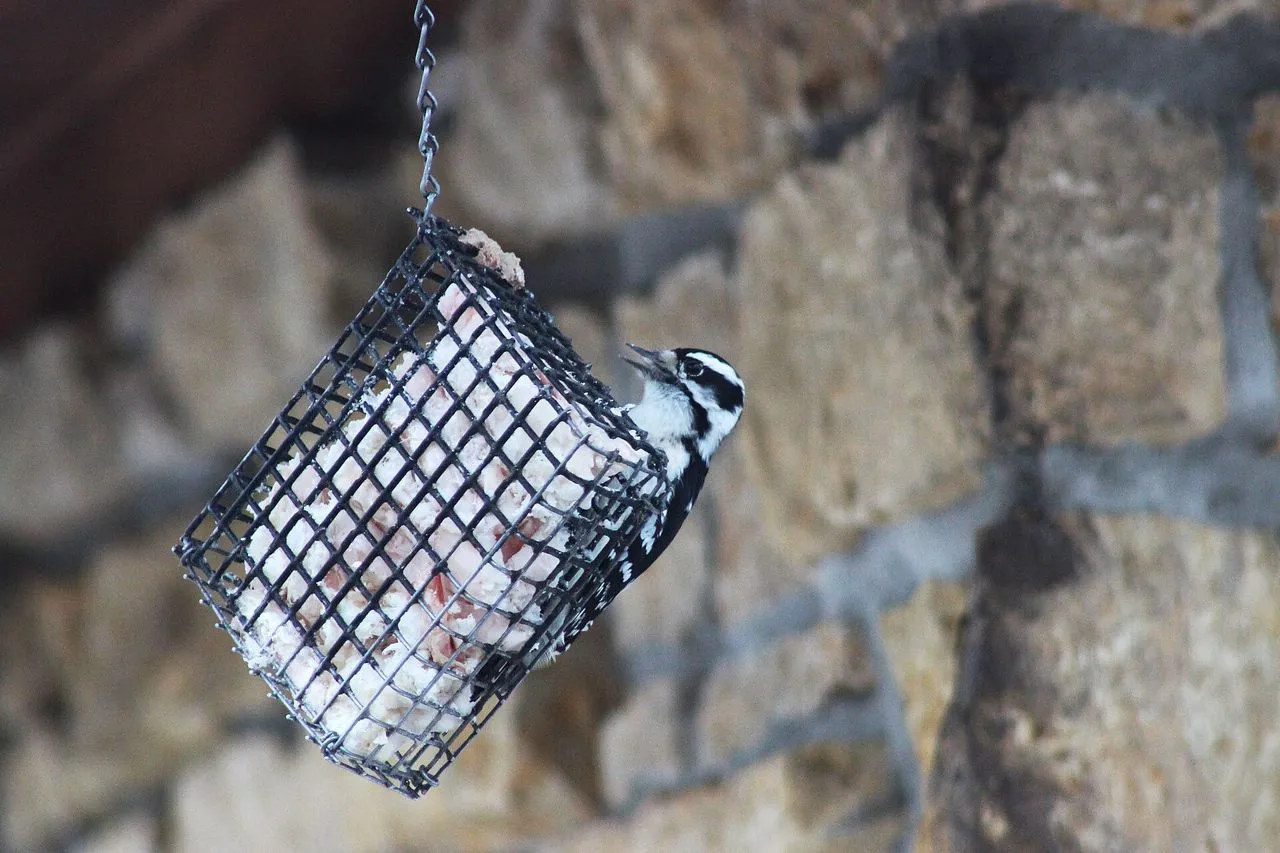
Spring migration is the most energetically demanding period of the year for many North American birds. Birds arrive depleted and need calorie-dense food within hours. Have nectar feeders up by your local first-arrival date for hummingbirds, orange halves and grape jelly out for orioles, mealworms ready for warblers and bluebirds, and white millet on the ground for sparrows. Native flowering trees (oak, willow, cherry) matter more than any feeder; they host the caterpillars warblers depend on. Treat windows before arrivals; spring strikes peak in April and May.
Autumn migration has a safety net: birds move with fat reserves built over summer, and many have made the journey before. Spring is different. Birds arrive at northern breeding grounds after weeks in the tropics, crossing the Gulf of Mexico in a single overnight flight that burns the last of their fat. They land underweight, in variable weather, with breeding season already starting its clock. This is the window when supplemental feeding has its highest practical impact. The six to eight weeks between late February and late May represent the most energetically demanding period of the annual cycle for many North American species.
Part of the Complete Attracting Guide.
The Migration Window
Spring migration across temperate North America runs from late February through late May. The first returnees, Red-winged Blackbirds and Eastern Phoebes, push north as early as late February in the southern states. The main wave of neotropical migrants, warblers, tanagers, orioles, and flycatchers, peaks in late April and early May across the eastern and central United States. The northernmost breeders are still arriving in late May.
Peak passage is compressed. A single warm night with southerly tailwinds in late April can move tens of millions of birds northward. A cold front stalling over the Great Lakes the next morning grounds all of them in a narrow band. That pattern, large numbers of birds suddenly needing food and cover in a small area, is what makes spring garden preparation worth doing.
The period from late February to late May also coincides with unpredictable weather. Late frosts, cold rain, and wet snowstorms strike after birds have already committed to northward movement and cannot easily retreat. In these conditions, a stocked feeder or a yard with native food plants can represent the difference between a successful refueling stop and a failed one.
Food by Species
Set out food before arrivals, not after. The table below covers the main feeder-responsive migrants and the timing for each.
| Species group | Food to offer | When to set out | Where to place |
|---|---|---|---|
| Ruby-throated Hummingbird | Nectar (1:4 sugar to water) | 1 week before local first-arrival date | Red feeder in shade, sheltered from wind |
| Baltimore and Bullock's Oriole | Orange halves, grape jelly | 1 week before local first-arrival date | Spike or oriole feeder, eye-level |
| Scarlet and Western Tanager | Orange halves, fruit, suet in cold snaps | When orioles arrive | Platform feeder at medium height |
| Warblers (most species) | Live or rehydrated mealworms | Peak migration, late April to mid-May | Shallow dish on platform feeder |
| White-throated and Fox Sparrow | White millet | Late February through May | Ground or low tray |
| Gray Catbird, mockingbird, thrush | Fruit, mealworms, suet in cold snaps | From first arrival through June | Platform feeder, 1 to 1.5 m high |
Hummingbirds: Use a clean red feeder with 1:4 sugar-water. Have it up before the first local record, which varies considerably by latitude. Check eBird arrival maps for your county rather than relying on calendar dates. Ruby-throated Hummingbirds reach the Gulf Coast by late March and the northernmost breeding range in late May. Nectar should be replaced every two to three days; in warm weather, replace every 24 to 48 hours.
Orioles: The two to three weeks after first male arrival are peak feeder use. Offer orange halves impaled on a spike and grape jelly in a shallow cup. Do not overfill the jelly cup; 15 to 20 ml at a time is enough, and replace it daily. After the arrival rush, oriole visits decline as insects become available, but leaving the feeder out costs nothing.
Warblers: Most warbler species do not visit seed feeders. Mealworms in a shallow dish are the exception. Yellow-rumped Warblers are the most feeder-adaptable species; they take suet and fat-based foods during cold snaps, making them reliable early-spring feeder visitors before insects are available.
Sparrows: White millet scattered on the ground or in a low tray pulls White-throated, White-crowned, Fox, and Lincoln's Sparrows during migration. These species move through in loose flocks and do not stay long, but white millet gives them a reason to land in your yard rather than elsewhere.
Why Native Plants Matter More
No feeder programme will do what a mature native tree does for spring migrants. A single native oak supports several hundred species of caterpillars. Willows and native cherries are not far behind. Warblers moving through in late April and early May are fueling on caterpillar biomass, not seed or feeder food. The yards that hold the most migrant warblers are the ones with native trees in leaf, not the ones with the most feeders.
The practical implication: if you have space for one improvement before next spring, plant a native oak, willow, cherry, or birch. Young trees take years to reach peak production, but even a small native tree contributes immediately.
Pesticide use is the inverse of this. A single neonicotinoid lawn treatment can collapse insect biomass on a property for weeks. If a yard has good native plants but heavy pesticide use, migrants pass through without stopping. Pesticide-free maintenance is not optional if the goal is to hold migratory insectivores. The Complete Attracting Guide covers native plants and pesticide impacts in the broader habitat context.
BirdCast and Real-Time Migration
Cornell's BirdCast (birdcast.info) publishes nightly migration forecasts based on weather models and radar data. The tool shows forecast migration intensity by region, real-time radar images of actual bird movement overnight, and three-day outlooks for migration conditions.
Practical use: check BirdCast the evening before a forecast heavy-migration night. If a large movement is predicted in your region and a cold front is behind it, the conditions for large numbers of birds landing and needing food are in place. That is the morning to have mealworms out early, fresh oriole food set up, and water clean. It is also the morning to keep cats inside and check windows for overnight strikes.
BirdCast also publishes a real-time radar view called MigrationVision. You do not need to understand radar interpretation to use it; the total nightly migrants counter and the regional forecast map are sufficient for practical garden preparation.
Fallouts
A fallout occurs when migrating birds are grounded by sudden adverse weather: cold fronts with rain, strong headwinds, or rapid pressure drops that make continued flight dangerous. Birds land wherever they can find cover, sometimes in large concentrations far from typical stopover habitat.
The Gulf Coast is the classical fallout location. Trans-Gulf migrants crossing from the Yucatan arrive already at the edge of their fat reserves, and a headwind over open water can leave birds landing on oil platforms, fishing boats, and beachfront shrubs. But fallouts happen anywhere a cold front stalls during migration.
If a fallout hits your patch, the response is straightforward: keep feeders fully stocked, add fruit and mealworms if you have them, keep noise and disturbance low, and keep cats and dogs inside. The birds are exhausted and need time to rest and refuel without disruption. Most fallouts clear within 12 to 48 hours once conditions improve. Reporting your sightings to eBird during a fallout contributes to the broader record of how these events unfold across a region.
Window Strikes
Window strikes peak during spring migration. The combination of night-time flight, disorientation from artificial lights, and daytime refueling near reflective glass creates elevated risk from April through May. The mechanism is the same year-round: glass reflecting nearby vegetation reads as a flyway, not a barrier.
External deterrents that work are spaced on a grid no wider than 5 cm horizontally and 10 cm vertically. Interior decals applied to the inside surface of glass do not stop birds approaching from outside. Single hawk silhouettes do not work at useful densities. The treatments that reliably reduce strikes are external dot patterns at the correct spacing, parachute cord screens (Acopian BirdSavers), or external film products applied to the outside of the pane.
For the full protocol, see Window Strike Prevention. Install deterrents before April, not after the first strike.
The First-Arrival Discipline
Birds do not wait to discover that a feeder is new. A hummingbird arriving from the Yucatan in late April will survey established sites in your area during its first day or two. If your feeder is not yet up, that bird moves on. If the feeder is up and clean, the bird registers your garden as a resource and returns.
The cost of late preparation is not just missing that individual visit. Hummingbirds and orioles return to productive gardens in subsequent years. A bird that finds nothing on first arrival in a new location does not come back. The garden that builds a returning population starts with food already in place in week one, every spring.
Set a recurring calendar reminder two weeks before your expected first-arrival date for each species you want to attract. Feeders should be clean and stocked at that point. Contrast this with summer feeding, where feeder use declines as insects become abundant, and with winter feeding, where the goal shifts to calorie density for resident birds through cold nights.
See Also
- The Complete Attracting Guide
- Summer Feeding Strategies
- Winter Feeding Strategies
- Ruby-throated Hummingbird: arrival timing, feeder setup, and spring migration behaviour.
- Yellow-rumped Warbler: the most feeder-adaptable warbler; cold-snap feeding and fat-food preferences during spring passage.
- Window Strike Prevention: full external deterrent protocol; treatments that work at the spacings that matter.
Frequently Asked Questions
When should I put out hummingbird feeders in spring?
Put feeders out one week before your local first-arrival date. Check eBird arrival maps for your county to find that date. Ruby-throated Hummingbirds reach the Gulf Coast by late March and the northern tier by mid-May. A feeder that is already clean and stocked when the first bird arrives makes a better impression than one put out the day after.
What do I feed spring migrating warblers?
Live or rehydrated mealworms in a shallow dish are the most reliable warbler food at feeders. Most warblers do not visit seed feeders at all. The better approach is native trees: oaks, willows, cherries, and birches host the caterpillar mass warblers depend on during migration. A pesticide-free yard with native trees will hold more warblers than any feeder setup.
What is a fallout and how do I respond?
A fallout happens when migrating birds are grounded by sudden adverse weather, typically rain and headwinds, and land in unusual numbers wherever they can find cover. If a fallout hits your yard, keep feeders stocked, add fruit and mealworms, and keep cats and dogs inside. Fallouts are short events, usually 12 to 48 hours. The birds are exhausted and will leave as soon as conditions allow.
Do orioles use feeders in spring?
Yes, reliably, in the first two to three weeks after arrival. Male orioles arrive before females and are often bold at feeders in early May. Offer orange halves (impaled on a spike) and grape jelly in a small cup. After the first weeks, as insects become abundant, oriole feeder use typically drops. Do not remove the feeders; use simply tapers off naturally.
Why do spring window strikes matter more than autumn?
Spring migration is characterised by night-time movement followed by daytime landing and refueling. Birds flying at night disoriented by building lights, and birds feeding by day near reflective glass, are both at risk. Window strike mortality peaks in May. External deterrents (dots on a 5 cm by 10 cm grid, external cord screens) should be in place before April.