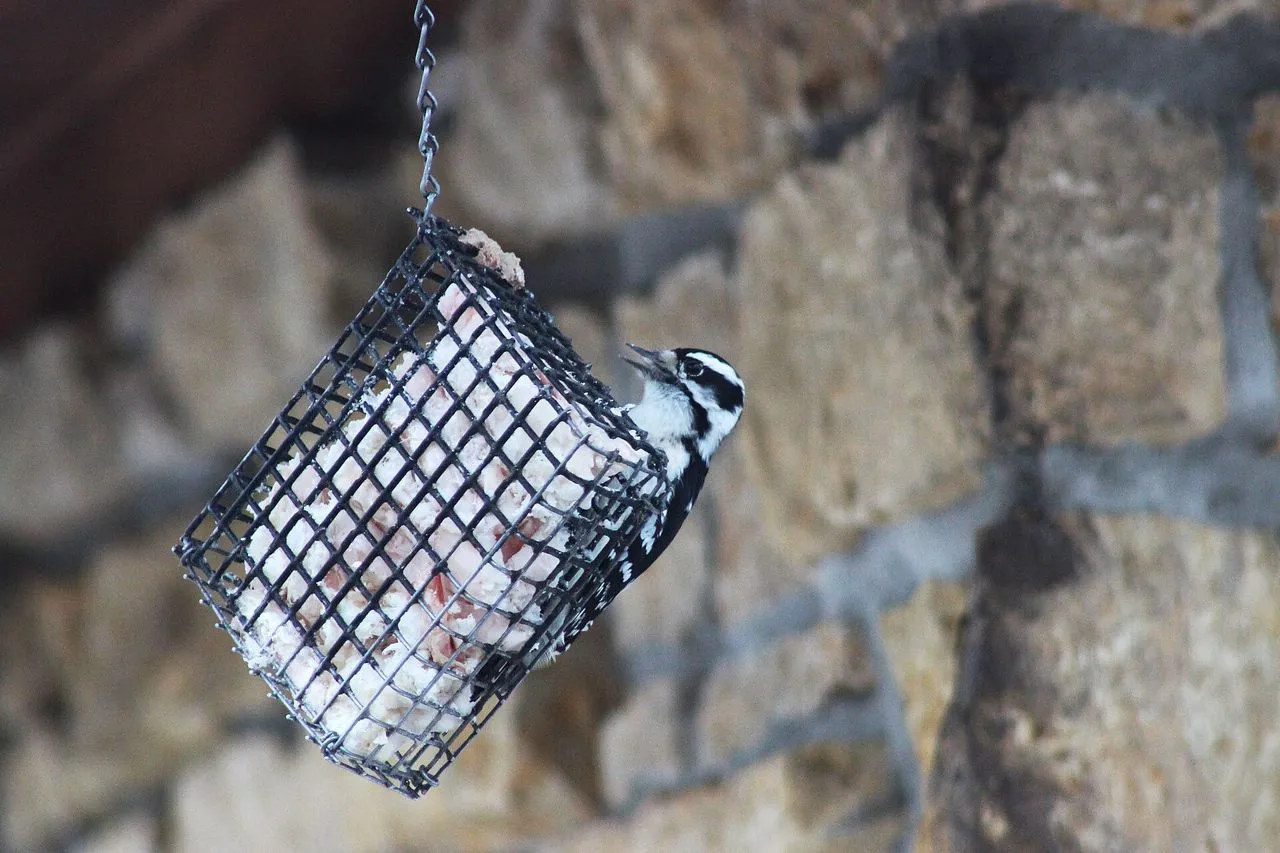
Suet (rendered animal fat) attracts woodpeckers, nuthatches, and chickadees. Use rendered beef fat only, not kitchen scraps. Remove suet when temperatures exceed 27°C, it melts, goes rancid, and coats feathers. Cage-style feeders on tree trunks work best.
Suet begins to soften around 32 °C, and rancid fat is not a bird food. It is a bacterial substrate with calories. That single temperature threshold explains why suet is excellent in January and often irresponsible in August.
Most advice treats suet as a year-round woodpecker magnet. It can be, in cool climates. In warm conditions it melts into plumage, coats facial feathers, and turns a high-energy food into a hygiene problem.
Part of the Complete Attracting Guide.
Recipes / What Actually Works
| Suet option | Composition | Use window | Main risk |
|---|---|---|---|
| Plain rendered suet | Beef or sheep kidney fat | Cold weather | Rancid if held too long |
| Basic winter cake | 500 g suet, cornmeal, peanuts, sunflower hearts | Freezing to cool weather | Too rich in warm spells |
| Insect mix | Suet, peanut butter, oats, dried mealworms | Near-freezing weather | Softens quickly |
| Commercial cake | Rendered beef fat first ingredient | Cool months | Filler-heavy products waste food |
| No-melt dough | Lower-fat blended block | Mild spring, small portions | Not a substitute for heat removal |
True suet is hard kidney fat from cattle or sheep, rendered slowly and cooled into a firm block. Ask a butcher for beef suet, chop it into 1 to 2 cm pieces, heat it on low until liquid fat separates, strain through a metal sieve, then cool. Render a second time if you want a firmer cake. Do not use bacon grease; salt and curing residues make it unsuitable.
A basic winter cake is 500 g rendered suet, 250 g coarse cornmeal, 150 g unsalted peanut pieces, and 100 g black-oil sunflower hearts. Melt the suet, stir in the dry ingredients, press into a 12 × 12 cm mould, and chill. The cornmeal stiffens the block and reduces greasing.
For insect-eating birds, a better mix is 500 g rendered suet, 200 g peanut butter with no xylitol, 250 g oats, and 100 g dried mealworms. This is rich; offer it in freezing or near-freezing weather, not during a warm spring spell.
Commercial cakes are acceptable if the first ingredient is rendered beef fat or suet. Avoid novelty cakes dominated by milo, red millet, artificial colour, or sweet bakery waste. Birds will pick through them and drop the filler.
Use a steel cage with 25 mm grid spacing. Thin plastic cages fail under squirrel chewing. An upside-down suet feeder selects against European Starlings because starlings are poor at sustained inverted feeding; Downy Woodpeckers, Hairy Woodpeckers, nuthatches, chickadees, and titmice manage it well.
Mount suet 1.5 to 2.5 m above ground, ideally on a baffled pole or suspended from a branch that squirrels cannot reach by jumping. Keep it 3 m or less from cover so small birds can retreat, but not pressed inside dense shrubbery where cats can ambush from below. Woodpeckers will also use trunk-mounted suet if the holder is secure.
Suet pairs well with a black-oil sunflower tube because the two foods serve different guilds. For feeder selection more broadly, see Choosing the right feeder. Woodpeckers, nuthatches, and chickadees are the core users; finches such as the European Goldfinch are not suet specialists.
Common Mistakes
- Feeding suet through summer heat. If the daytime high exceeds 32 °C, remove it. If it feels greasy to the touch at noon, remove it.
- Using kitchen grease. Bacon fat, roasting drippings, butter, and margarine contain salt, water, seasonings, or unstable oils.
- Buying seed-filled cakes with little fat. A suet feeder should deliver fat. Seed belongs in a tube or hopper.
- Hanging suet without a squirrel plan. Squirrels do not politely sample suet; they remove the block, damage the cage, and cache fragments.
- Leaving old suet until it disappears. Birds may avoid spoiled fat, but raccoons, rats, and flies will not.
Maintenance & Hygiene
In winter below 5 °C, replace uneaten suet after 2 to 3 weeks. Between 5 and 15 °C, inspect every 3 days and replace weekly. Above 20 °C, use very small portions or stop entirely. Above 32 °C, stop.
Wash cages with hot water and detergent when a cake is replaced. Once a month, soak the cage for 10 minutes in 1:9 bleach-water, rinse thoroughly, and dry. Fat films protect bacteria from casual rinsing, so detergent matters.
Remove dropped fragments under the feeder every few days. Those fragments are what draw rats and raccoons. If the ground below the suet cage smells sour, the feeding station is being run for mammals and flies, not birds.
During nesting season, avoid very soft suet mixes that can smear on adult plumage and be carried to nestlings. A firm commercial no-melt dough may be safer in mild spring weather, but even those products are not magic; they are lower-fat blends designed to hold shape. Use them sparingly.
See Also
- Attracting Woodpeckers
- Winter Feeding Strategies
- The Complete Attracting Guide
- Why Is My Suet Disappearing Overnight?: if the cake is gone by morning, this covers raccoons, rats, opossums, flying squirrels, and bears with a paw-print diagnostic.
- Raccoons and Bird Feeders: the most common overnight suet thief, with welded-steel cage and hot-pepper-suet specs.
- How to Make Homemade Suet: step-by-step rendering protocol and recipes for winter suet cakes.
Frequently Asked Questions
What is the best suet to feed birds?
Use rendered beef suet (rendered tallow) from butcher shops or bird food suppliers. Commercial suet cakes are adequate. Avoid pork-based products (soft at room temperature), bacon grease, or kitchen fat scraps, these go rancid quickly and can harm birds.
When should I remove suet feeders?
Pull suet down when temperatures consistently exceed 27°C (80°F). Suet softens above 32°C, goes rancid, and can coat facial feathers. In hot climates, only feed suet in cool months. In temperate zones, remove by mid-May.
Where should I place a suet feeder?
Hang on a tree trunk, ideally a mature tree with deep bark for grip. Cage-style feeders work better than mesh. Place near cover but not in dense foliage. Woodpeckers prefer natural trunk perches over hanging feeders.
How do I control starlings at suet?
Starlings love suet and can monopolize feeders. Use a cage feeder with small openings that exclude starlings but allow woodpecker tongues. Upside-down suet cages also work, starlings struggle with the orientation; woodpeckers don't.