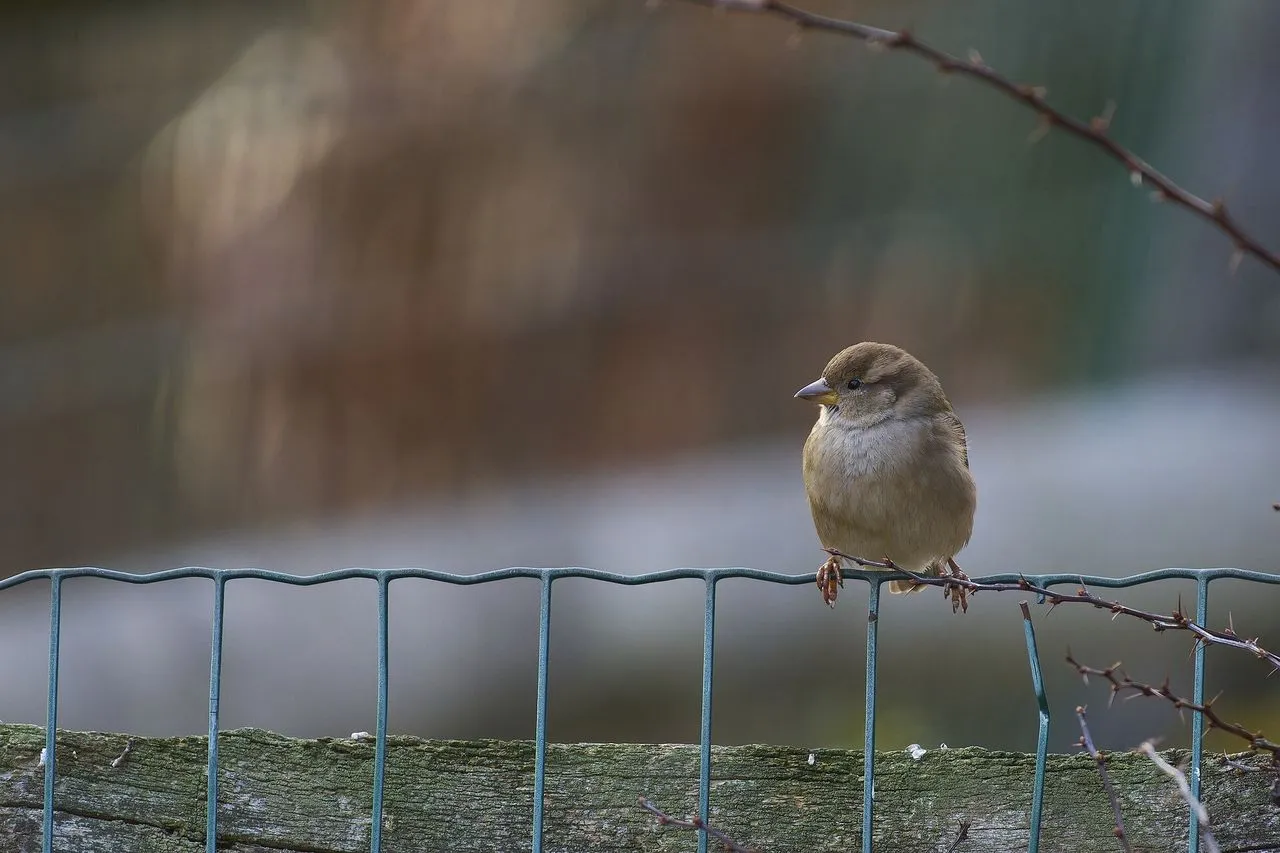
Starlings (75–90g) dominate feeders through mechanical advantage, longer perches, larger ports. Use small-perch tube feeders, fine mesh for nyjer, and safflower. House Sparrows are aggressive, use 28mm nest box holes (excludes them). Remove spillage that attracts them.
A European Starling weighs about 75 to 90 g; a Black-capped Chickadee weighs about 10 g. If both can stand on the same feeder port, the feeder has already chosen the starling.
Most published advice tells people to "discourage bullies" as though personality is the problem. It is not. Feeder domination is a mechanical outcome of perch length, port size, tray width, food type, and spilled seed. Change those variables and the bird community changes.
Specifications / Recipes / What Actually Works
| Problem bird | Feeder change | Food change | What it preserves |
|---|---|---|---|
| European Starling (Sturnus vulgaris) | Upside-down suet cage or 38–50 mm (1.5–2 in) outer cage | Plain suet, no corn filler | Woodpeckers, nuthatches |
| House Sparrow (Passer domesticus) | Perches shortened to 8–12 mm (0.3–0.5 in) | Nyjer or safflower | Goldfinches, chickadees |
| Brown-headed Cowbird (Molothrus ater) | Remove open trays in May–June | No millet or ground scatter | Shrub-nesting hosts |
| Pigeons and doves | Tube feeder without tray | Black-oil sunflower in small ports | Small perching birds |
| Mixed flock pressure | Pause feeding 10–14 days | Restart with one selective feeder | Native feeder regulars |
Starlings: Use upside-down suet cages, caged suet feeders with 38 to 50 mm outer-grid spacing, or small wire-mesh clingers. Starlings can cling briefly but feed poorly while inverted. Downy Woodpeckers, chickadees, and nuthatches handle inverted feeding easily. See the Downy Woodpecker for the bill-and-foot geometry that makes this work.
Avoid cheap suet cakes with cracked corn, millet, or bakery waste. Use plain rendered suet, peanut suet, or insect suet in a steel cage. In warm weather, remove suet entirely once it softens above 30 °C; greasy suet attracts starlings, squirrels, and raccoons.
House Sparrows: Shorten perches to 8 to 12 mm or use perchless mesh feeders. House Sparrows prefer stable horizontal perches and broad trays. Chickadees, goldfinches, and nuthatches manage narrow landing points better. Avoid platform feeders if House Sparrows are the main problem; platforms select strongly for them.
Seed choice matters. House Sparrows use millet, cracked corn, milo, and bread-like scraps heavily. Replace supermarket mix with black-oil sunflower in a tube, nyjer in a finch mesh tube, or safflower in a hopper. Safflower is not magic, but sparrows and starlings usually take it less readily than sunflower or millet.
Brown-headed Cowbirds: Cowbirds are native in much of North America but become a garden problem when feeding stations create unnaturally dense host-bird traffic. They prefer ground scatter, millet, cracked corn, and open trays. Remove platform feeding, sweep spillage daily, and keep feeders away from shrub-nesting areas during May and June.
Cage excluders: A cage with 38 mm openings excludes starlings and most adult House Sparrows while admitting chickadees, titmice, nuthatches, goldfinches, siskins, and many small woodpeckers. Some cardinals cannot enter, so do not use cage guards if cardinals are your priority.
Feeder placement: Put small-bird feeders 2 to 3 m from dense cover, not in the open lawn. House Sparrows and starlings are bold in open space; native small birds use nearby escape cover. Avoid placing feeders within 5 m of active nest boxes because House Sparrows will inspect boxes while feeding.
For feeder type selection generally, see Choosing the right feeder.
Common Mistakes
- Buying "wild bird mix" with millet and corn. These mixes are formulated for low cost, not selective feeding. They feed House Sparrows, pigeons, doves, blackbirds, and rodents very efficiently.
- Using large trays under tube feeders. Seed trays look tidy, but they create a stable platform that defeats the point of a small-port tube feeder.
- Feeding bread. Bread trains House Sparrows and starlings, adds poor nutrition, and fouls quickly in damp weather. It is not a bird food.
- Ignoring spillage. The ground under the feeder may be feeding more invasive birds than the feeder itself. Sweep or move the station every 2 to 3 days.
- Confusing control with harm. Ethical management means selecting feeder designs, not injuring birds. Lethal control is legally restricted and unnecessary for normal garden feeding problems.
Maintenance & Hygiene
Cleanliness is part of invasive-bird control because dense flocks foul surfaces rapidly. Starlings and House Sparrows leave wet droppings on trays, ports, and baffles; these become salmonella and coccidia transmission points.
Use feeders that dismantle without tools. Once weekly during heavy use, scrub ports and perches with hot water and dish soap, then disinfect with 10% bleach for 10 minutes. Rinse thoroughly and dry before refilling. If droppings accumulate faster than that, the feeder is too accessible to large flocking birds.
Nest boxes require separate management. A bluebird box should use a 38 mm entrance hole for Eastern Bluebird in most regions; that size admits bluebirds but excludes European Starlings, not House Sparrows. House Sparrows can enter and must be managed by monitoring. Remove House Sparrow nesting material where legal and before eggs of protected native species are involved. For box specifications, see Attracting Bluebirds and the Eastern Bluebird.
If a problem flock has formed, stop feeding for 10 to 14 days. Then restart with one selective feeder only: no tray, no ground seed, no millet, no corn. The absence of free spillage usually does more than any scare device.
See Also
- Attracting Bluebirds: the specific hole sizes and monitoring schedule that make bluebird boxes competitive with House Sparrows.
- Dealing with Squirrels: pole baffles and spacing that prevent predator corridors to the feeder.
- The Complete Attracting Guide: the full cross-species reference for selective feeding and feeder design.
- How to Stop Pigeons at Feeders: the pigeon-and-dove-specific companion to this starling/sparrow guide, with seed-choice and feeder-geometry rules.
Frequently Asked Questions
How do I exclude starlings from feeders?
Starlings have difficulty perching on short, thin perches typical of tube feeders. Use tube feeders with small perches and avoid platform or hoppers. Fine-mesh nyjer feeders exclude starlings. Safflower seed is less attractive to them.
How do I control House Sparrows?
House Sparrows are non-native and aggressive. Use 28mm entrance holes on nest boxes (excludes them) and remove perch from nest boxes. At feeders, use tube feeders with short perches. Keep spilled seed cleaned, attracts House Sparrows.
What seed attracts fewer invasive birds?
Safflower is less attractive to starlings and House Sparrows. Nyjer (thistle) requires fine mesh that excludes larger birds. Black-oil sunflower attracts most desired species but also starlings, use in tube feeders only.
Can I remove invasive bird nests?
In the US, House Sparrows and starlings are not protected, nests can be removed. However, check local regulations. Physical exclusion (hole size, perch design) is more effective and humane than nest removal.