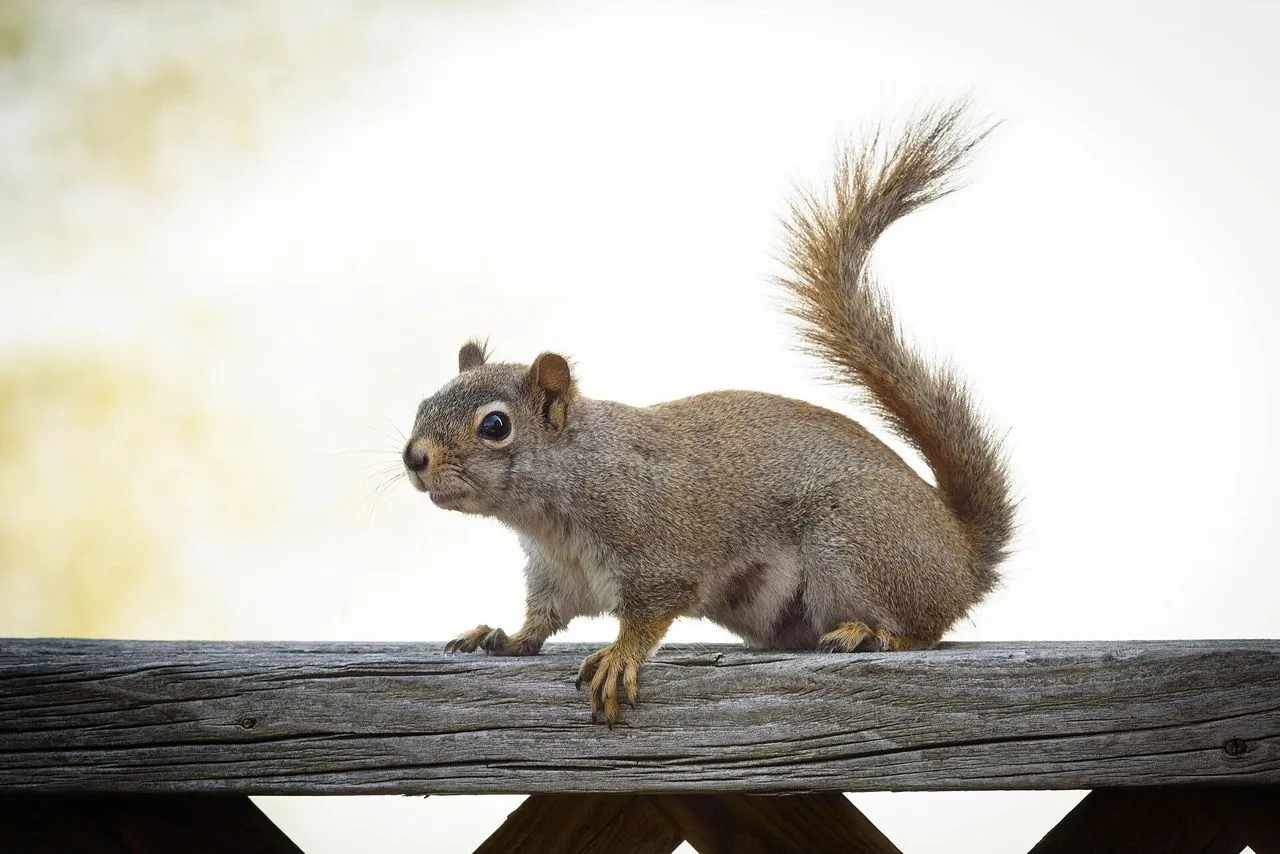
Squirrel control is about geometry, not gadgets. Grey squirrels leap 1.2m vertically and 2.5m horizontally. A stovepipe baffle 1.2–1.5m above ground with the feeder 3m from any launch point works. Weight-sensitive feeders help but fail in rain. Safflower seed is naturally squirrel-resistant.
A squirrel baffle must sit about 1.2 to 1.5 m above ground and the feeder must be at least 3 m from any launch point. If a squirrel can jump from a fence, branch, roof, or table, the baffle is decorative.
Most squirrel advice fails because it treats the feeder as the battleground. The real battleground is geometry. Grey squirrels can leap roughly 1.2 m vertically and 2.5 to 3 m horizontally, and they are willing to test a bad design for days.
Part of the Complete Attracting Guide.
Specifications / What Actually Works
| Control | Working specification | Strength | Weakness |
|---|---|---|---|
| Stovepipe baffle | 15–20 cm × 45–60 cm (6–8 × 18–24 in) | Most reliable on a smooth pole | Fails inside squirrel jump range |
| Horizontal spacing | More than 3 m (10 ft) from launch points | Stops branch and fence jumps | Needs open space |
| Weight-sensitive feeder | Metal ports, free-hanging | Useful backup | Mechanisms fail when wet |
| Caged feeder | 35–40 mm (1.4–1.6 in) openings | Excludes adult squirrels | Also excludes cardinals |
| Safflower | Hopper or tray, small fills | Reduces interest | Not a physical barrier |
The most reliable setup is a smooth metal pole with a stovepipe baffle. Use a pole at least 1.8 m high. Mount a cylindrical metal baffle 15 to 20 cm in diameter and 45 to 60 cm long below the feeder, with the top of the baffle about 1.2 to 1.5 m above ground. The baffle must wobble or block climbing; a fixed narrow cone is often defeated.
Spacing is non-negotiable. Put the pole more than 3 m from trunks, fences, walls, patio furniture, railings, and low roofs. More is better. A feeder hanging from a tree branch is not squirrel-resistant unless it hangs on a long wire with baffles and has no reachable trunk route.
Weight-sensitive feeders work when the spring mechanism is well made and the feeder is not touching anything. They close ports under squirrel weight while allowing lighter birds to feed. They fail when squirrels hang from above, brace against a pole, or chew plastic parts. Buy metal contact points and expect adjustment.
Caged feeders exclude adult squirrels if the mesh openings are about 35 to 40 mm. They also exclude larger birds, including cardinals and jays. That may be acceptable for chickadees, tits, nuthatches, siskins, and goldfinches. It is not acceptable if your goal is cardinals.
Seed choice can reduce damage but does not solve access. Safflower is less attractive to many squirrels than sunflower, and many cardinals take it readily. Nyjer in a fine-mesh finch feeder attracts little squirrel interest because it is small and awkward to extract. Black-oil sunflower is the highest-conflict seed because almost everything wants it.
Capsaicin-treated seed deters mammals because birds do not respond to capsaicin the same way mammals do. It can work. I consider it a last adjustment after geometry, not the foundation of a feeding station. Use only products labelled for wild birds and wash hands after handling.
Offer less seed at a time. A feeder filled with 2 kg of sunflower is worth a squirrel's entire afternoon. A small tube refilled every 1 to 2 days is less rewarding if a breach occurs. For feeder type selection, see Choosing the right feeder.
Do not relocate trapped squirrels casually. In many regions it is illegal, and in biological terms it usually means exporting a stressed animal into another squirrel's territory. Exclusion is cleaner than removal.
See Also
- Choosing the Right Feeder: the feeder styles that are easiest to protect from squirrel access.
- Feeder Hygiene and Disease: the cleanup schedule that matters once squirrels have been touching the station.
- Winter Feeding: Calorie Density, Open Water & Cover: winter setups need squirrel control and rapid access.
- House Finch: a common feeder species that benefits from the same station design trade-offs.
- The Complete Attracting Guide: the full cross-species reference for garden bird management.
Common Mistakes
- Hanging a feeder from a tree and adding a baffle underneath. The squirrel comes from above.
- Putting the pole 1.5 m from a fence. That is a launch platform, not a boundary.
- Buying plastic "squirrel-proof" feeders. Squirrels chew plastic ports, lids, and hinges first.
- Greasing poles. Grease contaminates fur and feathers, collects dirt, and does not remain effective.
- Feeding squirrels separately to distract them. Often this increases local squirrel activity and reproduction, then worsens the pressure.
Maintenance & Hygiene
Inspect baffles weekly. A shifted baffle, loose clamp, or branch that has grown into jumping range changes the whole system. After storms, reassess all launch points. A feeder draining overnight without daytime bird activity is one of eight scenarios covered in why have my birds disappeared.
Clean chew marks before they become holes. Exposed plastic edges invite more chewing. Replace damaged lids and ports quickly or the feeder becomes a seed dispenser for mammals.
Remove spilled seed under the station every few days. Squirrels learn from the ground first. If they find a daily seed fall, they will investigate the source. Use a tray if it does not collect wet seed, or switch to no-waste hulled sunflower in smaller amounts.
Wash feeders on the normal disease-prevention schedule: every two weeks in warm weather, monthly in cold weather, and immediately if seed becomes wet or mouldy. Squirrel saliva and dirty paws are additional reasons to keep ports clean, not the main reason. The main reason remains bird-to-bird disease transmission at concentrated feeding points.
See Also
- Choosing the Right Feeder: the feeder styles that are easiest to protect from squirrel access.
- Feeder Hygiene and Disease: the cleanup schedule that matters once squirrels have been touching the station.
- Winter Feeding: Calorie Density, Open Water & Cover: winter setups need squirrel control and rapid access.
- House Finch: a common feeder species that benefits from the same station design trade-offs.
- The Complete Attracting Guide: the full cross-species reference for garden bird management.
- Why Is My Suet Disappearing Overnight?: nocturnal mammal raids (raccoons, rats, opossums) on suet, ranked by frequency with exclusion specs.
- Raccoons and Bird Feeders: the larger-mammal companion using the same baffle geometry and pole-clearance rules.
Frequently Asked Questions
What is the most reliable squirrel deterrent?
A smooth metal pole with a stovepipe baffle (15–20cm diameter, 45–60cm long) mounted 1.2–1.5m above ground. The key is placement, feeder must be at least 3m from any launch point (fence, branch, roof).
Do weight-sensitive feeders work?
They work when dry but fail in rain when the mechanism gets wet and sluggish. They are a useful component of a multi-strategy approach but not a standalone solution. Squirrels also learn to test them gently.
Does Safflower seed really repel squirrels?
Yes. Safflower is naturally bitter and has a harder shell than sunflower. Most squirrels ignore it entirely. Cardinals, House Finches, and chickadees readily eat safflower, making it a good squirrel-resistant choice.
What doesn't work for squirrels?
Baffles that don't wobble, feeders within 3m of cover, and most 'squirrel-proof' commercial feeders (squirrels learn to defeat them). Slinkies on poles often fail because squirrels can navigate them. Placement beats product every time.