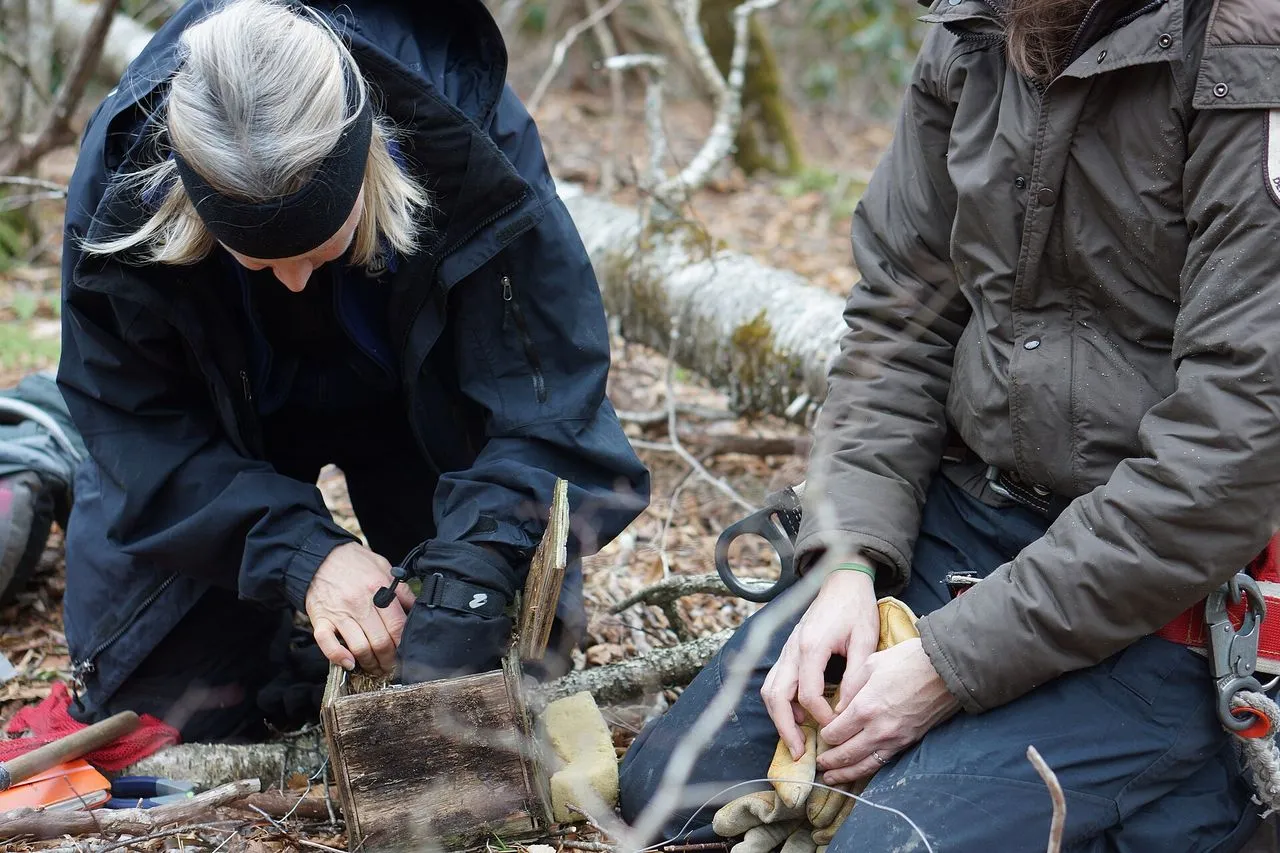
Entrance hole size determines which species can enter: 28mm excludes House Sparrows (Blue Tits), 32mm admits chickadees, 38mm admits House Sparrows. Use 15–20mm timber thickness for insulation. Mount 1.5–2m high on smooth poles with predator baffles. Clean annually after nesting season.
A 28 mm entrance hole admits Blue Tits and excludes most House Sparrows; a 32 mm hole admits Great Tits and many chickadees; a 38 mm hole admits House Sparrows and starlings in many gardens. Five millimetres can decide which species breeds.
Most nest-box advice is too sentimental about "homes" and too vague about dimensions. Birds select cavities by entrance size, internal volume, height, temperature, and predator risk. Paint colour and heart-shaped plaques are irrelevant.
Part of the Complete Attracting Guide.
Specifications / What Actually Works
| Target bird group | Entrance | Floor and depth | Notes |
|---|---|---|---|
| Blue Tit / small tits | 25–28 mm (1–1.1 in) | 110 × 110 mm floor; 200–250 mm deep | Excludes most House Sparrows |
| Chickadees and Great Tit | 32 mm (1.25 in) | 110 × 110 mm floor; 200–250 mm deep | Good general small-cavity size |
| Nuthatches | 32 mm (1.25 in) | 110–125 mm floor; 200–250 mm deep | Rough inner wall helps exit |
| Eastern Bluebird (Sialia sialis) | 38 mm (1.5 in) | 100 × 100 mm floor; about 200 mm high | Open habitat, pole baffle needed |
| Starling risk | 50 mm (2 in) | Variable | Avoid unless targeting a larger species |
Use untreated timber 15 to 20 mm thick. Cedar, pine, larch, and exterior-grade plywood all work if they remain dry and do not delaminate. Do not use pressure-treated timber inside the box. The inner front wall should be rough enough for nestlings to climb; if it is smooth plywood, score shallow horizontal grooves below the entrance.
For small tits and chickadees, build an internal floor of about 110 × 110 mm and an internal depth of 200 to 250 mm from entrance to floor. Drill the entrance 150 to 180 mm above the floor. That distance reduces predator reach and keeps nestlings from leaving too early.
Useful entrance diameters are precise. Use 25 mm for the smallest tits where appropriate, 28 mm for Blue Tit-sized birds, 32 mm for Great Tit, Black-capped Chickadee, Carolina Chickadee, and many nuthatches, and 45 mm for Eastern Bluebird or similar open-country cavity nesters. A 50 mm hole invites starlings in much of North America and Europe. If you are not targeting a larger species, do not drill a larger hole. For open-habitat box placement and monitoring, see Attracting Bluebirds.
Ventilation should be modest: two 6 mm holes high on each side, or a 5 mm gap under the roof overhang. Drainage should be four 6 mm holes in the floor corners. The roof should overhang the front by at least 40 mm and shed rain away from the entrance.
Use screws, not nails, for one side panel so it can open for cleaning. A brass or stainless screw used as a pivot near the top and a second screw as a latch near the bottom is enough. Do not add an external perch. Cavity-nesting birds do not need it; predators and House Sparrows benefit from it.
Mount small songbird boxes 1.5 to 3 m above ground. Face the entrance east or north-east where summers are hot, avoiding prolonged afternoon sun. In cold wet climates, avoid the direction of prevailing rain. The entrance should have a clear flight path of at least 1 m.
Predator guards matter. A metal entrance plate prevents squirrels and woodpeckers from enlarging the hole. On pole-mounted boxes, a stovepipe baffle 60 cm long mounted below the box is far more effective than a small cone. Tree-mounted boxes are harder to protect, but a smooth metal collar can reduce climbing access.
Spacing matters because many cavity nesters defend territories. For chickadees and tits, one box per 400 to 800 square metres is usually enough. Bluebird boxes in open habitat are commonly spaced 90 to 125 m apart. A row of boxes on one fence is mostly a House Sparrow project.
Nest boxes supplement habitat; they do not replace it. Nestlings still need insects, and those insects come from planting. For the food base around the box, see Native plants for birds.
Common Mistakes
- Drilling a large entrance "so more birds can use it". More often it means the most aggressive non-target birds use it.
- Adding a perch. It makes the box look like a cartoon birdhouse and gives predators a handle.
- Mounting the box on a sunny south-facing wall. Internal temperatures can exceed safe limits during heatwaves.
- Using thin decorative craft wood. A 6 mm wall overheats, chills quickly, and warps.
- Opening the box repeatedly during laying. Inspection has value, but disturbance has a cost. Keep checks brief and scheduled.
Maintenance & Hygiene
Clean boxes once the breeding attempt is finished and again in late winter before the next season. Remove old nesting material, scrape dry debris, and rinse if necessary. If parasites are heavy, use boiling water or a 1:9 bleach-water rinse, then dry the box fully before closing.
Do not clean active nests unless you are part of a monitoring scheme and know the legal rules in your country. Many native birds, eggs, and nests are protected by law. House Sparrow and starling control is region-specific and should be handled deliberately, not improvised.
Check attachment hardware annually. A box that tilts forward in rain can flood; a box that loosens in wind may be abandoned. Replace cracked roofs immediately. A nest box is only useful if it remains dry, shaded, and inaccessible to the animals most interested in eating the contents.
See Also
- Attracting Bluebirds: practical bluebird box specifications for North American open-country cavity nesters.
- Native Shrubs for Nesting: shrub layer that supports cavity nesters around the box site.
- Native Plants for Birds: insect-rich planting that supplies the food base nestlings require.
- Birdbaths and Water Features: water provision that supports nesting pairs and fledging survival.
- The Complete Attracting Guide: the full cross-species reference for nest boxes, feeding, and habitat.
- Why Is My Nest Box Empty?: the diagnostic companion when a built-to-spec box still goes unoccupied.
Frequently Asked Questions
What entrance hole size should I use?
28mm excludes House Sparrows, fits Blue Tits and small chickadees. 32mm admits most chickadees and titmice. 38mm admits House Sparrows and Starlings, generally avoid unless targeting specific larger cavity nesters.
What material should a nest box be made from?
Use 15–20mm thick untreated timber (cedar, pine) for adequate insulation. Avoid thin plastic or metal that overheats or freezes. The thickness matters more than the wood species. Ensure drainage holes in the floor and ventilation gaps near the top.
Where should I mount a nest box?
Mount 1.5–2m high on a smooth metal pole with a predator baffle. Face away from prevailing winds (typically north or northeast in North America). Place at least 3m from dense cover to reduce predator access, but within 50m of trees.
Should I add a perch?
No, perches actually help House Sparrows and Starlings access boxes. Most cavity nesters don't use perches anyway, they land on the rim and hop inside. Omit the perch to help exclude non-native predators.